
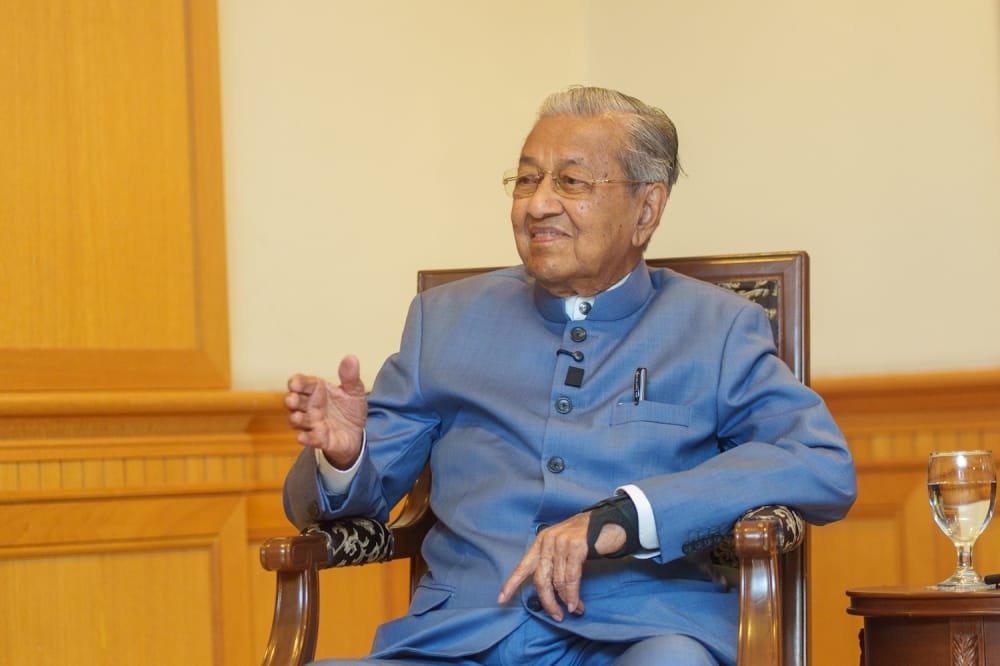
Across coffee shops from Johor Bahru to Kota Bharu, everyday citizens grapple with an unspoken exhaustion a subtle fatigue born from years of shifting coalitions, fluctuating living costs, and relentless political commentary. In households where grocery bills rise alongside conversations about national direction, voters are increasingly looking past superficial slogans to ask deeper questions about stability, communal representation, and institutional governance. When ballot boxes closed following the 16th Johor State Election, the clear verdict went beyond mere tally sheets. It exposed a profound cultural and social recalibration within the country’s socio-political fabric. Former Prime Minister Tun Dr Mahathir Mohamad observed that the election outcome demonstrated how Malay political unity could reassert the community's democratic strength. This remark sparked nationwide dialogue regarding identity, governance, and social harmony in multi-ethnic Malaysia.
The Echoes of Johor: A Shift in Political Gravity
The outcome of the Johor state polls marked a dramatic consolidation of power. According to official data reported by Bernama Garasi, Barisan Nasional (BN) secured a commanding 48 out of 56 state legislative assembly seats, expanding its footprint well beyond previous margins. Meanwhile, coverage by Channel NewsAsia (CNA) highlighted how Pakatan Harapan (PH) retained just eight seats, suffering notable losses across traditionally competitive mixed constituencies.
Following the announcement of results, Tun Dr Mahathir took to social media to reflect on the broader implications for the Malay demographic. As reported by Astro Awani, Mahathir posited that even if the exact nature or formal mechanism of cross-party cooperation remains fluid, the election results demonstrated that when the Malay electorate converges, political agency returns to the community.
From an analytical standpoint, Mahathir’s thesis is rooted in historical electoral patterns. When the Malay electorate which constitutes the nation's majority demographic is fragmented across numerous competing blocs, political leverage becomes diluted. Conversely, when voter sentiments align around shared concerns such as economic preservation, cultural dignity, and administrative competence, the resulting electoral weight becomes decisive.
Further detail provided by HarakahDaily noted Mahathir’s explicit qualification: political strength gained through unity must not be deployed to marginalize other communities or shield wrongdoing. Instead, it should serve as a stabilizing foundation to uphold constitutional integrity, safeguard Malay identity, and ensure broader national prosperity. This perspective frames communal solidarity not as an aggressive stance, but as a confidence-building measure that allows a majority group to participate in governance without anxiety.
Social and Cultural Dimensions of Unity
Understanding the appeal of unity calls requires looking beneath party politics to the social structures of the Malay heartland. Culturally, concepts such as musyawarah (deliberation), gotong-royong (mutual cooperation), and semangat kemasyarakat (community spirit) form the bedrock of Malay civic life. When political narratives tap into these deeply rooted values, they resonate powerfully with voters who feel alienated by partisan polarization.
In many rural and semi-urban districts, political alignment is closely intertwined with community identity. Local institutions, village committees, and religious centers serve as social hubs where national issues are interpreted through a collective lens. In this environment, hyper-partisanship is often viewed as a source of social friction rather than constructive debate.
An analytical assessment published by the S. Rajaratnam School of International Studies (RSIS) noted that voter turnout in BN strongholds averaged between 65.7% and 68%, driven by structured grassroots mobilization and a desire for administrative continuity. In contrast, lower enthusiasm among urban voters highlighted a growing divide in how different segments of the electorate perceive political effectiveness.
When voters observe political infighting while confronting everyday economic burdens, the appeal of a unified platform grows. A cohesive leadership structure is frequently associated with administrative predictability, effective resource distribution, and clear social safety nets. Thus, the desire for political consolidation reflects an underlying search for social security and cultural reassurance.
Institutional Dynamics and the Unity Government Balancing Act
The political fallout from Johor extends far beyond state borders, directly influencing the dynamics of the federal unity government. Analysts at Channel NewsAsia (CNA) pointed out that BN's landslide victory significantly strengthens UMNO's position within the federal coalition. This victory demonstrates that the party's grassroots machinery retains substantial revival capacity when aligned with local governance concerns.
This structural shift presents both opportunities and strategic hurdles for Putrajaya. On one hand, a reinforced BN provides a solid foundation of Malay voter support, helping to insulate the federal government against charges of lacking majority legitimacy. On the other hand, it forces Pakatan Harapan to re-evaluate its communication strategies and policy implementation ahead of upcoming state and general elections.
A commentary by Aliran examined the emerging "symbiosis formula" within Malaysian politics. The analysis suggests that major Malay-based political entities are increasingly recognizing areas of strategic convergence, achieving shared political goals without necessarily forging rigid, formal seat-sharing agreements.
At the same time, regional political analysis from CNA emphasized that electoral momentum in Johor creates high-stakes ripples for neighboring states like Negeri Sembilan. Federal leadership must balance addressing the core concerns of the Malay majority with maintaining the trust of non-Malay communities, ensuring that national policy remains inclusive and forward-looking.
Historical precedents documented by Malaysiakini demonstrate that efforts to construct overarching political consensus in Malaysia require delicate institutional handling. In a constitutional democracy, political strength is ultimately evaluated by its ability to deliver transparent governance, economic fairness, and institutional integrity for all citizens regardless of background.
Navigating Inclusivity in a Plural Nation
A primary consideration in discussions surrounding Malay political unity is its relationship with Malaysia's multi-ethnic reality. Critics and political commentators often raise concerns over whether a stronger focus on single-community cohesion might inadvertently alienate minority groups or widen societal divisions.
However, scholarly analysis of Malaysian statecraft suggests that stable governance historically relies on a confident majority working in genuine partnership with minority communities. In his commentary on the Johor results, Mahathir addressed this balance directly, asserting that when the Malay community feels politically secure, it approaches multi-ethnic governance with greater openness and confidence.
This model mirrors the founding spirit of the Malaysian federation, where distinct communal identities were acknowledged within a shared constitutional framework. Rather than erasing ethnic identities under a uniform banner, stability was preserved by ensuring each community felt represented at the decision-making table.
Insights published by the S. Rajaratnam School of International Studies (RSIS) indicated that in several mixed seats in Johor, candidates from minority component parties benefited significantly from a consolidated vote, demonstrating how inter-communal political machinery functions when backed by strong majority support.
The challenge moving forward lies in ensuring that political consolidation leads to tangible improvements in public welfare, economic equity, and national unity. Political power, when consolidated, is most effective when channeled toward solving structural challenges such as youth employment, education quality, healthcare accessibility, and inflation that affect every Malaysian household.
What Do You Think? I’d Love to Hear Your Opinion in The Comments Section.
Elections are ultimately more than tallies of ballots; they serve as a mirror reflecting the evolving hopes, anxieties, and collective aspirations of a nation. The story of the Johor State Election is not merely about party machinery or political calculations. It reflects a populace actively seeking stability, clear representation, and a sense of shared purpose in an increasingly unpredictable world.
As Malaysia navigates this era of political transformation, the dialogue surrounding identity and unity will continue to shape our national journey. Whether viewed through the lens of political strategy or cultural preservation, the desire for cohesion reflects a deep human need for security and community. The true test of any political realignment lies in its ability to translate parliamentary numbers into meaningful progress for every citizen.
When we look beyond party lines, we realize that the strength of our nation rests on our shared commitment to mutual respect, democratic dialogue, and social justice. As Malaysia moves forward, every voice contributes to building a resilient, prosperous, and harmonious society.
AM World (tameer.work88@gmail.com) is a content creator under the Newswav Creator programme, where you get to express yourself, be a citizen journalist, and at the same time monetize your content & reach millions of users on Newswav. Log in to creator.newswav.com and become a Newswav Creator now!
The User Content (as defined on Newswav Terms of Use) above including the views expressed and media (pictures, videos, citations etc) were submitted & posted by the author. Newswav is solely an aggregation platform that hosts the User Content. If you have any questions about the content, copyright or other issues of the work, please contact creator@newswav.com.