
The Met Office has issued a rare red weather warning for Wednesday and Thursday in the face of extreme heat and humidity.
The weather forecaster said that in this week’s heatwave, parts of England and Wales are likely to see temperatures exceed 37C in the shade and could even see them rise to 38C to 40C in some places.
The extreme heat, which has been very rare in the UK until now, will be accompanied by high humidity, and very warm and humid nights which will make it hard for people to recover overnight, the Met Office said.
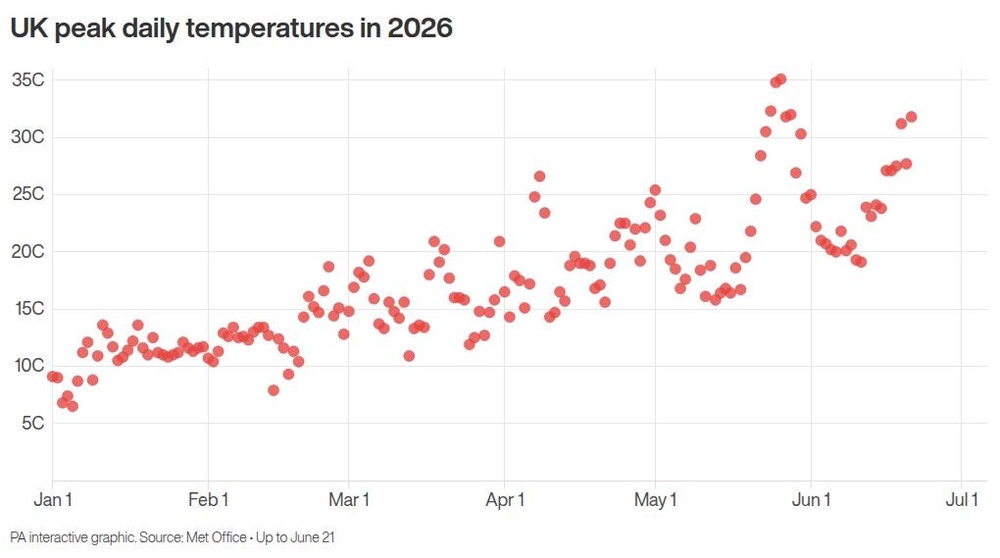
The heat will have impacts on health, and there will be “significant disruption” to daily life, it warned, as it urged people to adapt their routines where possible to cope with the heat.
The Met Office had already issued an amber weather warning covering large areas of England and Wales from Monday to Thursday but upgraded areas of central England and Wales to red on Monday morning.
The red alert stretches from London across to Somerset and Swansea and up towards Birmingham.
As part of the rare warning, forecasters say conditions will bring a risk to life and population-wide health impacts that no longer limited to those most vulnerable to extreme heat while “substantial changes” in working practices and daily routines will be required.
There is also a high risk of failure of heat-sensitive systems and equipment, with the loss of power and other essential services, such as water, electricity, gas or mobile phone services.
Significantly more people will likely visit coastal areas, lakes and rivers, leading to an increased risk of water safety incidents, the Met Office said.
And people can expect travel disruptions, including delays on roads and road closures as well as delays and cancellations to rail and air travel which bring significant welfare issues for those who experience even moderate delays.
Read MoreUK to fund AI weather forecasting as ‘super’ El Niño threatens wave of climate shocks
El Nino could increase chances of ‘milder, wetter and windier’ UK autumn
Climate crisis is changing when plants flower, artificial intelligence study finds