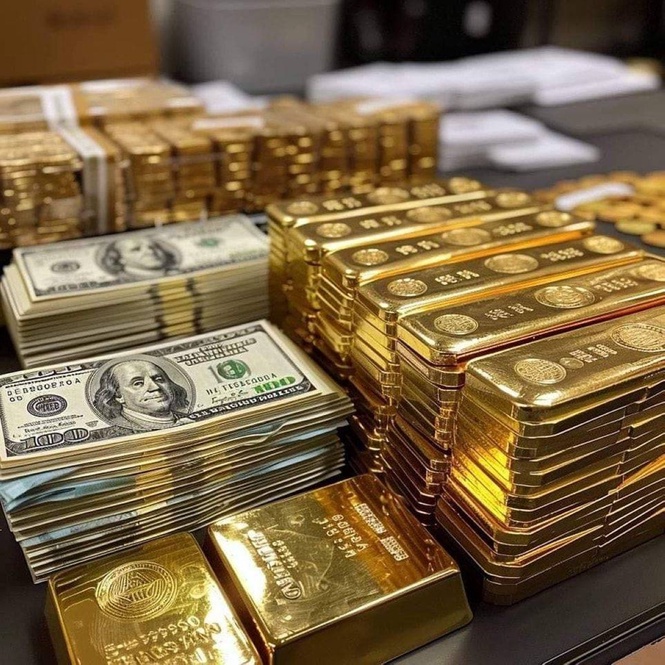
HIGHER gold prices gave the Philippines’ gross international reserves a boost in August, the central bank said late on Monday, with the level rebounding to $104.8 billion from July’s 18-month low of $103.3 billion.
“The increase in reserves was mainly driven by the upward valuation adjustments in the Bangko Sentral ng Pilipinas (BSP)’s gold holdings due to the increase in the price of gold in the international market, and the BSP’s net income from its investments abroad,” the central bank said.
“These were partly offset by the national government’s drawdowns on its foreign currency deposits with the BSP for external debt service,” it added.
The latest level is enough for 6.8 months’ worth of imports of goods and payments of services and primary income, the BSP said, and can also cover about 3.7 times the country’s short-term external debt based on residual maturity.
The reserves “provide sufficient foreign currency to meet the country’s import needs, service its external debt obligations, and serve as a buffer against external economic shocks,” the central bank said.
SM Investment Corp. economist Robert Dan Roces said GIR could drop as the BSP works to prop up the peso, which has fallen to fresh record lows amid a stronger dollar and renewed global uncertainties.
“A weaker peso is a concern, but this is not a reserves problem,” he said.
“The Philippines still has a sizable external buffer to manage periods of currency stress.” Metrobank economist Nicholas Antonio Mapa also said that GIR remained “more than healthy despite a modest slide over the past few months.” “This has happened as the currency has come under pressure due to the ongoing war in the Middle East, which keeps global crude oil prices elevated,” he said.
“We remain confident that these reserves will help the central bank maintain its presence in foreign exchange markets to help preserve order and limit volatility.” The central bank expects GIR to end at $104 billion this year and rise to $105 billion in 2027.