Table of Contents
Zach Cregger’s bold original story brings grounded survival horror and unexpected twists to Capcom’s iconic Resident Evil universe
After Rian Johnson’s Star Wars: The Last Jedi almost a decade ago, “subversion” became part of the nomenclature around film discourse, especially whenever fans of existing intellectual properties get involved. Yet, it is hard to separate the word from filmmaker Zach Cregger’s films, particularly the new Resident Evil.
From how he seemingly propped up Bill Skarsgard’s red flag-covered character as a menace to Georgina Campbell in Barbarian before completely shifting gears into horrifying, maniacal incest, to how Julia Garner’s character is put in the crosshairs of Weapons after children go missing only for the film to veer off the cliff into a darkly whimsical modern folk tale ravine, Cregger does the same with the latest iteration of Capcom’s video game franchise.
This largely is not going to fly with the hardcore fanboys of the games, who already polluted the discourse around the film pre-release with their Doritos-covered fingers over how the film would not adapt or feature any of the games’ famous lead characters.
However, for everyone else looking for an amazing survival horror film with an original story set within the Resident Evil universe, Cregger’s latest subversion of a video-game live-action movie certainly delivers.

A delivery into Raccoon City’s nightmare
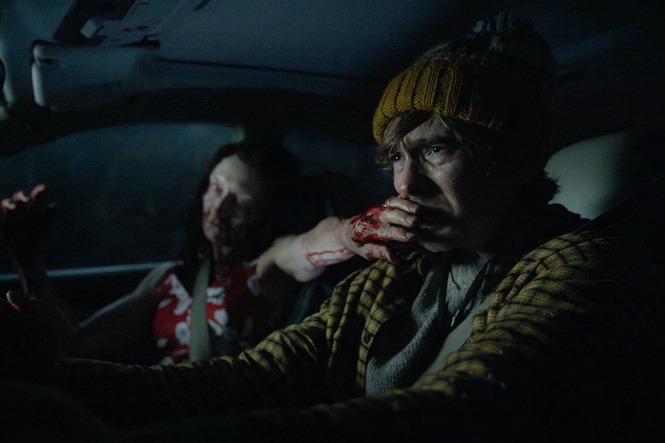
Upon completing a delivery at the end of his shift, medical courier Bryan (Austin Abrams) is abruptly tasked with delivering another package to the faraway Raccoon City General Hospital, located in the isolated Arklay County.
Driving through a snowstorm towards Raccoon City, the delivery attempt immediately goes sideways when Bryan crashes into a lone woman wandering the roads on the mountain surrounding the county.
Initially unbeknownst to him, Bryan has entered the area in the first few hours of what would later be called the “Raccoon City Incident”, when a contagious viral agent developed by the pharmaceutical and biotechnology company Umbrella Corporation is accidentally released.
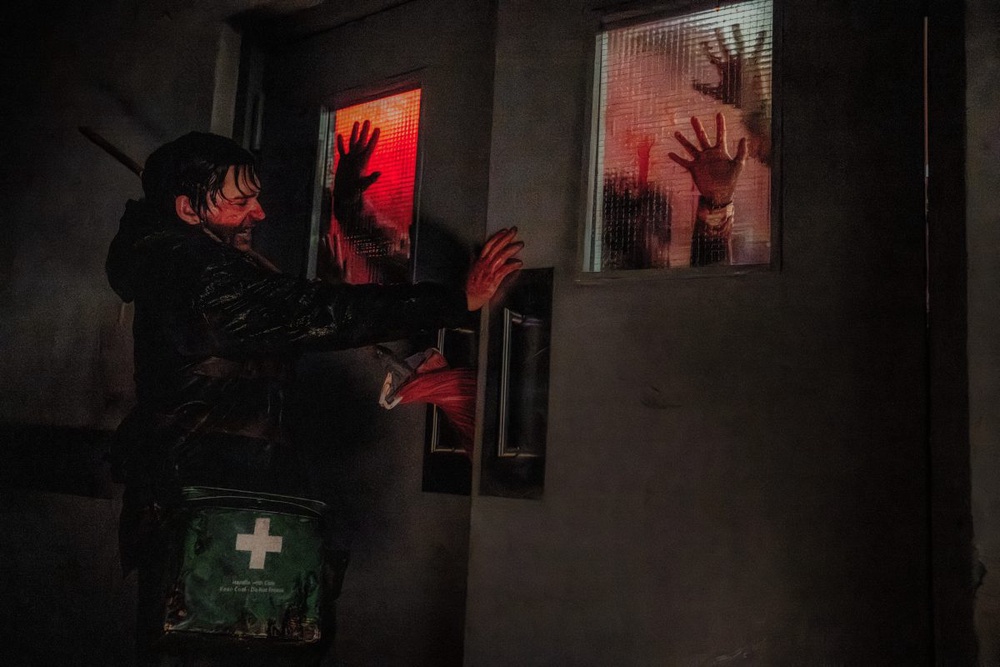
As he enters the city, Bryan has to contend with an outbreak that is reviving the dead and mutating the living.
A fresh take on survival horror
Rather than adapting an established Resident Evil story or character, going absolutely insane with the source material like Paul W.S. Anderson did, or making a loose adaptation like the Netflix series, Cregger instead opts for a middle road of sorts.
By framing the film’s story around a new character, a random nobody at that, Cregger opens up a new way to experience a story based on a game, effectively sidestepping the pitfall that those other live-action entries fell into.
This leads to a very grounded Resident Evil, sans the outrageous premise of the films’ mutations and zombies, with the realistic way Abrams’ Bryan reacts to and acts upon the insane scenarios the character is plunged into.
Under Cregger, Resident Evil also straddles the thin line between self-serious and campy humour, much like the games. These are all part of the film’s subversion of what video game adaptations tend to be.
Every facet of Bryan’s characterisation, from the harebrained attempts to rush through every situation, the desperate scrambles, to the lack of wherewithal in how to use guns or aiming accuracy, parallels how any one of us would behave if we were in a similar situation. In a way, the film is a cross between the games and a live-action adaptation of how inexperienced gamers play survival horror games.
If Cregger had chosen to make a film about Leon Kennedy, Chris Redfield, Jill Valentine or any of the other famous characters, Resident Evil would have been just another power fantasy action horror film. By taking the road less travelled, that has made all the difference.