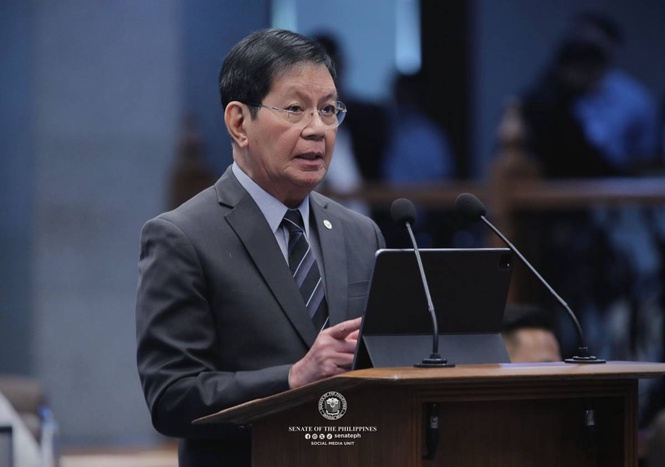
WITH mounting economic woes threatening to make life increasingly difficult for Filipinos, Sen. Panfilo Lacson urged President Ferdinand Marcos Jr. to take a hard look at the performance of his economic team.
“ECONOMIC MALAISE: Stocks are sliding, the peso is losing its value, property is oversupplied, agriculture is in disarray, investors have stayed away, and inflation and poverty keep climbing. Mr. President, maybe it’s time to look hard at your economic team,” Lacson said in a social media post.
On Monday, the stock market and the peso both closed lower as investors remained cautious amid inflation concerns.
The country’s gross domestic product grew by only 2.1 percent in the third quarter of 2026, slower than the 2.4-percent expansion recorded in the second quarter.
Philippine Statistics Authority (PSA) chief Claire Dennis Mapa said the latest growth figure was the slowest since the first quarter of 2021, when the country was reeling from the effects of the Covid-19 pandemic.
PSA data showed that services was the only major sector to post year-on-year growth in the third quarter, expanding by 3.7 percent.
Agriculture, forestry and fishing contracted by 4.8 percent, while the industry sector also declined, posting a 0.003-percent contraction.
Lacson’s call for a closer assessment of the administration’s economic team also came days after Marcos ordered a reshuffle involving several government agencies responsible for revenue collection, trade facilitation and investment promotion.
On Nov. 13, the president administered the oath of office to new officials heading the Bureau of Internal Revenue (BIR), Bureau of Customs (BOC), and Bases Conversion and Development Authority (BCDA).
BIR Commissioner Charlito Martin Mendoza was transferred to the BOC, while Finance department official Rolando Ligon Jr. took over the BIR.
Meanwhile, former BOC commissioner Ariel Nepomuceno was appointed head of the BCDA, replacing Joshua Bingcang, who was moved to the Philippine Economic Zone Authority.
The changes affected four agencies considered important to the government’s efforts to improve tax collection, strengthen customs operations, promote investments and develop economic zones.
Malacañang said the appointments were part of continuing efforts to improve government efficiency, strengthen public service and advance reforms in the affected agencies.