
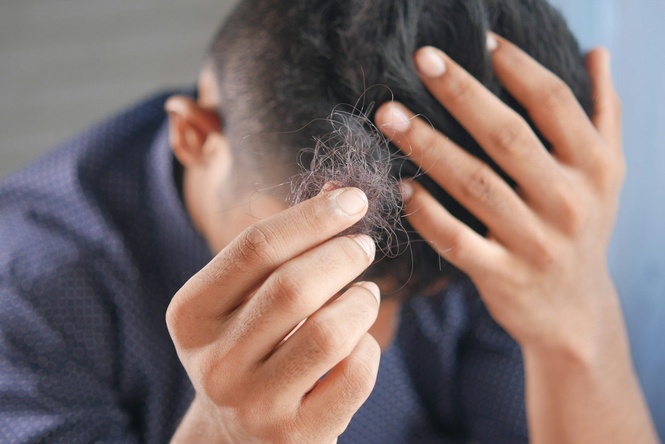
A medicine commonly prescribed for rheumatoid arthritis has shown promising results in people with severe alopecia areata, an autoimmune disease that can cause extensive hair loss from the scalp, eyebrows, eyelashes and body.
The drug, upadacitinib, is sold under the brand name Rinvoq. It belongs to a group of medicines called Janus kinase, or JAK, inhibitors. These treatments work by blocking immune signals that fuel inflammation. In alopecia areata, the immune system mistakenly attacks hair follicles, disrupting normal hair growth.
Two large phase 3 clinical trials found that many people taking daily upadacitinib experienced substantial scalp hair regrowth within 24 weeks. The findings add to evidence that JAK inhibitors can transform treatment prospects for people with serious forms of the condition.
Researchers reported that about half of participants receiving upadacitinib regrew enough hair to achieve at least 80% scalp coverage. In contrast, only around 2% of participants who received placebo reached that level of regrowth.
The results are particularly significant for people with severe alopecia areata, including those who have lost at least half of the hair on their scalp. For many, the condition is not simply a cosmetic concern. Visible hair loss can affect self-esteem, mental wellbeing, relationships and participation in work or social activities.
Upadacitinib is already authorised for several inflammatory diseases, including rheumatoid arthritis, psoriatic arthritis, atopic dermatitis and ulcerative colitis. It is not yet approved specifically for alopecia areata. Its established use in other conditions means clinicians have experience of its benefits and risks, although treatment for hair loss would still require specialist assessment and monitoring.
The trials included nearly 1,400 participants aged 12 to 64. All had severe alopecia areata, defined in the studies as scalp hair loss affecting at least 50% of the scalp. The international research programme involved more than 230 clinical centres across 25 countries in one trial and 28 countries in the other.
The studies ran from November 2023 to July 2025. Participants were placed in one of three groups. Roughly 40% received 15 milligrams of upadacitinib once a day. Another 40% received 30 milligrams once a day. The remaining 20% received placebo.
Hair growth was assessed at weeks four, eight, 12 and 24. Participants then entered a 28-week extension period, continuing under blinded conditions so researchers could gather longer-term information.
At the 24-week point, almost half of the people taking 15 mg of upadacitinib achieved at least 80% scalp hair coverage. More than 54% of those on the 30 mg dose reached the same target. Results in the placebo group were minimal.
The higher dose also appeared to produce greater regrowth on stricter measures. More than 35% of participants taking 15 mg regained at least 90% of scalp hair, compared with approximately 46% of those taking 30 mg. Only about 1% of participants in the placebo group reached that benchmark.
Complete scalp hair regrowth was less common, though the contrast with placebo remained striking. About 13% of people taking the lower dose achieved full scalp coverage. The figure rose to roughly 23% among those taking the higher dose. Almost no placebo participants achieved complete regrowth.
The trial findings also included improvements in eyebrows and eyelashes. More than half of those receiving 30 mg reportedly achieved significant regrowth in these areas. This could be meaningful for people whose condition affects more than scalp hair. Loss of eyelashes, for example, can cause eye irritation because lashes help protect the eyes from dust and debris.
Alopecia areata can begin during childhood or adulthood. It affects people of every ethnicity, sex and age. Some develop one or two small bald patches that resolve naturally. Others experience repeated episodes. A smaller group develops extensive or total hair loss.
Alopecia totalis refers to complete scalp hair loss. Alopecia universalis is the most extensive form, involving hair loss across the scalp and body. These forms can be persistent and emotionally devastating.
The condition develops because immune cells target the hair follicle. Hair follicles are usually not permanently destroyed, unlike in scarring forms of alopecia. This gives treatment a biological opening, if the immune attack can be reduced, follicles may resume hair production.
JAK inhibitors target an important part of this process. Janus kinases are proteins that help cells communicate in response to immune signals. By interrupting these pathways, JAK inhibitors can reduce inflammatory activity around hair follicles.
The class has already changed the treatment landscape for severe alopecia areata. Several JAK inhibitors have been approved by the United States Food and Drug Administration for the condition. These include baricitinib, marketed as Olumiant; ritlecitinib, marketed as Litfulo; and deuruxolitinib, marketed as Leqselvi.
Approval and availability vary by country. Medicines may be licensed for a condition in one health system but unavailable, restricted or unfunded in another. Cost can also be a major obstacle. An additional approved JAK inhibitor could eventually increase competition and widen treatment choice, though there is no guarantee that it would be affordable or routinely available.
The latest findings should also be interpreted carefully. Upadacitinib is a systemic immune-modifying medicine, not a simple hair-growth product. It affects immune signalling across the body. This may help restore hair growth in alopecia areata, yet it can also increase the risk of side effects.
The most commonly reported adverse effects in the trials were acne, colds, throat irritation and upper respiratory tract infections. Researchers said serious side effects were rare during the study period.
Even so, JAK inhibitors carry important safety warnings. Potential serious risks can include severe infections, blood clots, heart-related events, malignancies and changes in blood counts or liver function. The likelihood of these complications differs from person to person.
Age, smoking history, previous cardiovascular disease, infection risk, cancer history and other medicines may all affect suitability. Before treatment, clinicians may test for tuberculosis, hepatitis and other infections. Blood tests may also be needed before and during therapy.
Patients should not begin or stop this type of treatment without medical supervision. A dermatologist experienced in alopecia areata and systemic immune therapies can help assess whether the likely benefits outweigh the risks for an individual patient.
Another challenge is that alopecia areata can return after treatment stops. Hair regrown during therapy may be lost again if the immune attack resumes. Some people may therefore need long-term treatment to maintain the result. Long-term safety, cost and access are central questions, not minor details.
It is also important to identify the cause of hair loss accurately. Alopecia areata differs from androgenetic alopecia, often known as hereditary pattern hair loss. Pattern hair loss is the most common cause of hair thinning in adults and is driven mainly by genetics and hormones. JAK inhibitors are not established treatments for that condition.
Other causes include thyroid disorders, iron deficiency, nutritional problems, certain medicines, illness, stress, scalp conditions and repeated tension from tight hairstyles. Anyone with sudden, patchy or unexplained hair loss should seek medical advice. Assessment is especially important if hair loss affects eyebrows, eyelashes or body hair, or occurs with scalp irritation, fatigue, weight change or other symptoms.
Treatment for alopecia areata currently depends on the severity and pattern of disease. Mild localised hair loss may be managed with corticosteroid injections, topical treatments or watchful waiting. More extensive disease may require systemic medicines. Wigs, scarves, cosmetic camouflage and support groups can also play an important role in helping people manage the emotional and practical impact.
There is still no cure for alopecia areata. The upadacitinib results do not change that. They do, however, strengthen the case for immune-targeted treatments as an effective option for many people with severe disease.
Further data will be needed before the medicine can be considered for approval in alopecia areata. Regulators and clinicians will want longer-term evidence on safety, durability of hair regrowth and how upadacitinib compares with existing JAK inhibitors.
For now, the trials offer carefully measured optimism. A familiar inflammatory-disease drug may become another valuable treatment option for people living with severe autoimmune hair loss. The potential is substantial. So is the need for specialist oversight, clear information and shared decision-making.
The post Rheumatoid Arthritis Drug Shows Strong Hair Regrowth Results in Severe Alopecia Trials first appeared on PP Health Malaysia (PPHM) | 10POINTS Evidence-Based Health News.