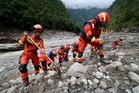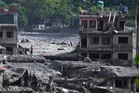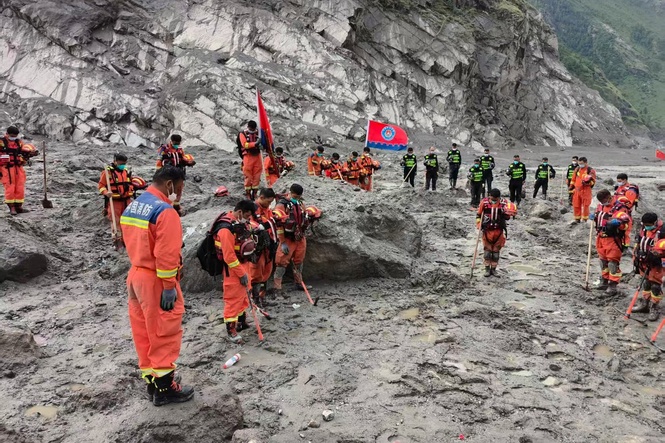
Human rights groups working in the Tibetan side of the border after Nepal’s catastrophic flash floods have accused China of intensifying censorship and limiting access to information flowing out from the region in the wake of the disaster.
Videos, pictures, and news from Nepal have revealed the scale of the devastation, but little information has emerged from the Tibetan side reportedly due to China's stringent censorship.
Nepal's search and rescue teams were racing against time to find survivors almost a week after the devastating flash floods triggered by partial glacial collapse near the Nepal-Tibet border tore through villages, power grids, electricity, and infrastructure.
Death toll in Nepal's flood crossed 1,000 on Tuesday, as rescuers used heavy machinery, helicopters and excavators to reach the thousands still missing.
Videos from the worst-affected villages, accounts from survivors, and updates from authorities have begun to reveal the scale of devastation.
Chinese officials have confirmed that 16 people died in the mudslide in Tibet near Nepal’s border, while foreign nationals were among the 546 missing. Rights groups fear the extent of damage could be far worse.

The International Campaign for Tibet said four villages, Sale, Serchung, Labi and Rizi, were among the hardest hit and almost 300 homes reportedly destroyed in the mudslide. The group said the little information they could gather from the ground suggested the numbers of those impacted by the disaster were “far higher” than the official reports.
The only information emerging from the region has come through Chinese state media, which have periodically released videos of rescue operations, without reporting on first-hand accounts from survivors.
Human Rights Watch claimed local journalists in China have also been barred from the disaster zone and from interviewing families.
The headlines dominating the Chinese papers were of a rare visit of Chinese premier Li Qiang and president Xi Jinping ordering an all-out rescue effort in the region.
Beijing on Monday said it punished 10 people for allegedly spreading “online rumours” about the floods and vowed to crack down on people fabricating “false disaster information” that could mislead members of the public.
It said all 10 people received “administrative penalties”, without specifying the exact punishment meted out to them.
Tibetans have resisted Chinese rule and faced intense state scrutiny since its annexation in the 1950s, with authorities cracking down on any expression of dissent, including perceived separatist sentiment and displays of support for the exiled Dalai Lama, whom Beijing continues to brand a dangerous separatist.
The Communist Party’s strict censorship since the floods appears to be over fears that the disaster could stoke public discontent, rights groups say.
China has been quick to remove evidence of the devastation from its social media platforms.
A video of a wall of water tearing through Gyirong Port, one of the main border crossings between Nepal and Tibet, sweeping everything in its path, quickly spread on social media. Hours later, it was removed from most Chinese social media platforms.
The video of the border wall collapsing was systematically blocked from being shared on the messaging app WeChat, even in private messages, said China Digital Times (CDT), an independent watchdog that tracks Chinese internet censorship.
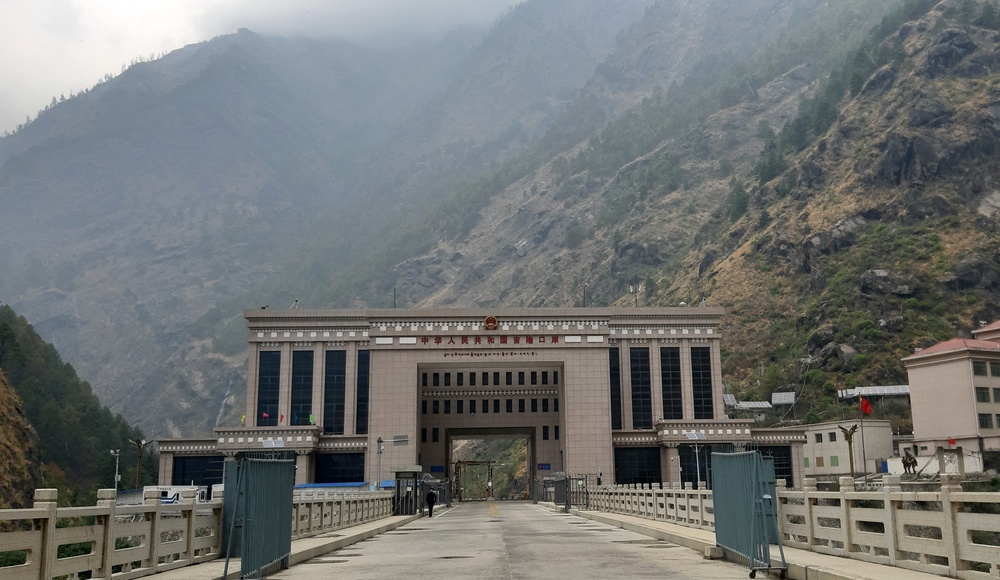
“The footage itself contained no graphic violence, no protests, and no political slogans,” Mira, a CDT editor, told Inquirer.net. “The target of the censorship was the symbol itself: the National Gate.”
The topic “Tibet mudslide” was redirected towards the government’s swift response in an effort to control the narrative. Videos on Xiaohongshu, the Chinese version of TikTok, began disappearing at a rapid speed.
Ryan Fioresi, the executive director of the International Campaign for Tibet, told The Guardian that “if people are afraid to share that information, or if their posts are removed,” then “potentially useful information may not reach families, relief workers or the wider public”.
Maya Wang from Human Rights Watch added that the instinct of the Chinese government has always been to “control and to ensure the narrative which is to portray itself as a very efficient government”.
“There have been questions raised over how the development of the valleys in an ecologically fragile and geologically fragile area may have related to this disaster,” she said.
On Monday, a Chinese foreign ministry spokesperson said the release of information about the floods and mudslide was transparent and timely.
“Malicious smear campaigns and hype using the disaster situation does not align with popular sentiment,” said Guo Jiakun.
This Nepal principal evacuated 900 students before flooding swept away their school
China says ‘there will be consequences’ as Taiwan attends Pacific leaders’ summit
‘Miracle house’ that stood firm as floods wrecked Nepal becomes symbol of survival
China ‘spy ships’ intercepting U.S. military communications, officials say
Fresh flood warning issued in Nepal as death tolls rises above 900
Fifteen Britons among 261 foreigners missing in China after floods