

With the SEA Games 2025 set to take place this December in Thailand, Merdeka season feels like the right moment to reflect on something that binds us together as Malaysians: sports. The rush of victory, the pride of watching our flag rise on the podium - these are moments that ignite national pride. Yet behind the cheers and medals, there’s another side to the story, one that’s often left untold. What does it really mean to wear Malaysia’s colors on the international stage? And more importantly, are our athletes truly given the recognition and support they deserve? Beyond the glory lies a harsher reality - one that forces us to question how this nation treats the very people who sacrifice so much to make us proud.
One such story belongs to Kam Kah Sam, a name not unfamiliar in Malaysia’s karate scene. Born in Kuala Lumpur and raised in Penang, Kam grew up very much a Penangite at heart. His first career path wasn’t in business or corporate life - it was in sports. From the age of 16 until 22, he represented Malaysia in karate while juggling part-time studies to earn his Bachelor’s degree in Business Management. His dedication bore fruit with some of his biggest achievements: a silver medal at the 2009 SEA Games and a bronze at the Asia Karate Federation Championships in 2012. It is also worth mentioning that he won a bronze medal in the 2011 SEA Games as well. You can watch him in action in this video.
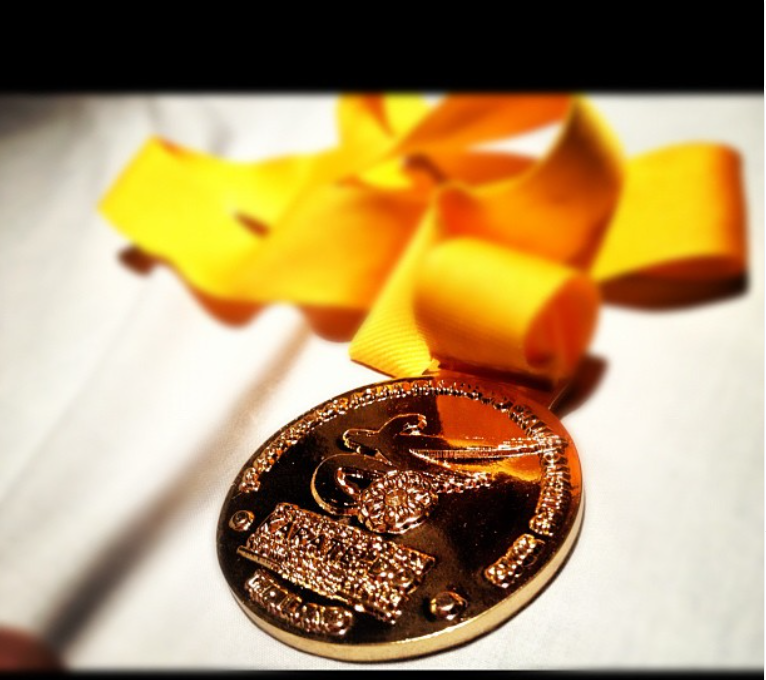
Despite being a two-time SEA Games medalist, Kam Kah Sam revealed in a recent video that he was paid only RM1,400 a month while representing Malaysia. In 2013, just seven months before the SEA Games in Myanmar, he decided to step away from the national karate team to focus on his studies - a move that left a significant gap in Malaysia’s squad at the time.
Today, Kam now more widely known as Sam Kam has built a very different career. He reinvented himself as a realtor and went on to dominate the industry in Penang, earning the title of Top Penang Realtor for eight consecutive years (2018–2024) and even recording a commission of RM200,000 in a single deal. It does make one wonder whether his decision to step away from the national team was shaped by the lack of support and uncertain future faced by many athletes. As he put it in the same video, “there's not much future in it (being a national athlete) so that's why I start being a realtor”.

Kam’s story isn’t unique. Another former national athlete, also from the world of karate, went through a remarkably similar struggle—Theebaan Govindasamy, better known today as Theeban G. Born in Kuala Lumpur and raised in Ipoh, Theeban’s journey began at just five years old when his parents “forced” him into karate, swapping out weekend cartoons for training mats. What started as parental insistence eventually turned into passion. Over the years, he rose through the ranks, representing Malaysia in karate for seven years, winning two SEA Games silver medals, and dominating locally as a seven-time National Champion. In 2016, he even claimed the title of Malaysia’s Welterweight MMA Champion.
On paper, his career sounds like the dream of every young athlete. But reality told a different story. Appearing on Let’s Get It Podcast #86 with Bryan Kong, Theeban revealed the harsh truth: despite his achievements, he was paid only RM300 a month by Majlis Sukan Negara. At the 1:30:08 mark of the podcast, he recounted his daily struggles:
“I remember walking to training every day and thinking to myself, ‘What am I doing? What am I doing?’. I am getting RM300 per month (from Majlis Sukan Negara Malaysia). By the 20th-25th of the month, I have no money already. As a 22-year-old, I had to go home and ask my mom for money.”
Eventually, the financial pressure forced him to leave the national team, despite being one of Malaysia’s top karatekas.

Theeban has been outspoken about the systemic neglect of local athletes. He argues that Malaysia needs to do far more in terms of recognition and support. He believes the government and media should shine a stronger spotlight on athletes in sports like karate, which could inspire the next generation. Over time, greater visibility could expand the talent pool, create more competition, and raise Malaysia’s chances of producing gold medalists.
Another point he stresses is proper incentives. For him, glory and money are not interchangeable:
If you have money, you can afford to talk about glory. But if you don’t, survival comes first—food, rent, basic needs.
Theeban also advocates for deeper investment in grassroots sports. He suggests that any sport capable of bringing back medals—gold, silver, or bronze—should be given meaningful funding to strengthen infrastructure and training programs.
Frankly, his concerns are valid. Take karate as an example. It is one of Malaysia’s two SEA Games gold mine sports, alongside wushu. In fact, karate was the reason Malaysia met its medal target at the 2021 Hanoi SEA Games. Yet, how many Malaysians can actually name a national karate exponent? The answer for most of us is none. That invisibility is the product of neglect from both government and media.
The disregard became even clearer in 2022, when Malaysia’s karate team made history by winning the country’s first-ever gold medal at a world karate championship. Instead of celebrating this milestone, the achievement went largely unnoticed by the Youth and Sports Ministry.
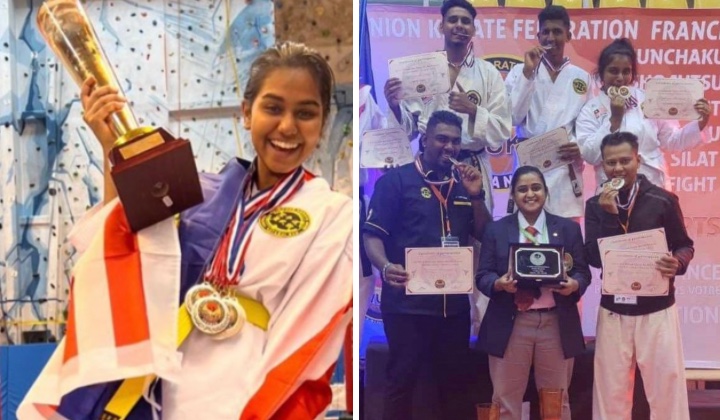
Worse still, the team was left scrambling for funds. According to a report by SAYS (May 12, 2022), spokesperson Thivashini from the International Okinawan Shorin-Ryu Sei-bu-kan Karate-Do Association of Malaysia (IOSSKAM) revealed how they were let down by empty promises from would-be sponsors. Many who initially pledged financial support later disappeared, dismissing the team’s efforts as naïve because of their youth. Although the athletes—mostly Malaysian Indians—did not face racial barriers, raising funds was emotionally crushing. The team needed RM62,271 but managed only RM18,000, of which RM10,000 came from MIC. The financial strain was so severe that Holara Holidays, a local travel agency, had to step in with a “fly now, pay later” arrangement to cover their tickets on Turkish Airlines after local carriers turned them down.
And this is in karate - a sport that has consistently brought home medals for Malaysia. Yet, just months before the SEA Games 2025, the national karate team finds itself in turmoil. At the center of it all is R. Sharmendran, Malaysia’s most decorated karateka with four straight SEA Games gold medals to his name, now serving as coach. For the moment, he continues to guide the squad toward December’s Games in Thailand but his future hangs by a thread.
Sharmendran retired from competition in 2023 and was initially appointed coach of the development squad. But when Egyptian head coach Tamer Abdelraouf Mohamed Mourssy made an abrupt exit last December, Sharmendran was thrust into the senior team’s hot seat as interim head coach. Since then, his position has remained in limbo. The Malaysia Karate Federation (Makaf) is still locked in talks with the National Sports Council (NSC), and no clear decision has been announced.
With the SEA Games fast approaching, the uncertainty surrounding Sharmendran’s role threatens to cast a shadow over Malaysia’s medal hopes. The clock is ticking—but the question remains: will the nation’s most successful karateka be given the mandate to lead?
At the end of the day, our athletes are not just competing for medals - they are pouring their heart, soul, and tears into carrying Malaysia’s name onto the world stage. Every drop of sweat, every sacrifice, every moment of glory on the podium comes at a cost most of us will never truly understand. We cannot expect gold medals when we can’t even provide our athletes with enough to live on.
It is time we recognize that a sport is a sport, and an athlete is an athlete - whether they compete in the Olympics, the SEA Games, or any other arena. Every Malaysian athlete trains just as hard as those we see on the Olympic stage, and every one of them deserves dignity, recognition, and support.
As we look ahead, I hold on to hope that the Ministry of Youth and Sports will take bold steps to ensure no athlete is left behind, and that Malaysians everywhere will stand united in supporting our heroes, regardless of what sport they represent. Because when our flag is raised and “Negaraku” plays, it is not just their victory - it is ours. And that pride is worth protecting.
Aaron Colt (aaronafter@hotmail.com) is a content creator under the Newswav Creator programme, where you get to express yourself, be a citizen journalist, and at the same time monetize your content & reach millions of users on Newswav. Log in to creator.newswav.com and become a Newswav Creator now!
The User Content (as defined on Newswav Terms of Use) above including the views expressed and media (pictures, videos, citations etc) were submitted & posted by the author. Newswav is solely an aggregation platform that hosts the User Content. If you have any questions about the content, copyright or other issues of the work, please contact creator@newswav.com.