
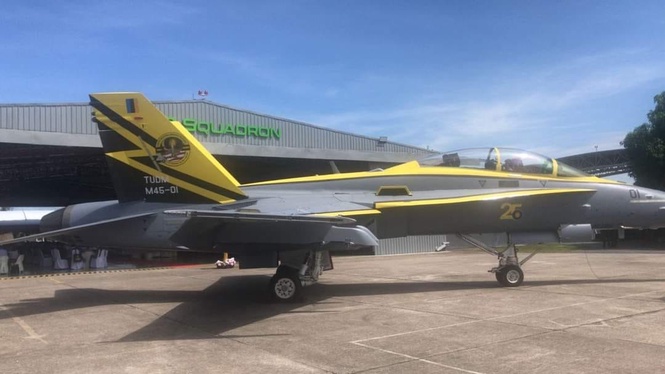
This year (2022) marks the 25th year of RMAF operating the venerable FA18D Hornet variant. Built by then McDonell Douglas, Malaysian Government had procured eight units of the venerable plane, with a supposed second batch to be procured much later on.
Russian Buddies
Together with the FA18D Hornet, Malaysian Government had also procured 18 units of Russian Mikoyan Gurevich MiG29N air superiority aircraft. These consisted of 16 single-seater N versions and 2 two-seater NUB versions for training / conversion training.
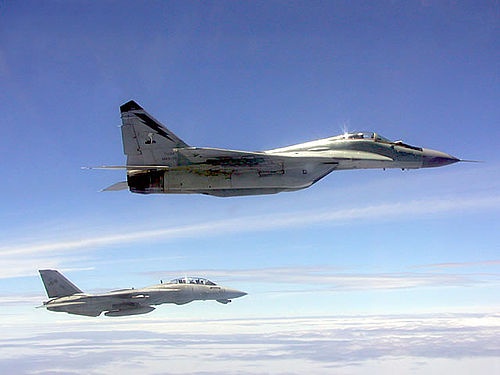
The purchase of the Russian jets raised huge eyebrow as it broke the tradition of the country procuring military platform from the West. Some even warned that the MiG29N procurement was ill-advised. Nevertheless, the procurement did indeed brought RMAF to a new height.
Today
Today, all eight units of the venerable FA18D Hornets are still operational despite one unit had skidded on the runway of Kuching International Airport in March 2003 (The Star). Both crews ejected safely. The fact that the jet was brought back to operational status is the testament of the ruggedness of the plane, originally designed for carrier operations.
It's Russian counterpart however, unfortunately have been retired (The Star). Two single-seater versions were lost in two different air crashes (Astro Awani).
Lack of Foresight or Lack of Understanding of Operational Philosophy?
Some took this as evidence of the lack of foresight of Malaysia going for Russian jets. But I believe the issue is more to the lack of understanding on the Russian operational philosophy against our own operational doctrine.
Our own operational doctrine was largely built with western influence with many pilots were exposed to western operational culture. Not a surprise since we were using western built jets and planes since the start of RMAF.
Western maintenance culture leans towards high precision technology, whereas Russian (read Soviet era) technology focused on ruggedness. Another key element that hugely influence the design and operational doctrine of both sides of the Iron Curtain is where these platforms were expected to operate.
Both jets, designed during the Cold War era, were designed with the view that they would be used in a full-scale warfare between US-led NATO (North Atlantic Treaty Organisation) versus Soviet Russia-led Warsaw Pact, with the likely combat theatre above the sky of Europe. The US, being far away from the probable combat zone, were designed to be rugged and able to survive the heavy stress of combat as replacements will take time to reach from continental United States. Whereas the Soviet, while their designs are also rugged, having to face a much shorter logistical leg, took to the operational doctrine of replacing damaged units with newly produced units from their factories located not too far from the expected combat zones.
These were unfortunately taken into consideration. But then again, who does discuss doctrine these days? These days, it is more about fan-boys getting to fulfil their dreams.
Danny Liew is a content creator under the Newswav Creator programme, where you get to express yourself, be a citizen journalist, and at the same time monetize your content & reach millions of users on Newswav.
Log in to creator.newswav.com and become a Newswav Creator now!
Newswav is solely an aggregation platform and hosts the content. The views expressed and content above including media (pictures, videos, etc) were provided by the author. If you have any questions about the content, copyright or other issues of the work, please contact Newswav.