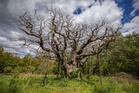
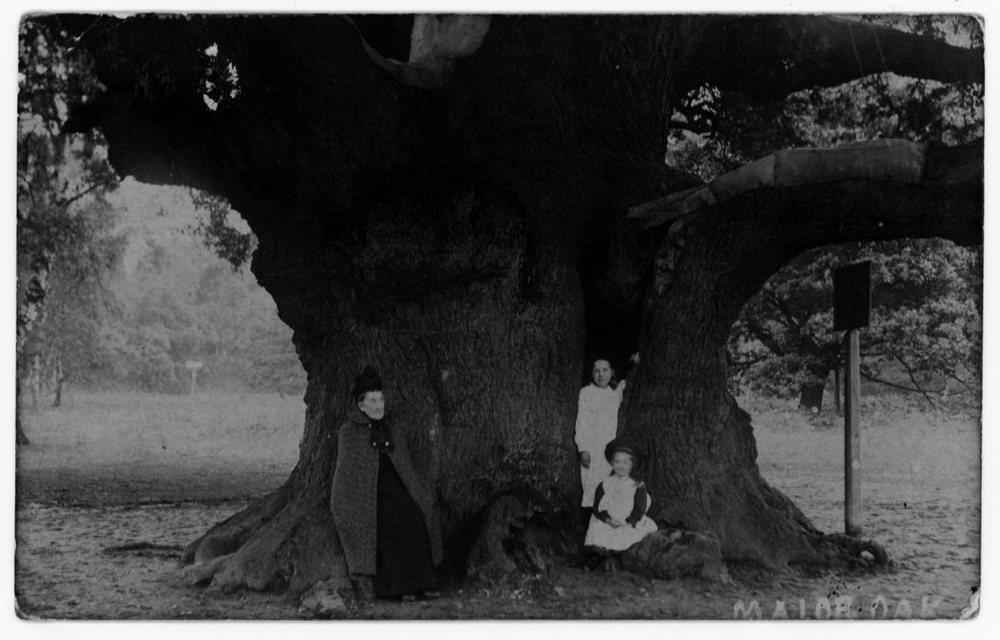
For more than 1,000 years, the world-famous Major Oak – said in folklore to have sheltered Robin Hood – has stood proudly at the heart of Sherwood Forest.
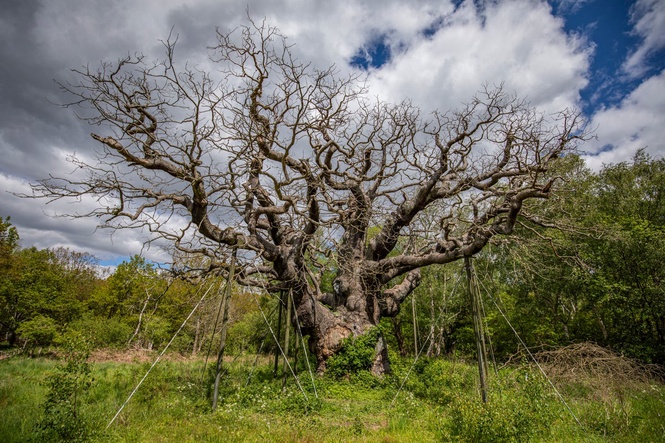
But the ancient tree, one of Europe’s oldest and largest, has now died after failing to sprout leaves following several dry and hot summers.
The tree is said to have provided sanctuary to Robin Hood, the legendary 13th-century bandit who stole from the rich and gave to the poor and took refuge in the Nottinghamshire forest when being pursued by the sheriff of Nottingham. In the winter of 2010, snowfall on the tree traced an uncanny image of Friar Tuck on the trunk.
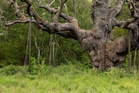
For 200 years, visitors fascinated by the folklore have trekked down to the forest to admire the Oak’s gnarled limbs and sprawling 28-metre canopy in Nottingham – but centuries of footfall have compacted the soil, inadvertently preventing rain from reaching its roots.
While past rumours of the tree’s demise proved false, the Royal Society for the Protection of Birds (RSPB) confirmed on Thursday that the ancient oak failed to grow –despite starting a programme in 2023 to help sustain the oak.
“The tree’s failure to produce leaves this year is heartbreaking for everyone,” Hollie Drake of the RSPB said in a statement announcing the death.
The much-loved tree got its name after being mentioned in a book on oaks by Major Hayman Rooke in 1790, which led to the first wave of fans who flocked to the forest.
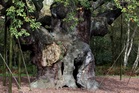
It is impossible to say what killed the tree, but the footprint of millions contributed to its downfall along with intervention to shore up its massive limbs using cables and poles. The UK’s warming climate also brought on scorching heatwaves and droughts.
Tree experts said they found the root system strangled and starved.
Robert Brackley, an outdoor educator who has proudly showed the Major oak to thousands, told The Guardian: “The stories it has given us is the legacy. It’s the most famous tree in the world.
“The legend always lives on. I feel sad but it’s a fleeting moment in time.”
“The Major Oak is the UK’s most iconic ancient tree and it leaves behind a colossal legacy,” said Ed Pyne, of the Woodland Trust.
“Ancient trees like the Major Oak are the ‘conservation white rhinos of the UK’ but their decline is far less visible," he added.
“Saving them is vital to the health of the world we live in and yet most disappear quietly, without the recognition or care given to the Major Oak.”
Dame Judi Dench, patron and ambassador for the trust, said: “The Major Oak has provided inspiration for countless stories, poems, paintings and people for more than a thousand years – all the while itself teeming with life and providing a home to an enormous range of wildlife.
“Ancient trees like this one have put air in our lungs and serenity in our hearts for centuries.”
In addition to its place in folklore, the forest is known for Sherwood oaks that floated the ships of Vice Admiral Horatio Nelson’s Royal Navy in the late 18th and early 19th centuries and as timbers in the roof of St Paul’s Cathedral in London.
Major Oak was spared from the saw and has been protected by a fence since the 1970s.
“The Major Oak will continue to stand at the heart of Sherwood as a natural monument for visitors to come and see, living on in the legend of Robin Hood and continuing to provide as much support to the forest’s ecosystem in death as in life,” Ms Drake said.
Fear of being called racist meant authorities did not stop tragedies – Badenoch
No murder trial for Valdo Calocane ‘robbed’ victims of justice – victim’s mother
Mother of Nottingham attacks victim says there has been ‘miscarriage of justice’
Tommy Robinson speaks to half-empty hall as protesters block Oxford Union debate
Nandy says she has concerns over BBC’s announcement of cuts to content division
Jon Snow’s wife says they felt people ‘struck him off’ after dementia diagnosis