The debate over the status of the Rohingya community in Malaysia is often framed primarily through the lens of humanitarian responsibility.
However, a different perspective has emerged from activist Sophian Mohd Zain, who argues that the circumstances surrounding the Rohingya’s arrival in Malaysia warrant a closer examination of whether they should be viewed solely as refugees.
Sophian, chairman of SURPLUS Penang, an NGO that has actively raised concerns and highlighted issues surrounding the Rohingya community in Malaysia for the past 11 years, argues that the term 'refugee' should not automatically be applied to every Rohingya who enters Malaysia.
At the heart of his argument is the distinction between fleeing persecution and subsequently moving to another country in search of better economic opportunities.
While the Rohingya have undeniably faced persecution and insecurity in Myanmar, Sophian contends that their circumstances change once they have reached a place where they are no longer facing the same immediate threat.
The journey taken by many Rohingya is therefore central to this argument. Rather than travelling directly from Myanmar to Malaysia, many first cross into Bangladesh and settle in Cox’s Bazar, where large numbers of Rohingya have sought refuge and received humanitarian assistance.
From this perspective, the question is not whether the Rohingya were originally forced to flee Myanmar, but what motivates their subsequent movement from Bangladesh to Malaysia.
Sophian argues that once they have reached Cox’s Bazar and obtained a degree of protection from the immediate threats they faced in Myanmar, their decision to continue travelling to Malaysia may be driven increasingly by economic considerations, including employment opportunities, higher incomes and the prospect of a more comfortable standard of living.
This distinction forms the basis of his description of some Rohingya arriving in Malaysia as 'economic refugees'.
The argument essentially separates the initial flight from persecution from the later decision to migrate onwards to another country.
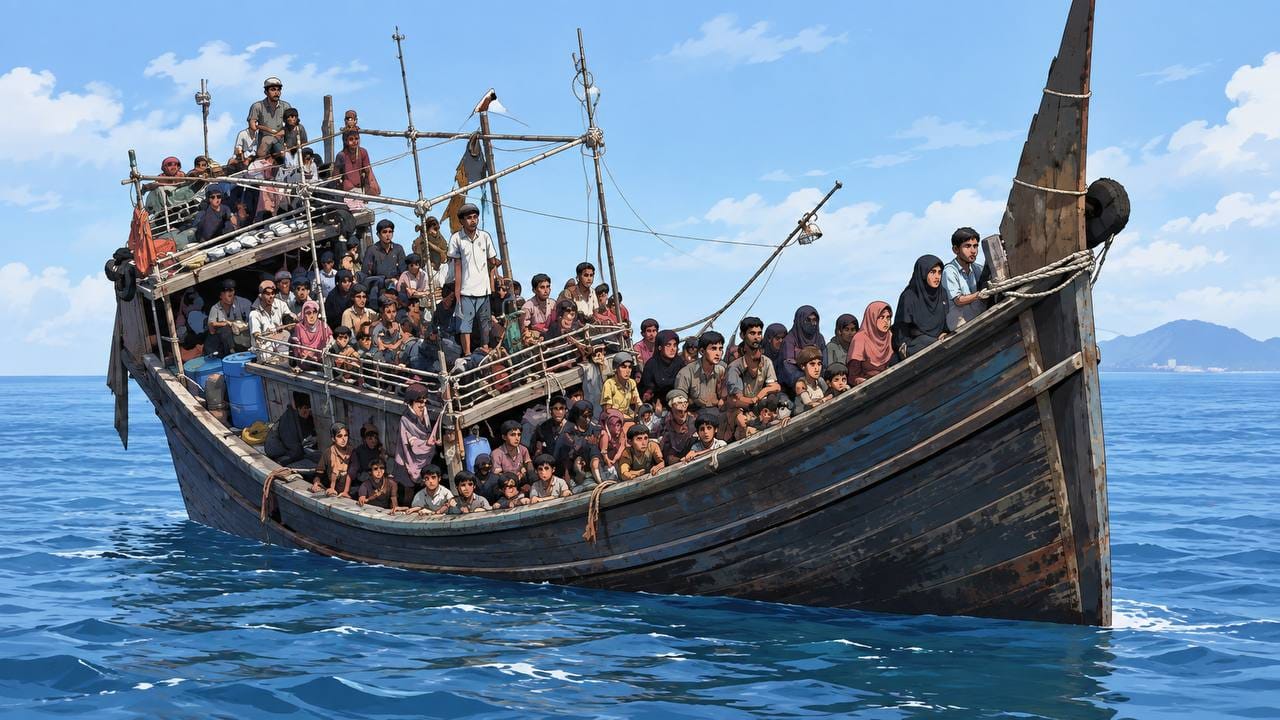
There is, however, another important dimension to the debate: the manner in which some Rohingya enter Malaysia.
Those arriving through maritime routes without valid immigration documents are entering the country outside the established legal immigration system.
This raises a separate question from the humanitarian circumstances that originally forced them out of Myanmar.
A person may have fled persecution in their country of origin, but that does not necessarily mean every subsequent movement across international borders is automatically recognised as lawful refugee resettlement by the destination country.
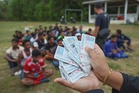
The issue becomes even more complicated when the status of Rohingya holding UNHCR documentation is considered.
Malaysia has not ratified the 1951 Refugee Convention or its 1967 Protocol, meaning the country is not legally bound by those international refugee instruments in the same manner as states that are parties to them.
Consequently, Malaysia does not have a domestic legal framework that formally recognises refugee status in the same way as countries that have incorporated such protections into their national systems.
This creates an important distinction between international recognition and recognition under Malaysian law.
UNHCR may recognise an individual as a refugee under its mandate, but that recognition does not automatically translate into formal refugee status under Malaysian immigration law.
It is also important not to conflate the Rohingya issue with the broader issue of undocumented migrants.
The circumstances that caused the Rohingya to flee Myanmar are fundamentally different from ordinary cases of foreigners entering Malaysia without valid documentation for employment or other purposes.
At the same time, humanitarian considerations alone cannot settle the question of how Malaysia should manage its borders, immigration system and national legal framework.
The Rohingya issue therefore sits at the intersection of two separate considerations: humanitarian protection on one hand, and immigration control and national sovereignty on the other.
The central question is ultimately not whether the Rohingya have experienced persecution. That reality is well documented.
The more contentious question is whether their subsequent movement to Malaysia should automatically be treated as part of the same humanitarian refugee journey, particularly when many have already passed through a third country where they had access to protection and humanitarian assistance.
Sophian’s position challenges the tendency to treat the term 'refugee' as a blanket description for all Rohingya residing in Malaysia.
His argument instead calls for a distinction between those fleeing immediate persecution and those who subsequently migrate in search of economic opportunities.
Whether one agrees with that position or not, the distinction is important because it highlights a broader policy dilemma facing Malaysia: how to balance humanitarian obligations and compassion towards displaced communities with the enforcement of immigration laws and the protection of national borders.
In the absence of Malaysia being a party to the international refugee convention framework, the country ultimately retains the responsibility to determine how it manages individuals who enter and remain within its territory.
That makes the debate over the Rohingya not merely a humanitarian question, but also one involving immigration policy, legal recognition and national sovereignty.
Azzman Mantoya (azzman.tvpertiwi@gmail.com) is a content creator under the Newswav Creator programme, where you get to express yourself, be a citizen journalist, and at the same time monetize your content & reach millions of users on Newswav. Log in to creator.newswav.com and become a Newswav Creator now!
The User Content (as defined on Newswav Terms of Use) above including the views expressed and media (pictures, videos, citations etc) were submitted & posted by the author. Newswav is solely an aggregation platform that hosts the User Content. If you have any questions about the content, copyright or other issues of the work, please contact creator@newswav.com.