
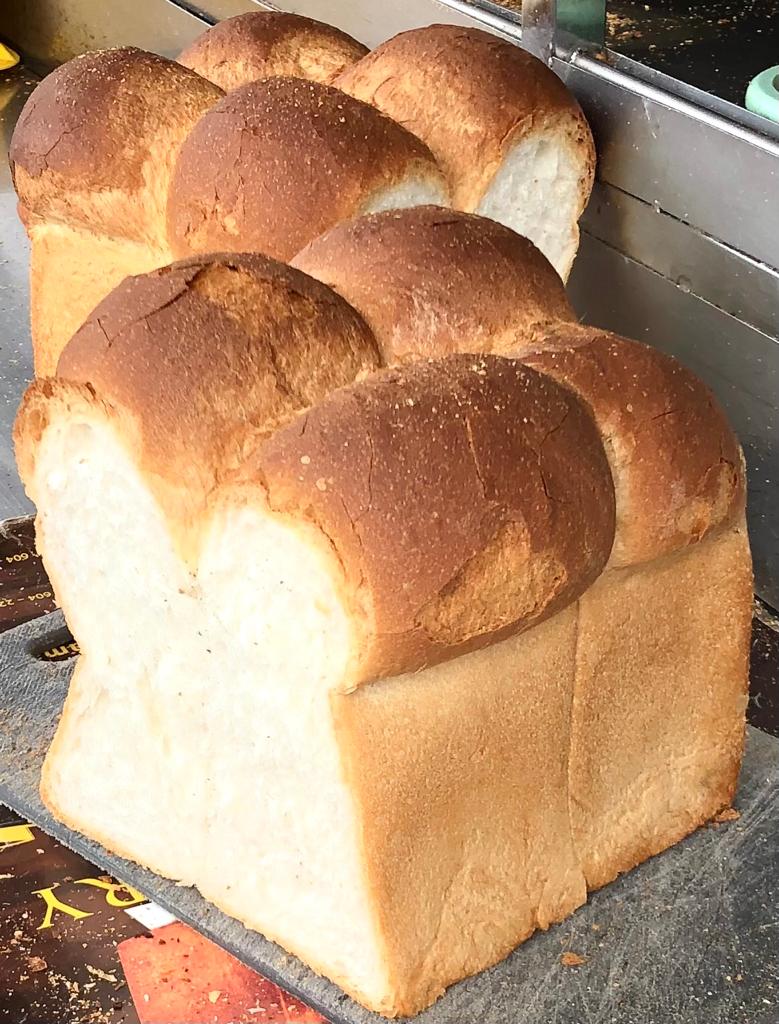
Have you ever heard the bread they called it Roti Benggali? It may sounds like a Punjabi Bread but in reality it is a fragrant loaf of white bread basically made from a mixture of flour and it’s simple ingredients. Once the dough is knead, it will be baked to complete the process. The result is a beauty to the eye with lingering smell of the unforgettable one i.e, Roti Benggali.
How the Roti Benggali got it’s name is still remain mystery until this day. Some would say it was due to mispronunciation of the word “Penggali“ which evolved into Benggali by our local people here. For whatever reason, this Roti Benggali appears not originated from Punjab nor Bengal district in India. Some sources believed that the original recipe was brought here by the Indian Muslim from Madras almost a century ago by their great great grandparents to this land of fortune. On their arrival, they began to set-up bread baking business which has since flourish over the years and handed down their business acumen to their successors for continuity once they have gone.
In tandem with their early settlement here in the northern states, particularly on Penang Island, the Roti Benggali has thus far successfully positioned itself to become a household name for all walks of life. Whether we are Indian, Chinese or Malays origins, all ethnicity here are very familiar with this bread and have ever tasted this unique yet a simple food once in their lifetime. To date, there are a number of well-known bakeries still active in the production to meet local demand and also to cater for those in the neighbouring states.
In a normal scenario, the bread is prepared by spreading the margarine and/or kaya to the top layer before it has been served. The bread can be prepared in many form either fresh, toasted or steamed as we wish. Suitable for morning breakfast, the bread were made available in most coffeeshop in various town and rural areas throughout the country.
Some chinese coffeeshop even spotted still using charcoal to grill of the same to retain its aromatic original taste. In the golden days, the kaya are prepared at home by coffeeshop owner in keeping with their tradition.
On top of that, the coffeeshop may also served the bread with half boiled egg placed in a separate cup or on top of it. For a quick breakfast, some regular customers may opt for a plain of bread by dipping in a cup of hot coffee to kick-off their day.
As regard for the Indian, Indian Muslim and the Malays, they preferred to enjoy the bread with mutton or chicken soup but… Fish Curry was the ultimate choice at tea time or during dinner. During those days, we use to see our mom and dad took the dishes if there is a leftover curry in the kitchen. If you go for a lepak ,some mamak stalls will provide the bread to be taken with a variety of spicy hot soup comprised of ox tail, gearbox, pigeon, beef, quail,mutton, rabbit and the list goes on.
In spite of there are many contemporary breads on sales in the local market, the original Roti Benggali remained popular as ever and never fade away. Stiff competition are normal from new entrants as demand for all kind of bread are on the rising trend lately.
The supply of the Roti Benggali is a non-issue with chain of suppliers are ever ready to deliver to the sundry shop, mini market and retail outlets on time. In addition, the old fashioned way of selling bread by using Riders@ Roti Man are still effective to reach out customers in the housing estate and local kampung area. You will be surprise the residents regardless of race will flock the Roti Man in search for a fresh bread from the oven.
Once in a while, I will make a trip to town with fellow colleagues and drop at the mamak stall to enjoy our favourite bubur kacang served with roti benggali. Beside that, bubur gandum, bubur jagung and bubur kanji are also available worth for a try.
Contrary to the belief that the roti benggali are predominantly confine to one particular race or background were untrue because this kind of food are adored and enjoyed by majority of people in this multicultural society. This signifies the roles it’s has played throughout the years as a unifying factor to bring closer ties to all of us in this beloved nation.
In the end, it unified all the people here for having one shared common food in making our life more meaningful and bring harmony to all #MalaysiaKita
Join our #MalaysiaKita campaign and stand a chance to win prizes worth up to RM9,000 - including a 4D3N stay at Royale Chulan Cherating! Find out how you can participate here.

Azad Khan is a content creator under the Newswav Creator programme, where you get to express yourself, be a citizen journalist, and at the same time monetize your content & reach millions of users on Newswav.Log in to creator.newswav.com and become a Newswav Creator now!
Newswav is solely an aggregation platform and hosts the content. The views expressed and content above including media (pictures, videos, etc) were provided by the author. If you have any questions about the content, copyright or other issues of the work, please contact Newswav.