A post recently shared by TechTimes caught my eye. It claimed that Russia had just unveiled the world’s first cancer vaccine, which was now ready for clinical use. The post quickly gained traction, racking up over 1.2k reactions, 144 comments, and 140 shares at the time of writing. What grabbed my attention, even more, was the sheer number of similar posts across social media platforms, each with their own twist on the story. Several news outlets and social media users quickly followed suit, all echoing the claim that Russia had developed a groundbreaking cancer vaccine that would soon be available to patients for free.
The details, however, were inconsistent across these posts. Some sources referred to the vaccine as "Enteromix", an mRNA-based therapy, and claimed it had shown 100% efficacy in early trials. Other sources simply claimed a “Russian cancer vaccine” was ready for use, without offering much detail. Instagram posts about the vaccine quickly gained massive traction, with one post garnering over 300,000 likes, while another had more than 175,000. Similar stories popped up on Facebook and X (formerly Twitter), but many were vague, offering little more than the basic announcement that a vaccine was ready.
A Newsweek article even jumped on the bandwagon, reporting that Russia’s Enteromix vaccine was ready for clinical use. But it notably stopped short of confirming it was an mRNA vaccine. Amidst the flurry of social media and news stories, one could not help but wonder - did Russia really just create a vaccine for cancer? And if so, what does this mean for the future of cancer treatment?
To answer that burning question, here’s the truth: Russia did not announce that an mRNA cancer vaccine called Enteromix was ready for widespread clinical use in September 2025. Instead, a series of mixed-up details about different cancer vaccines under development in Russia led to confusion. While a Russian official did announce that a vaccine for colorectal cancer was ready for clinical use, the reality behind the announcement was more complex. Other vaccines, including the mRNA vaccine Enteromix and one designed to fight multiple types of cancer, were still undergoing trials.
The confusion seemed to stem from a September 6, 2025, report from TASS, Russia’s state-owned news agency. In the article, Veronika Skvortsova, head of the Federal Medical and Biological Agency (FMBA), confirmed that Russia’s cancer vaccine was ready for clinical use. However, the details were scant, with Skvortsova mentioning only that the initial target for the vaccine would be colorectal cancer. Notably, the TASS report did not reference Enteromix or an mRNA vaccine, nor did it provide any specifics on the broader scope of vaccines being developed in Russia.
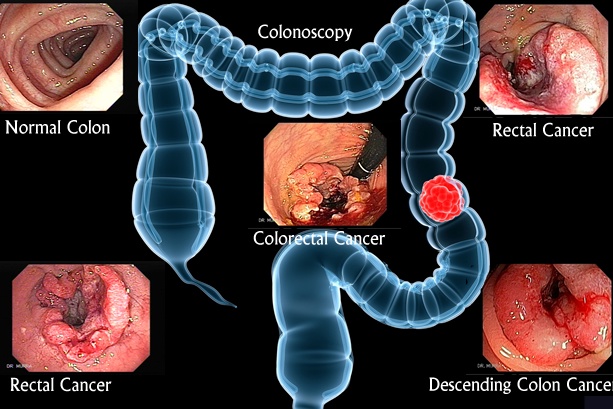
The FMBA’s colorectal cancer vaccine was mentioned separately from the Enteromix mRNA vaccine, which uses viral vectors to deliver genetic instructions to activate the immune system against cancer cells. According to a page on Russia’s National Medical Research Radiological Centre (NMRRC) website, Enteromix is intended to target multiple cancers, not just colorectal cancer. It is designed to use non-pathogenic viruses to help the immune system identify and destroy malignant cells. The mRNA vaccine, on the other hand, is more personalized, aimed at tailoring the immune response based on the unique genetic mutations of a patient’s tumor.
While both the Enteromix and mRNA vaccines were showing promise in preclinical trials, they were far from ready for large-scale distribution. In fact, as of 2025, clinical trials for these vaccines were just beginning, with small groups of patients being selected for early-stage testing. For instance, volunteers with solid inoperable tumors were included in a clinical trial for the Enteromix vaccine, while the mRNA vaccine was set to begin testing on patients with melanoma. Russia had plans to test both vaccines on lung cancer patients later on, but the timeline was still fluid.
What’s more, Russia’s colorectal cancer vaccine, which had been singled out as ready for use, was not the same as Enteromix or the mRNA cancer vaccines. This vaccine was reportedly developed under the FMBA’s direction and was focused specifically on colorectal cancer. It was set to be made available to patients with solid, inoperable tumors, though, like the other vaccines, it was still undergoing clinical trials.
So, where does that leave us? While the idea of a cancer vaccine is undoubtedly thrilling, the information surrounding Russia’s announcements has been misrepresented. Neither Enteromix nor the mRNA vaccines are ready for widespread clinical use, and the details surrounding their development have been murky at best. In fact, Russia is still in the early stages of testing these vaccines, and it will likely be years before they are proven effective and available to the public.
Despite this, the global excitement around personalized cancer vaccines is palpable. Countries like the UK are also advancing their own research into mRNA cancer therapies, though it’s clear that no one is quite ready to declare victory over cancer just yet. For now, the cancer vaccines in Russia are still in the early stages, and while they show promise, they remain far from a cure-all.
In conclusion, while Russia’s announcement of a cancer vaccine was groundbreaking, the hype surrounding it should be taken with a grain of salt. We may be witnessing the dawn of a new era in cancer treatment, but we are still a long way from seeing these vaccines available to patients worldwide. Until then, the true impact of Russia’s cancer vaccines remains to be seen, with much still to be determined through rigorous testing and clinical trials.
Aaron Colt (aaronafter@hotmail.com) is a content creator under the Newswav Creator programme, where you get to express yourself, be a citizen journalist, and at the same time monetize your content & reach millions of users on Newswav. Log in to creator.newswav.com and become a Newswav Creator now!
The User Content (as defined on Newswav Terms of Use) above including the views expressed and media (pictures, videos, citations etc) were submitted & posted by the author. Newswav is solely an aggregation platform that hosts the User Content. If you have any questions about the content, copyright or other issues of the work, please contact creator@newswav.com.