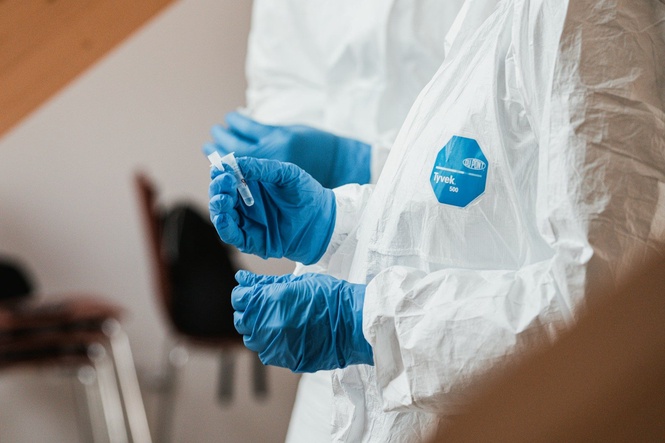
Nearly 200 people were reportedly placed under quarantine after the death of a 28-year-old laboratory worker at an anti-plague research institute in Irkutsk, Siberia.
Reports have differed on the cause: Russian officials initially suggested plague was possible, while the national health watchdog later described pneumonia of unknown cause.
“Plague is a serious disease, particularly when it affects the lungs, but it is also a disease that can usually be treated when recognised quickly and antibiotics are available”
The uncertainty deserves scrutiny. A death involving a worker at a laboratory that handles dangerous infections requires transparent reporting, rapid testing and clear communication with the public. But uncertainty is not, by itself, evidence of an outbreak.
The World Health Organization said no cause of death had been officially confirmed and assessed the risk to the general public as low on the unofficial information then available.
Plague is a serious disease, particularly when it affects the lungs, but it is also a disease that can usually be treated when recognised quickly and antibiotics are available.
What is happening in Irkutsk
The Irkutsk Anti-Plague Research Institute of Siberia and the Far East is part of Russia’s long-standing public-health infrastructure for monitoring and studying infections that can pass from animals to people.
The worker, identified in local reporting as Darya Shipilova, became ill after working at the institute and died on 2 October. Reports have suggested a possible workplace accident, but no official account has established how she became ill, whether she had plague, or whether any infection was acquired in the laboratory.
This distinction matters.
Pneumonia is an inflammation or infection of the lungs. It can be caused by bacteria, viruses, fungi or other conditions. Pneumonic plague is one rare bacterial cause, produced by Yersinia pestis, the organism responsible for plague.
If plague is suspected, public-health teams must act quickly such as identify close contacts, offer preventive antibiotics where indicated, monitor symptoms and investigate any possible source of exposure.
Quarantine may be used as a precaution while laboratory results and exposure histories are assessed. It does not prove that person-to-person transmission has occurred.
Plague is not confined to history books
Plague is caused by Yersinia pestis, a bacterium maintained mainly in wildlife populations, especially rodents and the fleas that feed on them. It still occurs in parts of Africa, Asia and the Americas, including areas of Siberia.
The disease has three main clinical forms.
Bubonic plague, the most common, usually follows the bite of an infected flea. It causes fever, weakness and painful swollen lymph nodes known as buboes.
Septicemic plague occurs when the infection enters the bloodstream. It can develop from untreated bubonic plague or, less often, arise directly. It is a medical emergency and can cause shock, organ failure and bleeding.
Pneumonic plague affects the lungs. It can occur when another form of plague spreads to the lungs, or through inhalation of infectious droplets from a person or animal with pneumonic plague. It is the form that can spread between people through close, unprotected contact.
That possibility makes pneumonic plague a high-priority public-health event. But it does not mean it spreads easily through communities in the manner of measles or influenza.
Transmission generally requires close contact with a person who is actively coughing infectious respiratory secretions, particularly before effective treatment begins.
Why the case matters and why facts matter more
Untreated pneumonic plague can be fatal, sometimes within days of symptoms beginning. The World Health Organization identifies early treatment as essential, noting that untreated pneumonic plague is invariably fatal.
Without antibiotic treatment, bubonic plague can be fatal within days, killing an estimated 30–60% of those infected. Pneumonic plague is rarer but more severe, with an untreated fatality rate of up to 100%.
Yet the same fact points to a practical safeguard, plague is treatable with antibiotics when clinicians recognise it promptly. Modern public-health control also relies on contact tracing, preventive treatment for exposed people, isolation of suspected pneumonic cases and laboratory confirmation.
The greater immediate concern in Irkutsk is therefore not evidence of a global threat. It is whether authorities provide sufficient verified information for clinicians, affected families and the public to understand what happened, what precautions are necessary, and whether any further cases have been detected.
Ambiguous or changing official messages can create a vacuum that rumours quickly fill. In outbreaks and possible laboratory incidents alike, delayed transparency can weaken trust, complicate risk communication and leave frontline health workers uncertain about what they should look for.
Why plague persists
Plague persists because it is primarily an animal disease. Wild rodents can carry the bacterium without it disappearing from an area, and flea populations can help move infection between animals.
Human cases often occur in rural areas where people live or work close to infected wildlife, handle sick or dead animals, or have limited access to health services. Poverty, poor housing, inadequate pest control and barriers to prompt medical care can increase risk, but no individual exposure should be treated as a personal failing.
Climate and environmental change may also alter rodent and flea habitats, although local conditions — wildlife ecology, surveillance capacity and access to care — determine risk in any particular area.
A reported laboratory-associated illness presents a different set of questions.
Research on dangerous pathogens can support surveillance, diagnostics and outbreak preparedness. But laboratories handling such organisms require strict biosafety procedures, trained staff, independent oversight and mechanisms for reporting incidents quickly and accurately.
Early treatment, surveillance and clear public communication help
The tools for preventing deaths from plague are well established.
Suspected patients need urgent medical assessment and antibiotics without waiting for every test result if clinical risk is high. Close contacts of a confirmed pneumonic plague patient may require monitoring and preventive antibiotics. Health workers need appropriate infection-control measures, including respiratory protection when caring for suspected cases.
At community level, surveillance of rodent die-offs and human illness can identify risks before wider outbreaks occur. Public education can help people avoid handling sick or dead animals and seek care early after fever or sudden swelling of lymph nodes in areas where plague is known to circulate.
These measures are most effective when public-health systems can reach people quickly. Remote communities, seasonal workers, people with insecure housing and those distant from hospitals may face the longest delays to diagnosis and treatment — delays that can turn a manageable infection into a fatal one.
The need for an accountable response
WHO said it was aware of reports that a laboratory worker in Irkutsk had died of severe pneumonia, but that the cause had not been officially confirmed.
Its assessment was clear, based on unofficial information available at the time, the public-health risk to the general population appeared low, with the assessment to be updated as more information emerged.
That is the appropriate balance response. Vigilance without alarm.
Russian health authorities and the institute have a responsibility to publish confirmed findings when they are available, including the cause of death, whether Yersinia pestis was detected, the basis for quarantining contacts, and whether any secondary cases occurred.
If a workplace exposure is established, authorities should also explain — without compromising legitimate safety concerns — what safeguards were in place and what corrective action has followed.
The International Health Regulations, the global rules that guide countries’ reporting of serious health events, are built on the principle that timely information is part of public protection.
The public should not have to rely on edited social-media posts or non-credible reports to understand whether an infectious-disease risk exists.
The Irkutsk case should not be used to inflame fears of a plague pandemic. On the available information, there is no confirmed evidence of a wider outbreak or sustained person-to-person transmission.
But it is a test of public-health accountability. A dangerous infection is best contained not by silence, but by rapid diagnosis, effective treatment, protection for workers, support for contacts and factual communication that people can trust.
Plague is no longer the uncontrollable force it was in past centuries. The science to diagnose and treat it exists. The public-interest question is whether institutions will use that knowledge openly, quickly and equitably when it matters most.
The post Russian Lab Worker’s Death Sparks Plague Fears. Here’s What it is Actually first appeared on PP Health Malaysia.