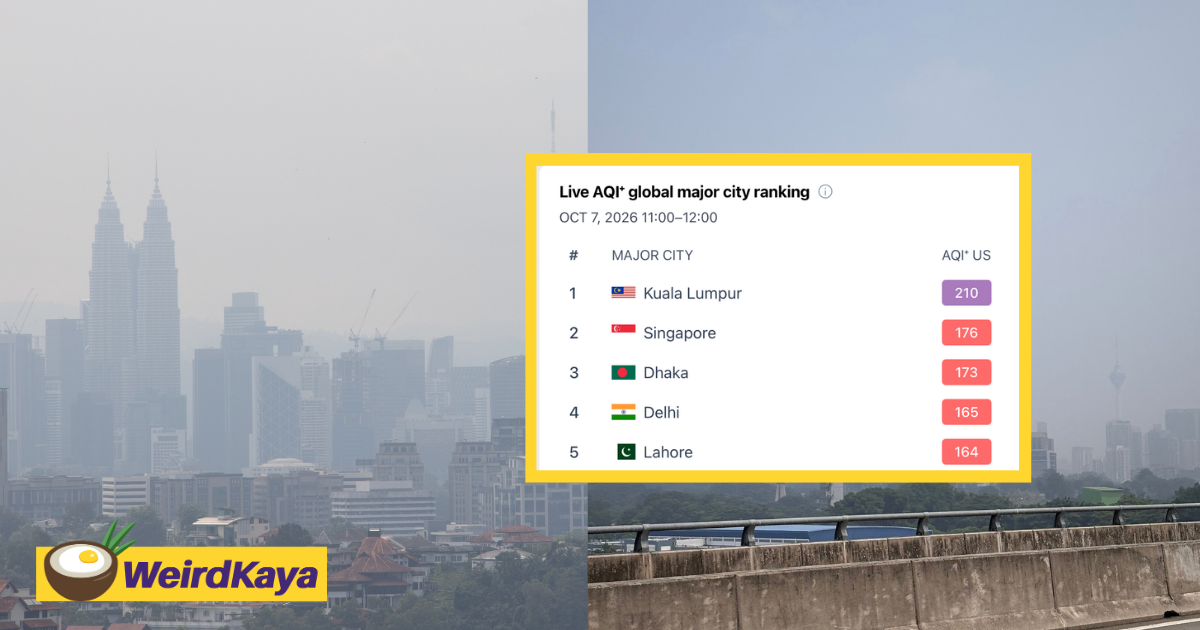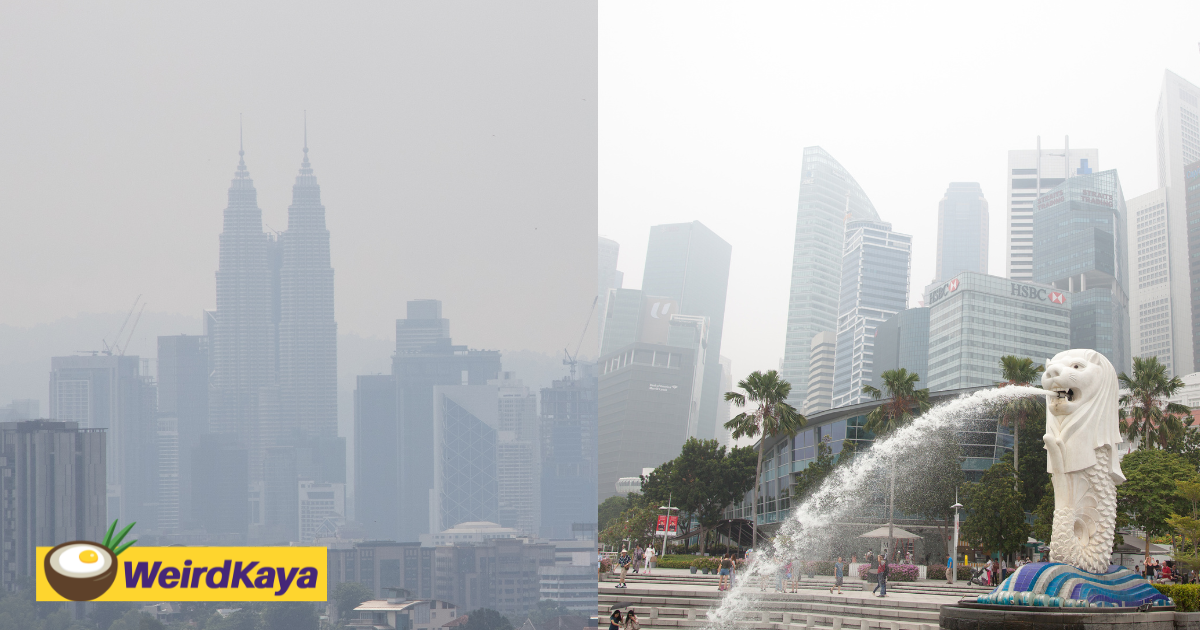
Singapore has overtaken Kuala Lumpur to become the world’s most polluted major city as haze continues to affect the region.
According to IQAir’s live global major city ranking between 11am and 12pm on Oct 9, Singapore recorded a US AQI of 216, placing its air quality in the “very unhealthy” category.
Kuala Lumpur followed closely in second place with a reading of 204, while Lahore, Dhaka and Kolkata completed the top five.

The ranking is updated in real time, so positions can change throughout the day as air quality improves or worsens.
Singapore’s air quality remains unhealthy
Singapore’s National Environment Agency (NEA) reported that haze persisted across the island on Friday morning.
As of 7am, its 24-hour Pollutant Standards Index (PSI) ranged from 111 to 163 across the five regions, all within the unhealthy range.

Meanwhile, hourly PM2.5 levels ranged from 92 in the north to 145 in the west.
IQAir separately recorded Singapore at a US AQI of 206 at 5am, with PM2.5 as the main pollutant at 130.5 µg/m³.
KL still battling very unhealthy air
Kuala Lumpur has also remained among the world’s most polluted major cities throughout the week.
IQAir recorded the capital at a US AQI of 198 at 6am on Oct 9, with PM2.5 levels at approximately 122 µg/m³.
Several monitoring points within the city were even higher, including Bangsar at 214 and Jalan Ampang Hilir at 212.
By the 11am to noon period shown in IQAir’s live ranking, KL’s reading had risen to 204, placing it just behind Singapore.
Smoke haze continues across the region
NEA said moderate to dense smoke plumes from southern Sumatra had been observed drifting towards Singapore, while haze was also detected from hotspots in Kalimantan.
Regional authorities warned that while rain may help improve conditions in some areas, there remains a risk of severe transboundary haze in fire-prone regions that continue experiencing dry weather.
For Singapore residents, NEA advises checking 1-hour PM2.5 readings before immediate outdoor activities, while the 24-hour PSI should be used for planning longer-term activities.
For now, both Singapore and Kuala Lumpur remain firmly among the major cities experiencing the worst air quality globally — though the rankings could shift again within hours.