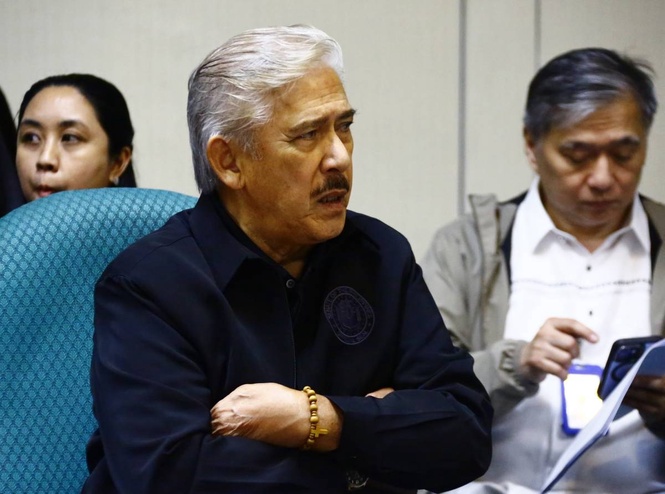
MANILA, Philippines — The Supreme Court has reaffirmed that even harsh criticism of its rulings is protected by the Constitution, dismissing a contempt case against Sen. Vicente Sotto III over his remarks on the impeachment proceedings against Vice President Sara Duterte.
In a decision penned by Senior Associate Justice Marvic M.V.F. Leonen, the SC En Banc ruled that Sotto’s public remarks did not amount to contempt, finding no indication that he intended to incite the public to distrust the Judiciary or obstruct the administration of justice.
The case stemmed from Sotto’s media interviews and social media posts questioning the Court’s decision in the impeachment case against Duterte. Among other things, the senator argued that the ponente was unfamiliar with congressional rules and that the ruling effectively amended the Constitution.
Lawyer Manuelito delos Reyes Luna and other petitioners sought to have Sotto cited for indirect contempt, arguing that his statements disrespected the Court and could undermine public confidence in the Judiciary.
The SC rejected the petition, emphasizing that courts must balance their authority to protect the administration of justice with the constitutional guarantee of freedom of speech and expression.
Citing the doctrine of fair comment, the Court said statements concerning public officials in the performance of their duties do not automatically become punishable simply because they are false, harsh or offensive.
“The guarantee of free speech was enacted to protect not only polite speech, but even expression in its most unsophisticated form,” the Court stressed.
The justices also reiterated that political speech deserved the greatest degree of protection because it represented a direct exercise of popular sovereignty. The Judiciary, like the other branches of government, remains open to public scrutiny and criticism.
In assessing allegedly contemptuous statements, the SC said courts must consider the content of the speech, the speaker’s identity, the medium used, and the message’s likely and actual effects.
The Court acknowledged that social media has complicated the assessment of political speech, as algorithms and online platforms can amplify statements, strip them of context and spread false or misleading information. Nevertheless, it said provocative, harsh or critical remarks remain protected unless they meet the legal standards for restricting speech.
Applying the incitement test, the high tribunal found no evidence that Sotto’s remarks were intended to rally the public against the independence of the Judiciary. Neither did the statements establish a clear and present danger of imminent harm that the State had a right to prevent.
Although the Court recognized that Sotto’s position as a senator gave his statements considerable reach and influence, it noted that most of his remarks were made in response to questions from the media. It also found no indication of bad faith or malice.
Punishing the senator for disagreeing with a judicial ruling, the SC warned, would unduly stifle the ordinary exercise of free expression.
“As a matter of paramount public interest,” the Court said, discussions on impeachment proceedings—including opinions critical of its decisions—should remain free and unrestricted by fears of subsequent punishment.