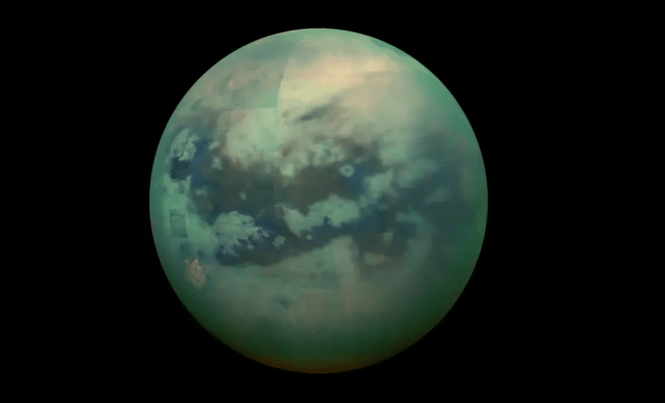
The idea of sending astronauts to Titan, Saturn’s largest moon, has long belonged to the realm of distant dreams. That perception is beginning to change. During the first-ever Humans to Titan Summit 2026, researchers, engineers, and planetary scientists gathered to examine a question that is no longer purely speculative: what would it actually take for humans to live and work on one of the most fascinating worlds in the solar system? While such a mission remains decades away, experts argue that planning now could shape the future of deep-space exploration beyond Mars.
Titan Is Emerging As A Serious Long-Term Destination
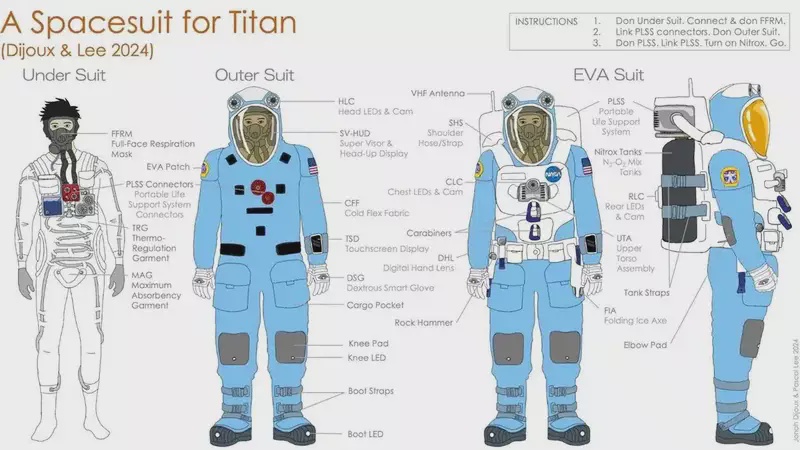
The two-day summit in Boulder, Colorado, marked the first coordinated effort focused entirely on the possibility of human exploration of Titan. Rather than discussing science fiction concepts, participants explored concrete engineering challenges, transportation systems, habitat designs, spacesuits, environmental hazards, and mission architecture. The meeting reflected a growing belief among planetary scientists that the time has come to begin preparing for destinations beyond Mars. Amanda Hendrix, director of the Planetary Science Institute and president of Explore Titan, believes that changing how people think about the moon is an important first step.
“Everyone recognizes that the reality of this is a long way off,” Hendrix told Space.com, “but normalizing the idea — that Titan is actually a very reasonable destination for humans — is important.” She argued that thinking beyond Mars provides a long-term objective capable of sustaining scientific momentum across generations. Taking this goal seriously means that “we can have a next destination in our minds, after Mars,” she added. “That keeps the momentum going.”
Although no human mission is currently being planned, researchers see value in developing technologies today that could eventually make such expeditions possible.
Titan Offers Conditions Unlike Anywhere Else Beyond Earth
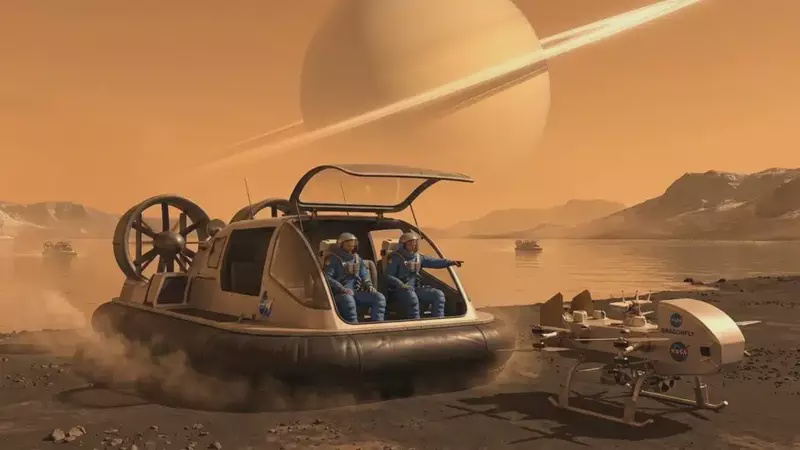
Among the many destinations in the outer solar system, Titanpossesses characteristics that make it uniquely attractive for future explorers. Its thick atmosphere, composed primarily of nitrogen, provides natural shielding against many forms of harmful space radiation, reducing one of the biggest hazards faced by astronauts during extended planetary missions. That atmosphere is also dense enough to make aerial vehicles remarkably efficient, opening possibilities for aircraft and hovercraft capable of traveling long distances across the moon’s frozen landscape.
Scientists at the summit also discussed weather patterns driven by hydrocarbons rather than water, including methane rain, rivers, lakes, seasonal flooding, and powerful winds. These unusual environmental conditions would create operational challenges but also offer unprecedented scientific opportunities. The moon’s abundance of methane, nitrogen, and other chemical resources could eventually support local fuel production and enable exploration deeper into the Saturn system. Hendrix emphasized that considerable preparation remains necessary before such ambitions become reality. “We’ve got a lot of planning to do,” said Hendrix, “but we have time!” She also highlighted what she considers Titan’s greatest natural advantage for human visitors. “The top reason in my mind that Titan is such a good spot for humans is the dense atmosphere,” Hendrix said.
Dragonfly And Future Missions Could Lay The Foundation
The roadmap toward human exploration depends heavily on robotic missions arriving first. Humanity’s understanding of Titan increased dramatically after the European Space Agency’s Huygens probe successfully landed on the moon in 2005 during the historic Cassini-Huygens mission. The next major leap will come with NASA’s Dragonfly, a nuclear-powered rotorcraft currently scheduled to launch no earlier than 2028 before beginning a six-year journey across interplanetary space.
Once it arrives, Dragonfly will spend more than three years flying between multiple scientific sites, collecting samples, analyzing surface materials, and studying the moon’s chemistry with onboard instruments. Data gathered by the mission could directly influence future concepts for habitats, landing systems, transportation vehicles, and astronaut operations. Researchers also envision future orbiters capable of mapping Titan in much greater detail while identifying the safest and most scientifically valuable locations for eventual human expeditions. Every robotic mission expands knowledge while reducing uncertainty for the generations that may ultimately follow.
Building Toward A Future Human Expedition
For Scot Rafkin, director of the Department of Space Studies at the Southwest Research Institute, the summit represented something larger than a technical workshop. It was an opportunity to establish a long-term vision capable of inspiring decades of innovation.
“Everyone recognized that sending humans to Titan is extraordinarily ambitious. But history shows that the greatest achievements in exploration begin when people are willing to pursue goals that seem beyond reach,” said Rafkin. Sharing with Space.comhis personal reflections, he described the gathering as “the beginning of a long-term effort to imagine and ultimately achieve something transformative.”
Rafkin believes the scientific and engineering obstacles are significant but increasingly well understood.
“Human exploration of Titan is not a question of physics,” said Rafkin. “It is a question of time, technology, and commitment. We understand most of the major challenges. We know many of the critical science and engineering gaps that remain.”
Progress in propulsion, robotics, manufacturing, computing, communications, power generation, and life-support systems could steadily move such missions from concept toward reality. According to Rafkin, work can already begin. “Some steps can be taken now, such as sending an orbiter to better characterize the Titan system,” said Rafkin. “Other capabilities will require decades or even generations of development. The challenge is immense, but it is achievable.” He concluded by placing the effort into a broader historical perspective. “It was about starting a movement. If space exploration has taught us anything, it is that ambitious goals accelerate innovation in ways we cannot fully predict. The destination is Titan, but the investment is in ourselves,” Rafkin concluded.