
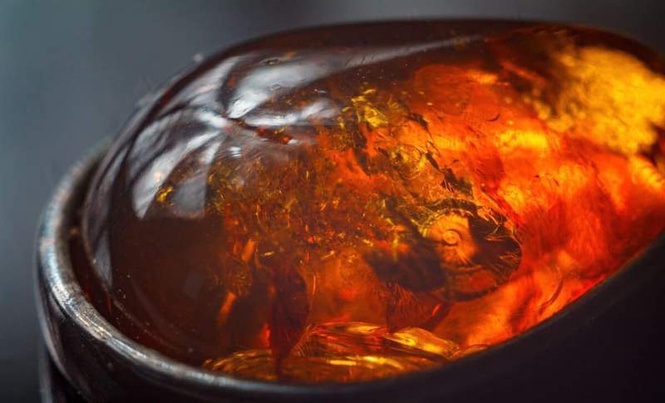
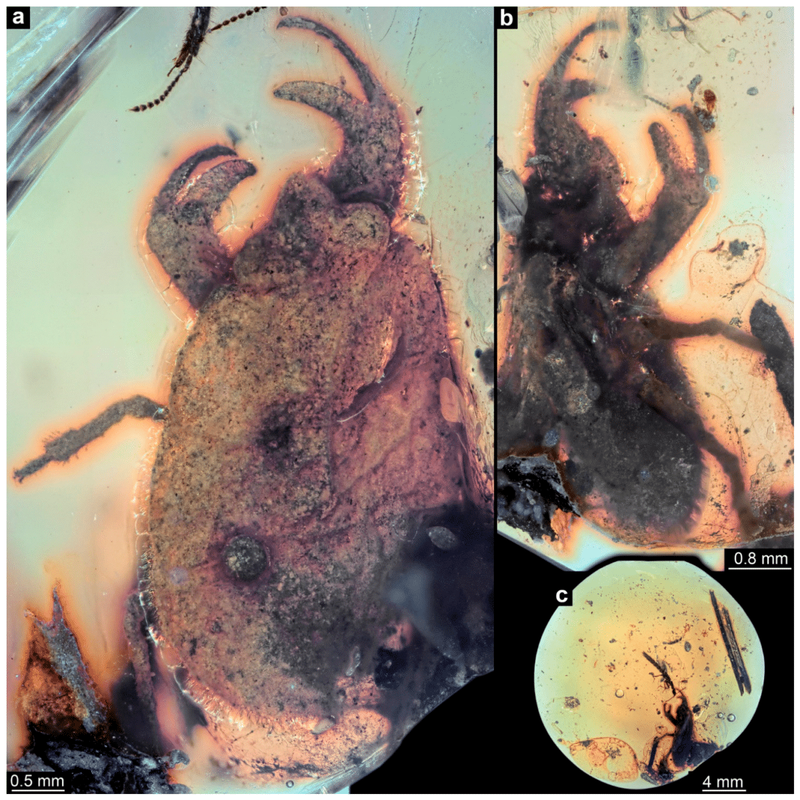
A fossil trapped in amber from Myanmar has revealed a 100-million-year-old true bug with unusual crab-like claws on its front legs. Researchers from LMU Munich identified this as a species never seen before, now named Carcinonepa libererrantes.
The Kachin region of Myanmar is famous for its amber, which preserves ancient life in remarkable detail. Over the years, scientists have uncovered all sorts of insects, plants, and other creatures that tell stories about forests from 100 million years ago. The study published in Insectsnotes that the area keeps producing species new to science, making it a treasure trove for understanding prehistoric ecosystems. One of the strangest discoveries is this true bug with front legs ending in chelae, claw-like pincers rarely seen in insects.
A Closer Look at the Bug’s Claws
Carolin Haug, study author and zoologist, explained in an university statement that such claws had previously been documented in only three other insect groups, making this the fourth known case of independent evolution of these structures.
The study team with the University of Rostock and the University of Oulu, used micro-computed tomography to get a full 3D view of the amber fossil. Their analysis showed that the claws of C. libererrantes are very different from those seen in other insects.
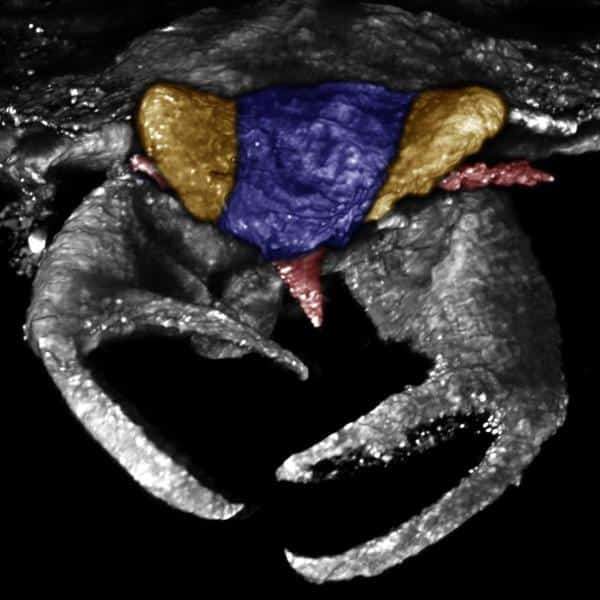
When they compared more than 2,000 claw and grasping structures from living and extinct species, similar forms were mostly found in crabs, lobsters, and shrimps. This demonstrates how evolution can “reinvent” the same tool in unrelated creatures.
A Name With a Twist
Because of its unusual claws, the fossil was assigned its own genus and species. The genus, Carcinonepa, combines “carcino-” (crab) with “nepa,” referencing true water bugs. Haug added that the species trapped in amber was named in tribute to a K-pop group.
“The species name libererrantes is a Latinization of the highly successful K-pop group Stray Kids,” she explained . “The name seemed fitting because the posture of the fossil’s chelae strongly resembles the group’s trademark pose. Stray Kids, I should add, is the favorite band of one of the paper’s authors, Fenja Haug.”
Clues From a 100-Million-Year-Old Predator
Based on its preserved features, C. libererrantesbelongs to the true water bugs, Nepomorpha, closely related to modern Gelastocoridae, or toad bugs. Its claws were likely used for catching small insects, suggesting a predatory lifestyle similar to living relatives.
“The morphology of [the newly discovered bug] suggests that this species had a similar lifestyle,” said Haug. “We can imagine it living in a Cretaceous forest, probably near the coast.”
Its overall body structure indicates it probably inhabited terrestrial or near-coastal environments within Cretaceous forests. Haug adds that studying such fossils helps scientists understand how ancient insects interacted with their environment and reveals the incredible diversity that existed back then.
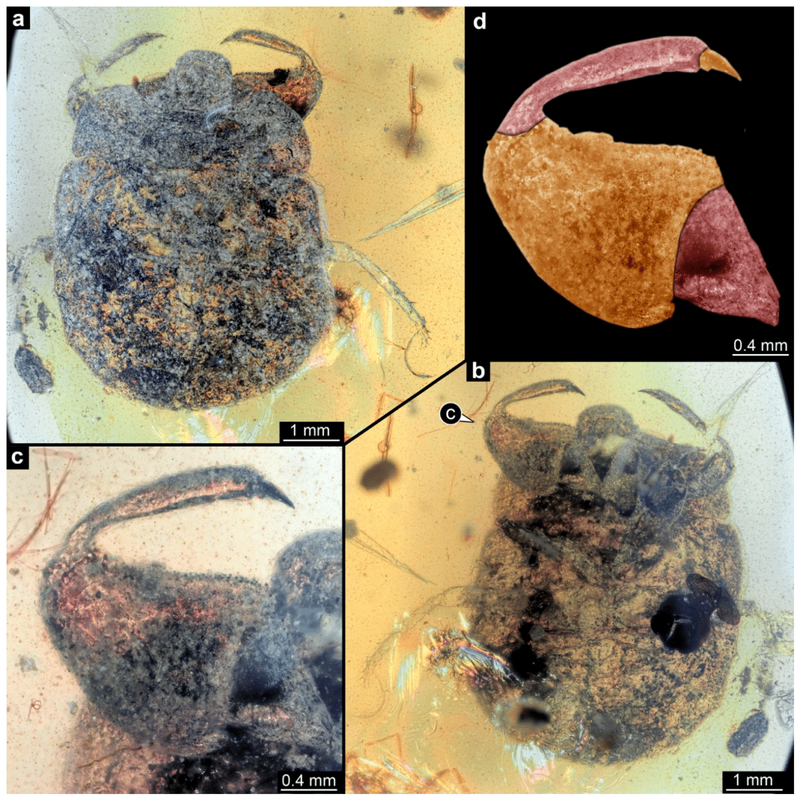
Discoveries like Carcinonepa libererrantes, preserved in amber, show that insects were experimenting with bold designs. LMU researchers highlighted that:
“Amber from the Kachin region of Myanmar has preserved a wealth of fossils offering insights into the diversity of the Cretaceous fauna of a 100 million-year-old forest ecosystem. The site continues to yield previously unknown species.”
Enjoyed this article? Subscribe to our free newsletter for engaging stories, exclusive content, and the latest news.