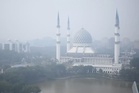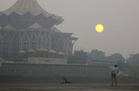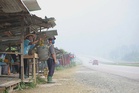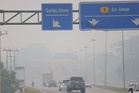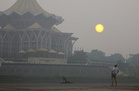
SHAH ALAM, Sept 6 - Face masks will be distributed to areas in Selangor with highest Air Pollutant Index (API) readings, as an additional measure to protect them from the effects of haze.
State executive councillor for public health and environment Jamaliah Jamaluddin said the District Disaster Management Committee (JPBD) will distribute the face masks to civil servants and public, especially those in the vulnerable category.
“The Selangor State Disaster Management Committee is ready to hand over supplies of face masks to the JPBD to be distributed to civil servants and the public as an additional protection measure from the effects of exposure to haze.
“The distribution will give priority to areas recording the highest API readings in Selangor, especially to those in need.
“If it is necessary to be outside, the use of an appropriate face mask can be considered as an additional protective measure,” she said in a statement today.
Jamaliah said measures to address the haze condition and to strengthen the readiness of relevant agencies were made after the increase of API readings in several areas in the state this morning.
She also added that the public health aspects remain a priority for the state government, especially the vulnerable group.
“High-risk groups such as children, the elderly, pregnant women and individuals with heart and respiratory diseases are advised to reduce exposure to haze by limiting physical activity and outdoor activities, especially when the API reading is at an unhealthy level.
“The public is also advised to reduce strenuous outdoor activities, stay indoors if the air quality is unhealthy and always get the latest information on the API reading in their respective areas,” she added.
For the education sector, Jamaliah said the Selangor State Education Department will continue to monitor the API readings at school locations and take appropriate action based on the pollution level and the instructions set.
“Schools are also asked to ensure that the safety and health of students remains a priority throughout the haze period,” she said.
Jamaliah added that the state government will continue to obtain technical information and the latest developments from relevant agencies, including the Environment Department (DOE) and the Malaysian Meteorological Department (MET Malaysia), to help determine appropriate action if the air quality continues to deteriorate.
“The public is asked not to engage in activities that could worsen the air quality situation and always comply with the advice and instructions issued by the authorities.
“The Selangor government will continue to monitor this situation from time to time and take appropriate steps to ensure that the health, safety and well-being of the people of Selangor are always maintained,” she said.
She also urged the public to report any open burning activity via the DOE Hotline at 1-800-88-2727 or the DOE eComplaint application.
For fire incidents that require immediate action, the public can call the Malaysian Fire and Rescue Department's emergency line 999 or 1-800-88-994.
According to the Malaysian Air Pollutant Index Management System (APIMS) portal as of 4pm, 35 areas nationwide recorded unhealthy API levels, while 27 areas were at moderate levels and four areas were at good levels.
Sarawak remained the most affected state with 11 areas recording unhealthy readings, namely Samalaju (196), Samarahan (196), Kuching (191), Bintulu (190), Mukah (188), Sarikei (185), IPD Serian (182), ILP Miri (176), Sibu (174), Miri (170) and Limbang (157).
Kapit was the only station in Sarawak to record moderate readings with an API of 90.
In Selangor, six areas also recorded unhealthy readings, namely Johan Setia (181), Shah Alam (168), Kuala Selangor (158), Petaling Jaya (157), Klang (156) and Banting (155).
Also recording unhealthy readings were Batu Muda (164) and Cheras (162) in Kuala Lumpur, Putrajaya (162) and Labuan (157).