.jpeg)

The issue of human organ trafficking has been a hotly contested topic in Malaysia recently. This is after the Member of Parliament (MP) for Machang, Wan Ahmad Fayhsal claimed that some Malaysians are resorting to selling their kidneys due to dire financial constraints.
Speaking at a press conference in Parliament on 3 April 2023, Wan Fayhsal alleged that this happened due to the government refusing to allow for another withdrawal from the Employees’ Provident Fund (EPF). The Perikatan Nasional (PN) MP claimed that this is no laughing matter and that the Ministry of Finance (MOF) has yet to update him on the government’s plan to help the needy if targeted EPF withdrawals are not allowed.
Without giving any proof of Malaysians selling their kidneys to support themselves financially, Wan Fayhsal’s statement was criticised by lawmakers and medical professionals alike. More so, given how the act of selling kidneys or any other human organs is illegal in our country.
These include the MP for Kuching, Dr Kelvin Yii who branded Wan Fayhsal’s allegation as serious and that proof is needed so that the organ harvesting syndicate can be dealt with by the authorities. Recently appointed as the Special Advisor to Health Minister Zaliha Mustafa, Kelvin stressed that without proof, the allegation is just “irresponsible and cheap politics”.
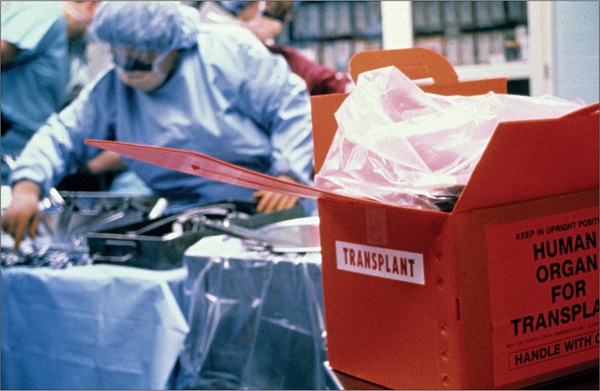
Meanwhile, Dr Abdul Jabbar Ismail, a medical doctor who is a specialist in organ donation branded Wan Fayhsal’s allegations as harmful to organ donation efforts. In fact, the statement may affect the effort to help over 30,000 end-stage renal failure (ESRF) patients undergoing Hemodialysis in our country.
With that in mind, the law governing the matter is actually not as straightforward as it sounds. Moreover, the law that directly punishes someone involved in human organ trafficking is rather obscure and is not found in the place one expects it to be.
Join us as we examine in depth the relevant laws on human organ trafficking in Malaysia below:
Human Tissue Act (1974) and The Declaration of Istanbul on Organ Trafficking and Transplant Tourism (2008)
Firstly, Malaysia is a signatory of The Declaration of Istanbul on Organ Trafficking and Transplant Tourism (2008). With over 100 countries’ endorsement, the declaration states that organs for transplantation should be equitably allocated to suitable recipients without regard to gender ethnicity, religion, social or financial status.
In relation to the subject matter at hand, the declaration emphasised that human organ transplant commercialism should be prohibited because it targets impoverished and vulnerable donors leading subsequently to injustice and inequity. Accordingly, Health Director-General Tan Sri Hisham Abdullah had previously stressed that the Health Ministry does not support any individuals or organisations engaging in the illegal and unethical procurement of human organs.
Besides that, the Human Tissue Act 1974 (Act 130) regulates the legal avenue for the removal of an organ for therapeutic purposes. Specifically, the legislation is an Act to make provisions with respect to the use of parts of the human bodies of deceased persons for therapeutic purposes and for purposes of medical education and research. Section 2 of Act 130 prescribes the following:
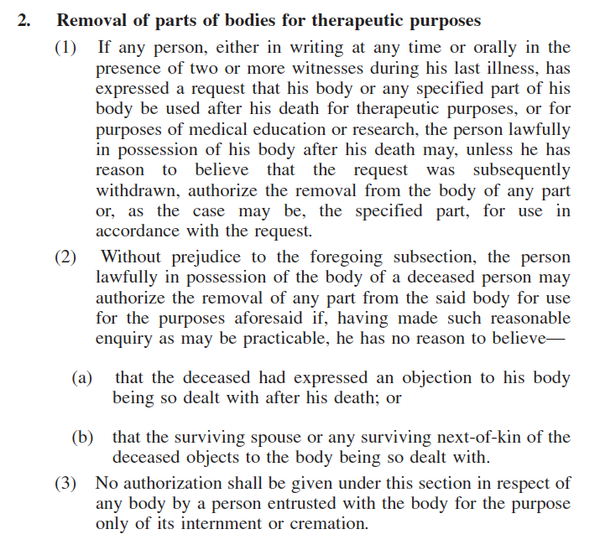
Essentially, Act 130 governs the situations and circumstances which allow for the donation of human organs in our country. Again, it must be reiterated that the commercialism of kidneys or any human organ as mentioned by Wan Fayhsal is strictly prohibited in Malaysia.
The potential punishment for human organ trafficking in Malaysia
While the Human Tissue Act 1974 is the legislation on organ transplants for therapeutic, medical education and research purposes in our country, it doesn’t expressly deal with human organ trafficking. Instead, the legal framework that has criminalised organ trade is under the Anti-Trafficking in Persons and Anti-Smuggling of Migrant Act 2007 (Act 670).
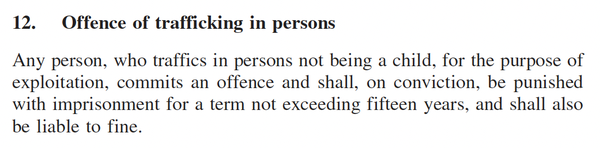
Section 12 of Act 670 prescribes the following:
Furthermore, the Act includes “the removal of human organs” as part of its interpretation of “exploitation”. Section 2 of Act 670 is as below:

Hence, any individual who is found trafficking persons for the purpose of the removal of human organs can be punished with imprisonment of up to 15 years and is liable to a fine. In relation to that, Section 16 of Act 670 adds that the consent of the trafficked person is irrelevant to the offence under Section 12.
Therefore, even if the individual agrees to the sale of his kidney(s) or any other organs, it is still an offence under Act 670. With that being said, there are still gaps in our laws regarding organ trading.
For example, there are no legislations that directly prohibit the selling and buying of human organs in our country. The two mentioned above are only concerned with the circumstances allowed for organ transplants and human trafficking for the removal of organs respectively.

Accordingly, if there is one positive from Wan Fayhsal’s statement, it might be that it highlights the gap or lacuna in our legislation regarding organ trafficking. Towards that end, maybe our lawmakers can take inspiration from a couple of legislations enforced overseas.
One of which is the National Organ Transplant Act 1984 enacted by the United States. This American law bans the solicitation and advertisement of organs for sale, as well as prohibits organ commercialisation for transplantation. Any individual found guilty of offences under the Act is subject to imprisonment and fines.
Besides that, we can also draw inspiration from the United Kingdom’s Human Organ Transplants Act 1989. Essentially, this Act prohibits commercial dealings in human organs intended for transplanting, restricts the transplanting of such organs between persons who are not genetically related and for supplementary purposes connected with those matters.
For more insights into the Malaysian legal system such as this, do make sure to follow us on Facebook and Instagram or visit our official website. You can also read our articles on the popular Malaysian news aggregator app Newswav here.
About us
Ahmad Danial Iswatt & Luqman (formerly Luqman Iswatt & Partners) is an esteemed law firm that delivers best-in-class legal solutions to individuals, businesses and legal entities in Malaysia and beyond. We offer ease of mind to our wide range of clients by dismantling complex legal challenges with novel solutions through exceptional legal advisory and representation.
Our distinguished partners of diverse backgrounds and expertise have achieved significantly favourable results in all levels of courts in Malaysia, from high-profile civil and criminal litigation proceedings to complex cases in which the outcomes have become binding precedents for the laws of the country. Backed by a growing team of exceptional lawyers and capable support staff, we aspire to be at the forefront of the legal sphere to satisfy our clients’ dynamic demands and ever-increasing complexity.
ADIL Legal is a content creator under the Newswav Creator programme, where you get to express yourself, be a citizen journalist, and at the same time monetize your content & reach millions of users on Newswav. Log in to creator.newswav.com and become a Newswav Creator now!
The User Content (as defined on Newswav Terms of Use) above including the views expressed and media (pictures, videos, citations etc) were submitted & posted by the author. Newswav is solely an aggregation platform that hosts the User Content. If you have any questions about the content, copyright or other issues of the work, please contact Newswav.