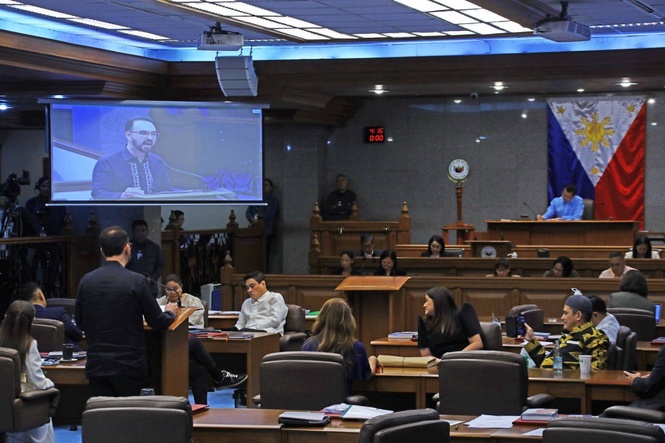
MANILA, Philippines — The Senate on Monday approved a proposed legislation aimed at reducing child deaths and injuries related to tourism activities in the country.
With a vote of 18-0-0, the upper chamber approved Senate Bill 1926 or Sandy’s Act, which would require tourism establishments and destinations to prepare emergency and risk mitigation plans and ensure access to medical response, trained first-aid personnel and lifeguards where necessary. The safeguards would cover both accredited and non-accredited establishments.
Sen. Risa Hontiveros said the measure was inspired by Sandy Garovillas, a child who died after suffering an allergic reaction from a jellyfish sting while vacationing in Palawan.
“The Philippine Senate stands with you to ensure her memory becomes a lasting, living shield for others,” Hontiveros told Sandy’s family, who were present in the session hall.
Hontiveros said the legislation seeks to transform the family’s grief into a nationwide mandate for proactive risk prevention, comprehensive emergency planning and immediate life-saving responses in tourist establishments.
She also noted the inclusion of the Baterbonia-Adili amendment in the measure.
The senator expressed hope that the bill would help prevent other families from experiencing a similar tragedy while on vacation.
“To the Garrovillas family, friends, and all their loved ones, Sandy’s legacy will ensure that no other family will have to return from a vacation with a tragedy instead of a cherished memory,” Hontiveros said.
She also thanked her fellow senators for their unanimous support of the measure, describing the vote as one that would benefit children and the future of the country’s tourism industry.
“I thank all my colleagues for this resounding, affirmative vote for this bill—a vote for our children, a vote for the future of our tourism industry, and most importantly, a vote in the living memory of Sandy,” she said.
Meanwhile, Sen. Mark Villar expressed his affirmative vote for the proposed measure, emphasizing that institutionalizing immediate medical response in tourism spots will protect visitors and boost local tourism.
"With safety mechanisms in place, we will be able to unlock the potential of our local tourism and will bolster tourist arrivals, one which we have been diligently working on," Villar said.
Visitor safety is a critical factor for travelers, expressing optimism that the bill would help restore tourist confidence and drive growth in the country's tourism sector, he added.