
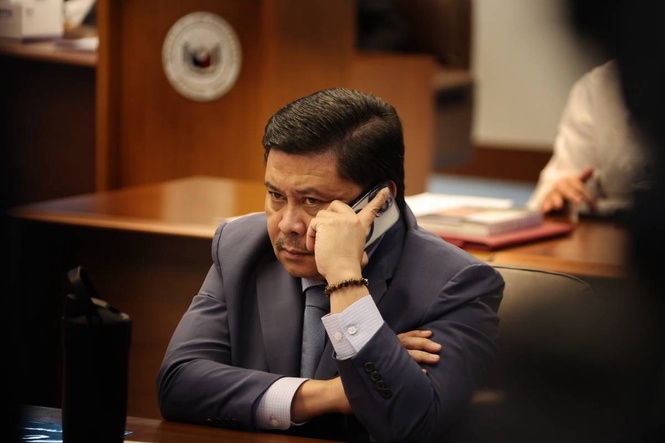
SEN. Jinggoy Estrada wants the Senate to investigate the killings of environmental defenders in the Philippines, which Global Witness has again ranked as Asia’s deadliest country for people protecting land, natural resources and communities.
In Senate Resolution 697, Estrada urged the appropriate Senate committees to examine the findings of the Global Witness 2026 report and determine what legislative measures are needed to protect environmental defenders and ensure that perpetrators are held accountable.
“We must not turn a blind eye, especially as these killings continue. Ordinary people are simply defending their land, livelihoods and the environment, yet they end up losing their lives. This should never happen,” Estrada said.
The report identified the Philippines as the deadliest country in Asia for environmental defenders for the 13th consecutive year. It documented at least 124 land and environmental defenders killed worldwide in 2025.
The Philippines recorded 12 killings, the highest number outside Latin America, tying with Honduras for the third-highest total globally, behind Colombia with 39 and Brazil with 26.
Of the 12 victims in the Philippines, six were Indigenous people, three were small-scale farmers and one was a journalist.
Environmental defenders include individuals and communities who peacefully protect land rights, natural resources and the environment. They include Indigenous leaders, farmers, journalists and community advocates who speak out against activities they believe threaten their land, livelihoods or surroundings.
Global Witness noted that land disputes were linked to more than half of the killings recorded worldwide in 2025. Mining, logging and agribusiness interests were also identified as contributing factors in attacks against defenders.
The report flagged five killings in the Philippines in which members of the military were suspected of involvement. One of the cases cited was that of 65-year-old farmer Veronico Anterio, who was allegedly shot dead by soldiers after speaking out against restrictions on residents’ working hours and movement.
Global Witness also raised concerns over the use of criminalization and “red-tagging” — the practice of labeling individuals or groups as communist insurgents or terrorists — which exposes environmental advocates to threats, harassment and other forms of reprisal.
The Commission on Human Rights has warned about the continuing threat posed by red-tagging. Following a nationwide inquiry in 2025, the commission called for stronger government action to protect human rights defenders, citing the practice of publicly labeling individuals and organizations as communists, terrorists or enemies of the state, often without due process.
From 2012 to 2024, Global Witness recorded a total of 306 killings and disappearances in the Philippines.
The organization cautioned that its figures may underestimate the actual scale of violence because attacks can go undocumented or remain difficult to verify, particularly in areas where conflict, restrictions on civic space and limited independent monitoring hamper investigations.
Estrada said the figures tarnished the country’s international reputation, particularly given its commitments under international human rights agreements, and pointed to shortcomings in protecting Filipinos from violence.
He said the proposed Senate inquiry would allow lawmakers to scrutinize the report’s findings, assess whether existing safeguards are adequate and identify gaps in the law that leave environmental defenders vulnerable to violence and intimidation.
“More than a decade has passed, yet the killings continue. Those responsible must be held accountable, and justice must be served for the victims and their families,” Estrada said.