
Not long ago, a cross-border controversy in Southeast Asia gripped headlines when regional travelers shared horror stories of being arbitrarily turned back or aggressively interrogated at international checkpoints, sparking intense debates on social media about immigration dignity. For the average Malaysian traveler, a passport is an instrument of pride a document that generally grants hassle-free entry to over a hundred nations. Yet, for a vast segment of the global population, crossing a border is an exercise in systemic humiliation, a psychological gauntlet where one's dignity is stripped away the moment the aircraft wheels touch the tarmac.
This harsh reality shattered the glitz and glamour of international sports recently when the Senegal national football team was subjected to intensive security checks right on an airport runway. The viral footage, which spread like wildfire across global sports networks, showed elite athletes including European league stars earning hundreds of thousands of dollars a week standing with their arms outstretched on the concrete while private security wands scanned their uniforms, and officials minutely examined the soles of their feet.
To many onlookers, the optics were deeply troubling: a predominantly Black, African team treated not as celebrated international ambassadors of the world's most popular sport, but as high-risk security threats. While the modern world preaches a gospel of global connectivity, hyper-mobility, and the breaking down of physical walls, this incident reveals a highly selective and deeply stratified border regime. It suggests that no amount of fame, wealth, or diplomatic prestige can fully shield citizens of the Global South from the institutionalized suspicion inherent in Western security apparatuses.
Logistics, Optics, and the Pathology of Control
In the immediate aftermath of the public outcry, the Senegal Football Federation issued a clarification statement explaining that the screening was not a punitive measure upon landing in Texas, but rather a pre-boarding procedural arrangement at Raleigh airport designed to bypass public terminals and optimize travel time to their friendly match in San Antonio. According to official bodies, the procedure was executed in full compliance with standard local transport regulations. Yet, from a sociological perspective, the institutional defense of "standard operating procedure" often obfuscates a deeper, more insidious structural reality.
Analysis suggests that the structural layout of international border control is inherently designed to assert dominance, reducing human bodies regardless of their cultural capital into a set of data points to be monitored, verified, and neutralized.
Even if we accept the operational logic that tarmac screenings were a logistical shortcut, the imagery remains highly potent. It evokes centuries-old power dynamics where bodies from the Global South are subjected to an intrusive level of physical inspection that is rarely, if ever, forced upon their Western counterparts. When the English, French, or German national teams travel across the Atlantic, their transitions from luxury coaches to private charters are characterized by high-security cordons meant to protect their privacy, not search their footwear on the hot asphalt.
The institutional justification that "everyone undergoes this" falls flat when contrasted with the parallel experiences of other visiting delegations. Reports surfaced that during the same international break, the Iraqi national team experienced grueling border delays, with star striker Aymen Hussein held and interrogated for nearly seven hours at Chicago’s O’Hare Airport, while the team’s official photographer was outright denied entry.
The Geopolitical Hierarchy of the Modern Passport
To fully comprehend why this matters to a Malaysian audience, one must analyze the concept of global mobility as a form of currency. The passport a person holds dictates their freedom of movement, their perceived trustworthiness, and their safety when stepping onto foreign soil. Western security mechanisms, largely constructed in the wake of the post-9/11 counter-terrorism paradigm, have systematically codified a hierarchy of nations. In this paradigm, African, Middle Eastern, and certain Asian states are permanently marked with a red flag of inherent suspicion.
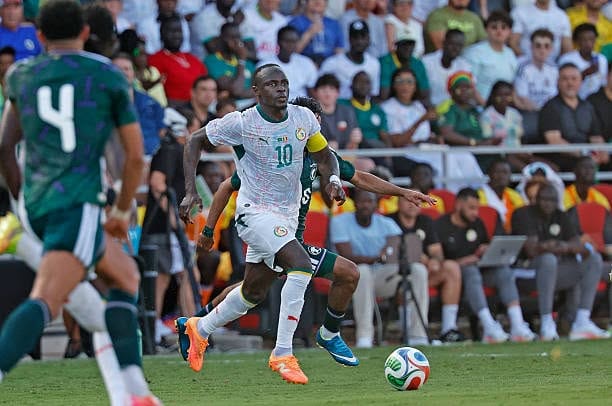
When the provisional 28-man Senegal World Cup squad was selected under Coach Pape Thiaw, it featured a glittering array of world-class talents like Kalidou Koulibaly, Sadio Mané, and Edouard Mendy individuals celebrated globally for their athletic brilliance. Yet, when they encountered the Western border machine, their status as sports icons was instantly secondary to their nationality. This is the core paradox of global capitalism: it eagerly consumes the labor, entertainment, and cultural products of the Global South, but severely restricts, monitors, and penalizes the physical bodies that produce them.
This institutionalized suspicion operates under an umbrella of racialized and geographic bias. The administrative processes of the Global North are frequently weaponized to remind visitors exactly where they stand in the global pecking order. For the Global South, the border is not a welcoming gate; it is a filter designed to detect an imagined contamination, whether that contamination is conceptualized as economic migration, terrorism, or cultural friction.
Cultivating Hostility in the Name of Security
Large-scale mega-events like the FIFA World Cup are traditionally marketed as global festivals of unity, peace, and cross-cultural harmony. The official narratives spun by corporate PR firms depict sports as a universal language capable of bridging ideological divides. However, the realities surrounding these tournaments are increasingly defined by security hyper-vigilance and an atmosphere of hostility. The host nation’s desire to project absolute domestic safety often manifests as an aggressive display of authoritarian control over foreign bodies.
Malaysians, who are deeply passionate about football, understand the immense pride that comes with international representation. When national heroes step onto the world stage, they carry the hopes and collective dignity of an entire populace. To see such representatives subjected to runway body scans and intrusive physical examinations feels like a collective insult. It signals to the fans, the citizens, and the nation-states of the developing world that they enter these arenas not as equals, but as tolerated guests who must submit to arbitrary displays of power.
This aggressive vetting process has broader implications for global tourism and international relations. When even elite, multi-millionaire athletes cannot escape the suffocating reach of border paranoia, it sends a chilling message to regular fans, students, and businessmen from these regions. It validates the assumption that Western security frameworks are inherently hostile environments where the presumption of innocence is a privilege reserved only for a select few.
When the Pitch Cannot Protect You
The modern elite athlete is often viewed as a transcendent figure, someone whose immense wealth, global fan base, and corporate endorsements place them above the mundane struggles of everyday citizens. We live in an era where top-tier footballers are treated like royalty, traveling in private jets, staying in six-star resorts, and possessing a level of social capital that rivals world leaders. Yet, the tarmac incident involving the Teranga Lions proves that this transcendence is completely conditional.
When Sadio Mané or Nicolas Jackson wear their club jerseys in the English Premier League or the Saudi Pro League, they are adored commodities. But when they step onto an American runway wearing the green, yellow, and red of Senegal, the protective shield of corporate celebrity status vaporizes. They are forced to comply with the demands of an airport security guard who possesses the state-sanctioned authority to halt their progress, search their persons, and remind them of their fundamental vulnerability.
This reality serves as a powerful wake-up call for the entire sports ecosystem. It exposes the limits of athletic soft power. Football can make you rich, it can make you famous, and it can win you trophies but it cannot rewrite the rigid geopolitical scripts that govern global migration. On the tarmac, away from the roaring crowds and the soft lighting of the television studios, the pitch cannot protect you from the historical and systemic biases embedded within global institutions.
What do you think? I’d love to hear your opinion in the comments section.
What happened to the Senegalese squad is a fractured mirror reflecting the broader inequalities that define our contemporary world. It forces us to look past the sanitized, commercialized imagery of international sports and confront the stark asymmetrical power balances that still dictate human interactions across borders. It reminds us that behind the rhetoric of global unity lies a world still fiercely divided by historical prejudices, economic divides, and an obsessive need for institutional control.
As we watch these athletes perform on the grandest stages, scoring spectacular goals and lifting trophies, we must remember the unseen gauntlets they run just to be present. The border remains the ultimate arbiter of human value in the 21st century, a place where equality goes to die and where the historical wounds of colonialism and global disparity are reopened daily under the cold, indifferent glare of security wands.
The conversation sparked by these viral clips should not be dismissed as a minor logistical misunderstanding or a passing social media storm. It touches upon the core of our shared humanity and the structural dignity we owe to one another, regardless of the passport we carry or the color of our skin. It challenges us to question the systems we have built and to demand a world where a journey across the globe does not require the surrender of one's fundamental respect.
AM World (tameer.work88@gmail.com) is a content creator under the Newswav Creator programme, where you get to express yourself, be a citizen journalist, and at the same time monetize your content & reach millions of users on Newswav. Log in to creator.newswav.com and become a Newswav Creator now!
The User Content (as defined on Newswav Terms of Use) above including the views expressed and media (pictures, videos, citations etc) were submitted & posted by the author. Newswav is solely an aggregation platform that hosts the User Content. If you have any questions about the content, copyright or other issues of the work, please contact creator@newswav.com.