
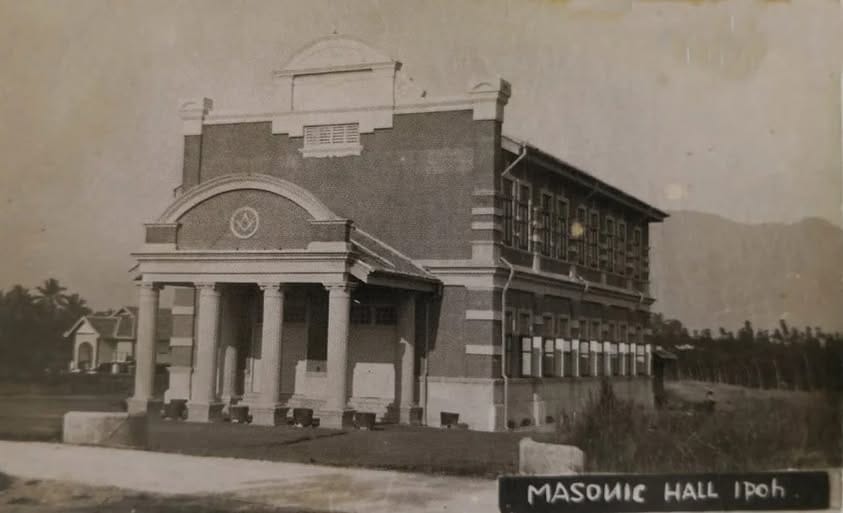
In 2026, a routine scroll through Malaysian social media suddenly devolved into a digital witch hunt. Allegations erupted online claiming that a senior lecturer at Universiti Malaya, the nation’s premier academic institution, was secretly affiliated with an overseas Masonic lodge. Within days, the university felt compelled to issue a public statement, confirming it had launched an internal investigation to handle the controversy fairly and transparently, as reported by The Star. To the average modern netizen, this seemed like a bizarre 21st-century digital trial, but for anyone who understands the deep psychological undercurrents of Malaysian politics, it was just another day in the country’s longest-running ideological theater. The panic was immediate, the accusations painted the fraternal society as inherently un-Islamic, and the institution found itself defending its governance protocols against a ghost, a narrative thoroughly detailed by Free Malaysia Today. Why does a centuries-old European fraternal organization still strike such acute fear into the hearts of modern Malaysians, and how did a society built around stonecutters’ rituals become one of the most potent, debate-baiting weapons in the Malaysian political arena?
From Colonial Sanctuaries to the Elite Royal Corridors
To truly dissect this phenomenon, one must dismantle the layers of historical amnesia that plague modern political discourse. Freemasonry is not a shadowy specter that slipped through Kuala Lumpur's back doors yesterday; it was woven tightly into the fabric of British Malaya's elite social structure. Decades ago, the fraternity did not carry the scandalous political baggage it does today. In fact, research published in the USIM academic journal Al-Abqari highlights that British Malaya saw native rulers, most notably Sultan Sir Ibrahim of Johor, get initiated into the fraternity as a calculated geopolitical strategy to reinforce political authority without invoking British colonial animosity. Far from a rejection of his faith, historical analysis suggests that the Sultan even attempted to synthesize European bureaucratic efficiencies exposed through Masonic practices with Quranic admonitions to improve the administration of Johor.
The physical legacy of these historical cross-currents remains hiding in plain sight across Malaysia. Lodges like Lodge Tullibardine in-the-East No. 1118 S.C., established under the Grand Lodge of Scotland, operated openly in Kuala Lumpur, drawing a membership roster comprised of colonial administrators, prominent entrepreneurs, and eventually, high-ranking Malaysian professionals. To the early Malay working class, however, these grand, windowless brick buildings where wealthy men gathered in secret ceremonies were deeply unnerving. Lacking structural transparency, the local populace dubbed them Rumah Hantu (Ghost Houses), a cultural moniker born out of a natural suspicion toward the secretive ruling class. Over time, what began as a colloquial nickname morphed into a sinister institutional narrative.
The Ultimate Political Smear and the Architecture of Fitnah
In the modern Malaysian political theater, the word "Freemason" has transitioned from a historical curiosity into the ultimate weapon of character assassination. It functions as a master key of political slander, often bundled together with accusations of Zionism, Mossad collaboration, and Western espionage. When political rivalries heat up, logic is frequently suspended in favor of emotional manipulation. Consider the high-stakes climate surrounding the 15th General Election (GE15). Just a day before voters headed to the polls, a viral video alleged that high-profile political, media, and corporate figures were holding a secret meeting to execute a Freemason-backed agenda. The accusation was so volatile that veteran media personality Datuk Hussamuddin Yaacub had to issue an aggressive public denial, calling the rumor a "cruel slander" (fitnah yang zalim) meant to sabotage democratic processes, an event captured vividly by Sinar Harian.
This weaponization of Masonic conspiracies knows no partisan boundaries; it is an equal-opportunity mud-slinging tool. Even Prime Minister Datuk Seri Anwar Ibrahim has repeatedly found himself at the receiving end of these tactical whispers. During a heated political campaign in Kedah, Anwar openly confronted his detractors, pleading with the electorate to reject narrow politics and slander, stating, "If you don't like me, that's fine, but don't call me a Freemason agent," a defense archived via his official YouTube Channel. This analysis reveals a sobering truth about our socio-political landscape: accusing an opponent of being connected to a Masonic lodge is a highly effective shortcut to delegitimize their moral standing among Malay-Muslim voters, completely bypassing the need for factual policy debates.
What the Archive Tells Us: The Parliamentary Cross-Examinations
Despite the relentless rhetoric echoed on contemporary social media platforms, the Malaysian state's official relationship with Freemasonry has historically been far more pragmatic, bureaucratic, and surprisingly transparent. A deep dive into the historical archives of the Malaysian legislature reveals that the "Masonic Question" has been formally debated on the floor of Parliament for decades. According to the Penyata Rasmi Parlimen dated April 21, 1977, the Ministry of Home Affairs openly stated that while the government had carefully monitored Masonic movements for years, police investigations yielded absolutely no concrete evidence that their activities posed a threat to national security or public order.
Yet, the cultural and religious anxiety refused to dissipate. By November 1978, the debate shifted heavily from national security to religious orthodoxy. Parliamentary records from the Penyata Rasmi Parlimen November 1978 show MPs explicitly questioning whether Muslim citizens who joined these lodges should be formally declared apostates (murtad). This institutional tension was further illuminated in parliamentary order papers, such as the S. *3, 1 Parliamentary Document, where lawmakers pressed the Prime Minister's Department to clarify what exact religious transgressions were being committed inside these lodges. The state was caught in a structural paradox: legally, the societies were monitored but un-banned under civil law, while culturally, they were increasingly viewed as an existential threat to the spiritual fabric of the majority populace.
The Paradox of Philanthropy and the Boogeyman Complex
What makes the discourse surrounding Freemasonry in Malaysia so utterly fascinating is the stark disconnect between its public operations and its conspiratorial reputation. On one hand, the fraternity has quietly engaged in standard civic philanthropy within the country for decades. For instance, a report by The Star documented how the Joseph William Yee Eu Foundation a Masonic philanthropic arm awarded academic scholarships to deserving Malaysian university students, funding dreams ranging from veterinary science to corporate degrees. Furthermore, the fraternity has made attempts to step into the sunlight of legal legitimacy; while earlier statements from the Registrar of Societies in 2020 cast doubt on their overall registration compliance, certain entities like the Sovereign Grand Lodge of Malaysia have claimed formal registration under the Societies Act since October 2018.
Yet, no amount of charity or legal paperwork seems capable of erasing the "boogeyman complex." As analyzed by commentators in letters to the editor in The Star, the public’s obsession with Masonic secrecy often completely overshadows the mundane reality of what actually occurs behind closed doors which mostly amounts to routine boardroom meetings, financial reporting, and standard networking among middle-aged professionals. But in a country where political leverage is built upon the defense of cultural and religious identity, the preservation of an elusive, elite enemy is highly useful. It satisfies a psychological need to attribute complex socioeconomic anxieties like rising inflation, political corruption, or shifting cultural norms to a single, coordinated, hidden hand rather than systemic structural flaws.
What do you think? I’d love to hear your opinion in the comments section.
The ongoing obsession with Freemasonry within Malaysian politics is ultimately not a reflection of the fraternity's actual power, but rather a mirror held up to our own societal anxieties. We live in an era where the line between verified fact and digital sensationalism has become dangerously blurred. The moment a political figure or an academic is labeled a "Mason," it triggers an immediate emotional response that shuts down critical thinking, splitting the public into camps of defense and absolute condemnation. It shows how deeply our political machinery relies on invisible enemies to maintain ideological discipline and rally the masses. Instead of interrogating policy failures, economic mismanagement, or institutional loopholes, it is far easier to point toward a Rumah Hantu and blame a secret society for the nation’s fractures.
This brings us to a crucial crossroads as a society. As long as we allow these shadowy narratives to dominate our national discourse, we remain distracted from the very real, tangible challenges that require our collective attention. Real power in Malaysia does not reside in secret handshakes or cryptic rituals inside hidden lodges; it resides in the laws we pass, the governance we demand, and the transparency we enforce in broad daylight. We must ask ourselves whether we want to remain captive to historical ghosts or if we are ready to demand a mature political culture built on visible truths and accountable leadership.
AM World (tameer.work88@gmail.com) is a content creator under the Newswav Creator programme, where you get to express yourself, be a citizen journalist, and at the same time monetize your content & reach millions of users on Newswav. Log in to creator.newswav.com and become a Newswav Creator now!
The User Content (as defined on Newswav Terms of Use) above including the views expressed and media (pictures, videos, citations etc) were submitted & posted by the author. Newswav is solely an aggregation platform that hosts the User Content. If you have any questions about the content, copyright or other issues of the work, please contact creator@newswav.com.