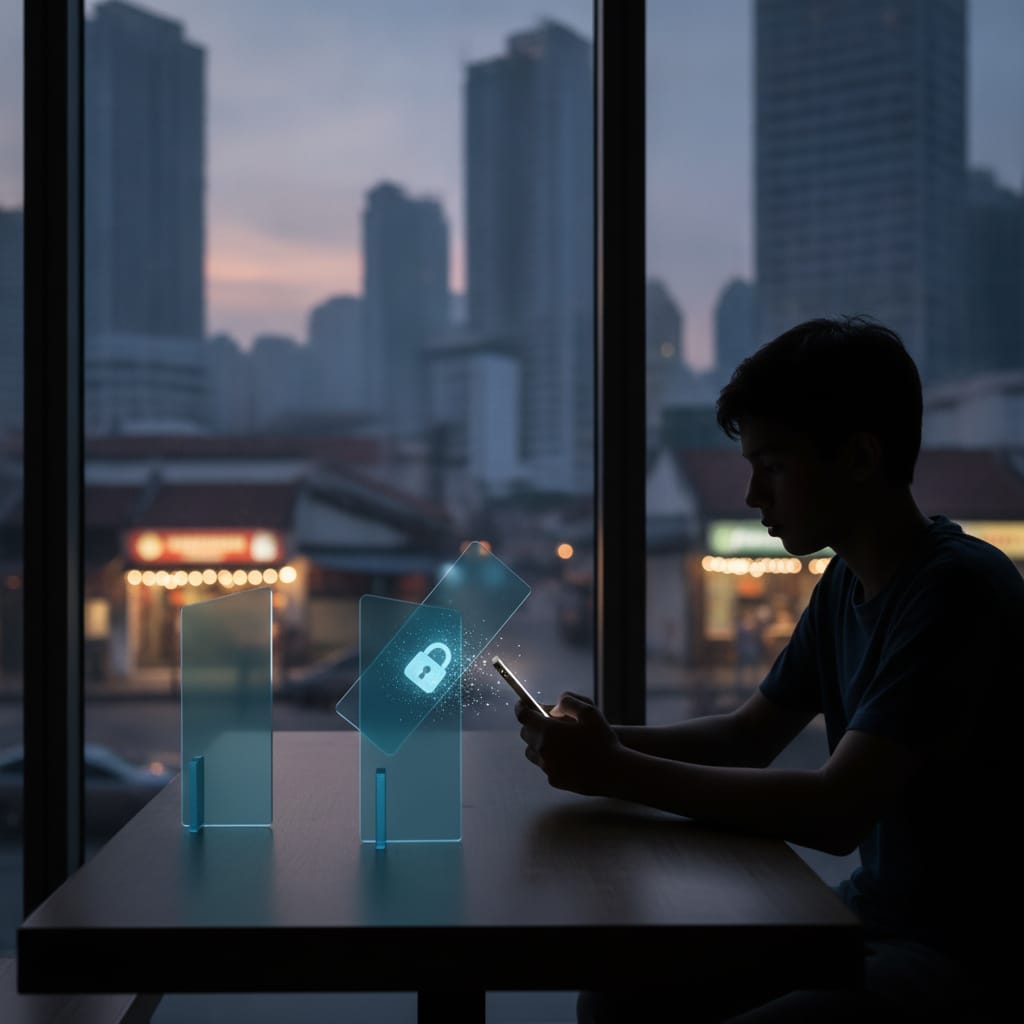
For over a decade, Malaysian households have engaged in an unspoken, cross-generational compromise: the "digital nanny."
Walk into any kopitiam in Kuala Lumpur, a trendy café in Penang, or a family restaurant in Johor Bahru, and the scene is identical. Toddlers, children, and young teens sit illuminated by the blue light of smartphones, pacified by the infinite, dopamine-driven scrolls of TikTok, Instagram, and YouTube Shorts.
However, on June 1, 2026, the Malaysian government officially pulled the plug on this digital sedative. With the formal implementation of the Risk Mitigation Code (RMC) and the Children’s Protection Code under the Online Safety Act 2025, Malaysia has taken one of the boldest legislative steps in Southeast Asia.
Social media platforms boasting more than 8 million domestic users are now legally required to enforce strict age-verification protocols. Using secure national digital infrastructure—such as MyKad verification and MyDigital ID integration—these platforms must aggressively block children under the age of 16 from registering or maintaining accounts. Failure to comply exposes tech conglomerates to staggering fines of up to RM10 million.
Predictably, the move has triggered a wave of anxious pushback. Critics have decried the law as a Trojan horse for state-level digital surveillance, an infringement on personal liberties, and a heavy-handed overreach by a nanny state.
But let’s be entirely clear: this is not an act of censorship. It is a vital, long-overdue public health intervention.
The Feed is Not a Playground
To understand why this digital border wall is necessary, we must stop viewing social media as a benign public park. Algorithms designed by Silicon Valley and ByteDance are sophisticated, multi-billion-dollar engines engineered for maximum psychological capture. They operate on variable reward schedules—the same psychological mechanism that makes slot machines addictive.
For an adult, navigating this landscape requires self-regulation. For a developing brain under 16, it is an uneven, predatory fight.
According to data collated by UNICEF and various youth mental health advocacy groups in early 2026, Malaysia has consistently ranked among the worst countries in Asia for youth cyberbullying and digital harassment. The correlation between unrestricted screen time and the surging rates of juvenile anxiety, depression, and body dysmorphia is no longer academic speculation; it is a documented domestic crisis.
When we leave children at the mercy of unrestricted algorithmic feeds, we are exposing them to hyper-curated, unrealistic life standards, viral dangerous trends, and online predators. The feed is not a playground; it is an unregulated corporate ecosystem where our children's attention spans are mined for ad revenue.
From "Assurance" to "Verification"
For years, social media platforms hid behind the shield of "age assurance"—the laughably ineffective system where a user simply inputs a fake birth year to gain entry. Tech giants knew it was a farce, parents knew it was a farce, and the children certainly knew.
The June 1 RMC framework fundamentally shifts the burden of proof. By tying account creation to official documentation or authenticated MyDigital ID tokens, the law cuts through the evasion. Critics worry about data privacy, but the legislation is structurally sound: it places the strict onus of compliance and data protection squarely on Big Tech.
Platforms must verify age without archiving sensitive personal identities in insecure databases, creating an ironclad barrier. If social media corporations wish to profit from Malaysia’s highly connected digital population, they must assume legal custody of the environments they provide. If a bank requires rigorous identity verification to protect financial capital, a social media platform should require the same to protect psychological capital.
The Real-World Vacuum
However, implementing a digital ban is only half the battle. If we successfully evict millions of under-16 Malaysians from the digital landscape, we create an immediate, massive vacuum.
To fill this void, we need to look back at a time before the internet became a household word. Children had the luxury of playing out in the open. Socializing was meeting at the playground or field or a friend's house.
For the past decade, physical infrastructure for youth has decayed. Neighborhood football fields have been paved over for commercial developments; public parks are frequently poorly maintained; and community libraries are viewed as relics of a bygone era. If children are forced to put down their screens, where then do they go?
This is where the MADANI government must pivot.
The millions of ringgit potentially collected from non-compliant tech platforms through RMC penalties should not vanish into federal administrative coffers. Instead, these funds must be aggressively legally earmarked for local municipal councils.
Malaysia needs a localized renaissance of physical youth infrastructure. We must rebuild public parks, heavily subsidize grassroots sports clubs, fund community coding and art hubs, and create safe, physical third-spaces where teenagers can socialize, fail, and grow without an internet connection.
A Cultural Reset
The Online Safety Act 2025 is a structural speedbump, but law alone cannot cure a cultural dependency. The under-16 social media ban is ultimately a mirror held up to Malaysian society. It challenges parents to reclaim their roles from the algorithmic "digital nanny" and forces us to confront how we manage family time, boredom, and development.
Securing the digital guardrails isn't about restricting our children's futures—it is about giving them their childhoods back.
Maclean Patrick (macleanpatrick@gmail.com) is a content creator under the Newswav Creator programme, where you get to express yourself, be a citizen journalist, and at the same time monetize your content & reach millions of users on Newswav. Log in to creator.newswav.com and become a Newswav Creator now!
The User Content (as defined on Newswav Terms of Use) above including the views expressed and media (pictures, videos, citations etc) were submitted & posted by the author. Newswav is solely an aggregation platform that hosts the User Content. If you have any questions about the content, copyright or other issues of the work, please contact creator@newswav.com.