KUALA LUMPUR, July 13 - Ports, shipping lines and cargo owners are now confronting the formidable task of restoring global supply chains and clearing a backlog of vessels and cargo from the months of conflict in and around the Strait of Hormuz, a process that industry players say could take weeks or even months.
For Malaysia, the gradual restoration of shipping activity between Asia, West Asia and Europe could translate into higher vessel traffic and cargo movements through ports along the Strait of Malacca, one of the world’s busiest maritime trade routes through which nearly 22 per cent of global trade and 29 per cent of maritime oil transits.
Three-phase recovery expected
Federation of Malaysian Freight Forwarders (FMFF) president Datuk Tony Chia Han Teun said the passage of vessels through Hormuz would likely be done in three phases, with energy cargo prioritised before container and bulk shipping networks are gradually restored over the coming weeks and months.
“We expect the first phase or initial reopening to almost certainly (be for) crude oil tankers, liquefied natural gas (LNG) carriers, refined petroleum product tankers and strategic government-chartered vessels.
“The reason is simple: Hormuz handles roughly 20 per cent of global oil consumption and a significant share of LNG trade. Governments will want energy flows restored first to stabilise markets,” he told Bernama.
Based on FMFF conversations with shipping alliances, he said, the other two phases would see backlog clearance as this is where most of the congestion is, and industry assessments suggest that simply clearing the tanker queue could take roughly 10 days to 15 days after reopening.
“At this stage, container vessels begin moving in larger numbers, followed by bulk carriers (transporting grain, minerals, coal) and thereafter general cargo and project cargo vessels would resume scheduled transits.
“Traffic control authorities will likely use convoy-style scheduling or time-slot allocations,” Chia said.
He said Phase 3, or network recovery, is often the part many overlook as even after ships pass through Hormuz, global shipping schedules remain disrupted.
“A container vessel delayed by two to four weeks in the Gulf may arrive late in Jebel Ali, Port Klang, Singapore, Colombo, Rotterdam and even Hamburg; and shipping lines must then reposition empty containers, rebuild vessel rotations, recover port berthing schedules as well as reorganise crew changes.
“One major liner operator has reportedly estimated around six weeks to restore a fully normal network once vessels can move freely again,” he added.
Backlog, freight rates to gradually ease
Based on public data, more than 102,500 ships transited the Strait of Malacca in 2025.
On July 8 - 130 days since Hormuz was first restricted on February 28 - the Strait of Hormuz tracker showed that with about 2,000 vessels stranded due to the West Asia conflict, there were 27 vessels transiting the area with about 340 vessels comprising bulk carriers, tankers and others waiting their turn.
On whether freight rates would decline, Chia said rates for oil tankers are expected to go down quite quickly.
“The war-risk premium and scarcity premium that pushed tanker rates higher should begin easing once insurers gain confidence and vessel queues shrink.
“Expected timeline is initial softening will be up to three weeks and significant decline will be up to two months.
“Container shipping and container freight rates tend to lag. This is as carriers will first try to recover higher fuel costs, war-risk surcharges and schedule disruption costs,” he said.
As for bulk shipping, the bulk rates should normalise between the tanker and container markets, he said, adding that this is dependent on confidence that the peace agreement is durable and no new restrictions or attacks occur.
“By October 2026, freight markets and insurance conditions would be close to pre-crisis norms.
“For Malaysia and ASEAN importers and exporters, the first noticeable benefit is likely to be a reduction in fuel-related surcharges and tanker rates within a few weeks, while container freight rates may take one to two months longer to reflect the reopening,” Chia added.
Port of Tanjung Pelepas eyes recovery
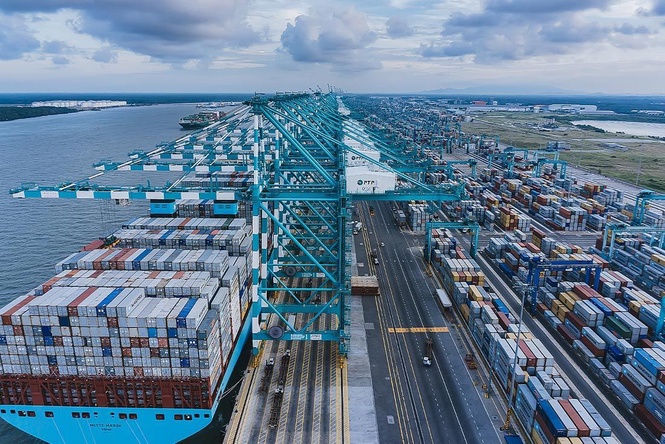
Against this backdrop, Pelabuhan Tanjung Pelepas Sdn Bhd (PTP), which operates the Port of Tanjung Pelepas, remains optimistic about its prospects for the second half of 2026.
For Malaysia, the Strait of Malacca includes Port Klang, Tanjung Pelepas, Johor’s industrial zones, Penang’s electronics ecosystem, LNG infrastructure, power plants, ship repair, bunkering, warehousing, customs systems, and the smaller but vital maintenance firms that keep industrial equipment intact.
PTP chief executive officer Mark Hardiman said any recovery in trade flows is positive for the industry. However, any increase in transshipment will depend on how shipping lines restore their networks and schedules.
“The recovery is unlikely to be immediate. Even if the situation stabilises, it will take time for vessels, cargo and schedules to return to normal. PTP expects the process to be gradual over the coming months,” he said.
Hardiman also said that while there could be some increase in cargo movements as inventories are replenished and supply chains normalise, the extent of the impact on PTP will depend on cargo routing and shipping line decisions.
Asked on PTP’s performance, he said PTP recorded a strong first half in 2026, supported by continued growth in throughput, high vessel productivity and operational reliability.
“PTP remains optimistic about H2 2026. While global uncertainties remain, current indicators suggest H2 2026 could perform better than the first half, supported by stable customer demand, network growth and continued operational excellence,” he added.
Clearing supply chain bottlenecks will take time
Maritime, logistics and supply chain analyst Nazery Khalid concurred that Hormuz’s reopening is only the beginning of the recovery process, with the maritime industry still needing to work through a substantial backlog of vessels and cargo affected by the disruption.
He said the experience from the COVID-19 pandemic illustrates how long supply chain bottlenecks can take to unwind.
“It took about 18 to 24 months for the most severe bottlenecks caused by disruptions to ocean freight flows during the pandemic to be cleared across the global supply chain.
“The initial shock to maritime trade began in early 2020 and supply chains only stabilised by mid- to late 2023 as trade demand normalised and logistics capacity recovered,” he added.
Nazery said key indicators of a full recovery in Gulf-Asia-Europe trade flows would include the restoration of shipping services and cargo volumes to pre-conflict levels, lower insurance costs, declining freight rates and the eventual removal of war-risk classifications in the region.
For Malaysian ports, however, the gradual return of trade flows could prove beneficial, providing sustained cargo activity as shipping lines work through delayed shipments and restore network reliability in the months ahead.
The latest development in West Asia saw both the United States and Iran exchanging attacks after indirect ceasefire talks ended a couple of weeks ago, without any public sign of headway towards lasting peace despite a 60-day truce intended to create space for diplomacy.