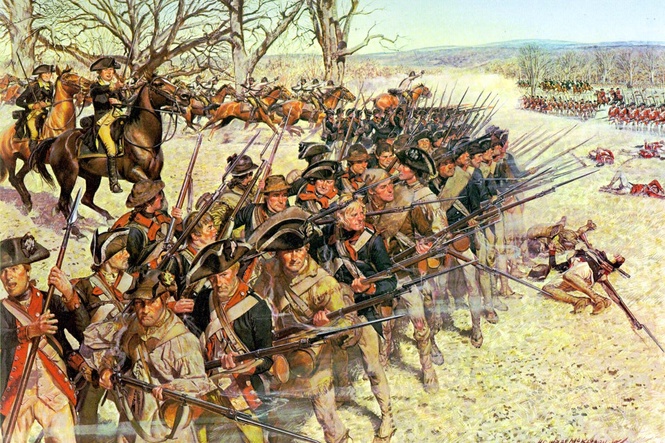
As the world prepares to commemorate this coming Saturday’s 250th anniversary of the American Declaration of Independence, new historical and archaeological evidence and analyses are allowing both academics and the public at large to more fully understand how and why the American War of Independence was even more violent than often popularly believed.
Research over the past few years has shed new light on the massacres, ethnic cleansing and extreme maltreatment of prisoners that occurred during the war.
Although most western European conflicts of the 18th century (such as the Wars of Spanish and Austrian Succession) were on much greater scales, they had much lower atrocity rates.
The American War of Independence was particularly atrocity-prone because it had a unique combination of features: it was an anti-government insurrection, a civil war and an ethnic conflict all combined into one particularly brutal war.
Because it was a rebellion, the British regarded American troops as treason-committing rebels and traitors and treated them with unimaginable cruelty. Because it was also a civil war (the American population was split between pro-independence and pro-British camps), it was a particularly bitter domestic internecine struggle – and because both sides used Native American tribes as allies, indigenous people were subjected to extraordinarily violent racism expressed through appalling massacres, ethnic cleansing and, in one case, what would today be considered a genocide.
A book published in 2023 (Memory Wars: Settlers and Natives Remember Washington’s Sullivan Expedition of 1779) reveals the ways in which indigenous and European-originating Americans have, over the years, remembered George Washington’s invasion of the Haudenosaunee [Iroquois] Confederacy, a military campaign now regarded by numerous historians and others as an act of genocide.
And last year, another US academic (Professor Joshua Catalano of Clemson University, South Carolina) published a study of the mass execution of dozens of Native American men, women and children by American pro-independence forces in the Gnadenhutten Massacre of 1782. The new research evaluates how myth-making and cover-ups were weaponised to enable frontier land grabs. And, over recent years, archaeological and ethnographic investigations have shed important new light on the 18th-century village where the massacre took place.
Other research (including two books: Relieve Us of This Burthen: American Prisoners of War in the Revolutionary South [2012] and The American Revolution on Long Island [2017]) has investigated disturbing new evidence about Britain’s treatment of American prisoners of war.
The disease-ridden prison ships in which the British mistreated American prisoners of war and allowed many to starve to death, have been compared to concentration camps by some historians.
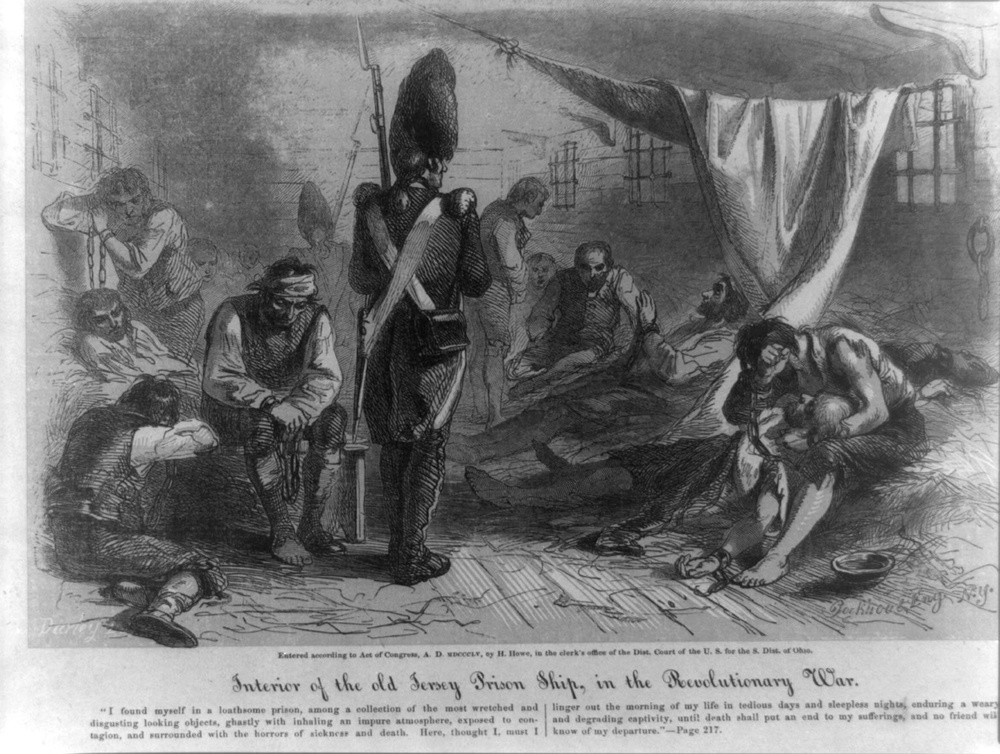
Indeed almost twice as many Americans died in those virtual death camps as in battle.
Around 30,000 African-Americans served in the war (on both sides), but research has revealed that, largely due to shocking racially discriminatory practices, their death rate was roughly four times greater than that of white troops.
Very recent research by US scholars (in 2022, 2023 and early 2026) has also shed important new light on how the British military almost certainly used or planned to use germ warfare (smallpox) against pro-independence Americans.
Significantly, over very recent years, several museums have been launched or expanded, providing coverage of the atrocities. The Museum of the American Revolution (in Philadelphia, Pennsylvania), which opened in 2017, includes material on the more appalling aspects of the conflict.
The American Revolution Museum in Yorktown, Virginia reopened in 2016 with equally objective coverage of the brutality of the war.
And throughout the 2000s, the very moving Prison Ships Martyrs Monument in New York was totally restored and modernised with new and detailed explanatory displays.
And, in London, the British Museum is launching an exhibition of three key artefacts linked to Native American peoples involved in the conflict (Declaring Independence: USA 250 will run from 30 June to 29 November in the Museum’s Room 3). The three Native-American-linked exhibits are:
- The 1777 Washington Peace Medal (presented to a key native American ally of George Washington, but later confiscated by the British)
- A shell-bead wampum belt used in 18th-century diplomacy between two Native American nations, who then suffered civil war, betrayal and destruction at the hands of both the British and the Americans
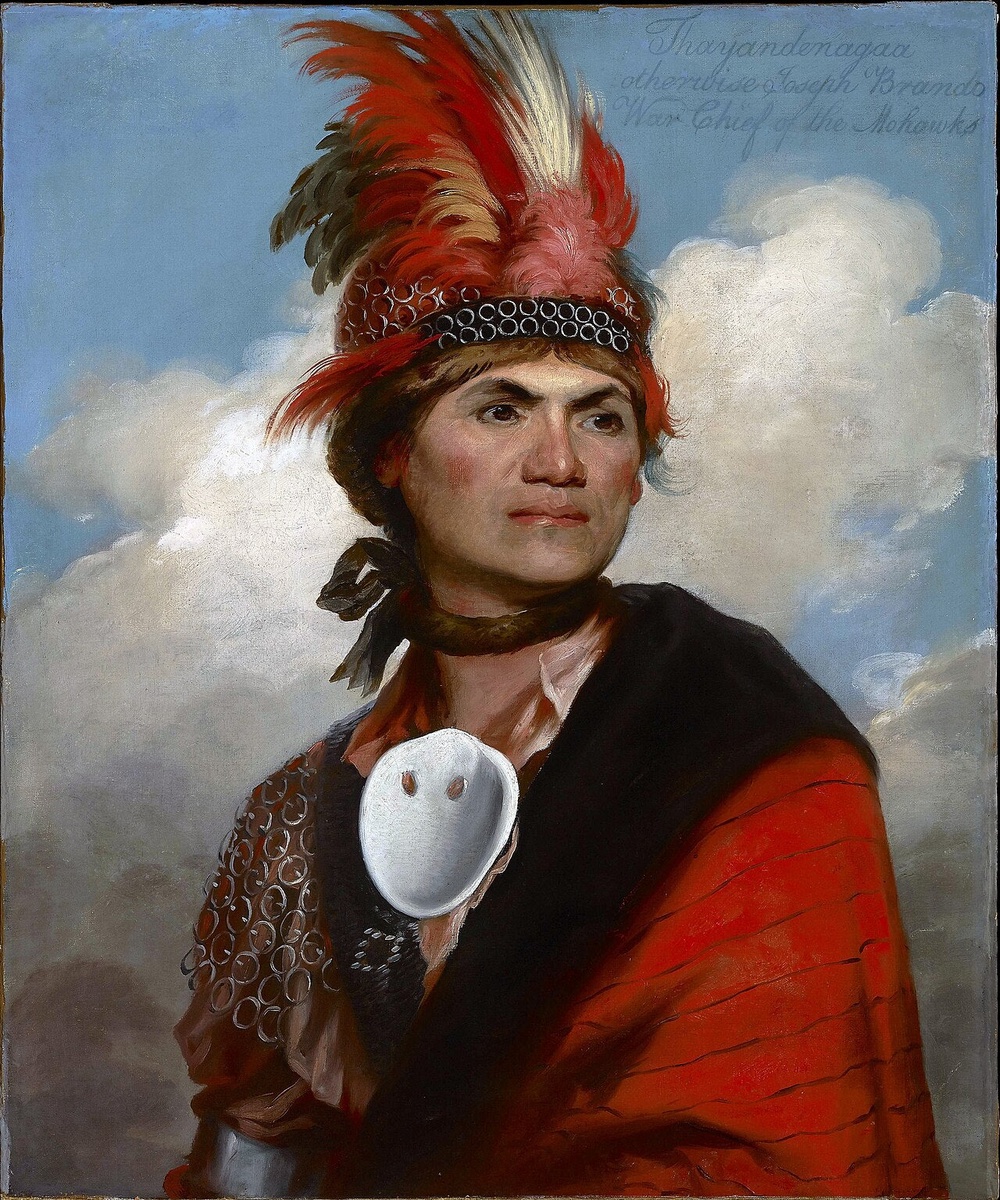
- A ceremonial pipe-tomahawk, given by a British aristocrat to a pro-British Native American leader (Thayandenagaa [Joseph Brant]), who the British Crown had largely betrayed.
And from mid-September, the exhibition will also include the only known ceremonial copy of the Declaration of Independence itself. It is owned by West Sussex Record Office, which will be loaning it to the museum. It will be the first time that the document has ever gone on general public display.
Research by Professor Danielle Allen of Harvard University suggests that it was given as a present by the American revolutionary Thomas Paine to an aristocratic British sympathiser, the Duke of Richmond in late 1787 or early 1788. Professor Allen has just published a book in the US on the subject, entitled Radical Duke (due out in the UK in August).
Significantly, the full-size ceremonial vellum copy of the declaration, due to go on display at the British Museum in mid-September, is actually much better preserved than the original 1776 Declaration in the National Archives Museum in Washington DC. Sadly, the writing on that original is no longer legible – but the one in Britain still is.
Thomas Jefferson’s legacy faces a new reckoning as America approaches its 250th birthday
Proud, excited or indifferent? How Americans feel about nation’s 250th anniversary
Pride and disillusionment divide Americans ahead of 250th milestone, new poll shows
Indonesia sentences Gojek founder to 10 years for graft over procurement of school laptops
Putin knows he’s in trouble. It’s time to kick him while he’s down
PHOTO ESSAY: Two victims on opposite sides of the global scam industry seek to rebuild their lives