
A medication that helps someone sleep through the night or manage chronic pain can also increase the risk of a fall, confusion, or a trip to the hospital. For older Americans, these trade-offs deserve particular attention because the body processes many medications differently with age.
The problem rarely comes down to one prescription alone. Reduced kidney function, changes in liver metabolism, and greater sensitivity to certain drugs can make familiar treatments harder to tolerate. Add medications from several specialists, plus an over-the-counter sleep aid picked up at the pharmacy, and the risks can become difficult to spot.
The American Geriatrics Society (AGS) addresses these concerns in its Beers Criteria, a clinical resource that identifies medications that older adults should generally avoid, use cautiously, or take only under specific circumstances. The criteria do not label every listed drug as dangerous for every patient. Instead, they help clinicians weigh potential harm against an individual’s medical needs.
Six medication categories deserve particular attention during a medication review. Some increase the risk of falls and memory problems. Others can damage the kidneys, cause dangerous heart rhythms, or increase mortality in people with dementia.
1. Benzodiazepines: Valium, Xanax, and Ativan
Benzodiazepines help treat anxiety, panic disorders, and certain other medical conditions. Common examples include Valium (diazepam), Xanax (alprazolam), and Ativan (lorazepam). These medications slow activity in the central nervous system, which can ease anxiety but also cause sedation, impaired coordination, and confusion.
Older adults face greater risks because their bodies may process certain benzodiazepines more slowly. Even when someone takes a prescribed dose, the medication can increase the likelihood of falls, fractures, delirium, and problems with memory or attention. Long-term use can also cause physical dependence, making sudden discontinuation potentially dangerous.
The combination of benzodiazepines and opioids poses an additional threat because both can suppress breathing. The AGS generally recommends avoiding benzodiazepines in older adults, although specific conditions may justify their use.
For persistent anxiety, clinicians may consider psychotherapy, including cognitive behavioral therapy, or other treatments suited to the patient’s diagnosis. Anyone who has taken a benzodiazepine regularly should discuss a supervised taper with a prescriber rather than stopping abruptly.
2. Anticholinergic Medications: Benadryl, Elavil, and Detrol
Anticholinergic medications treat a surprisingly wide range of conditions, including allergies, bladder problems, and depression. Examples include Benadryl (diphenhydramine), Elavil (amitriptyline), and Detrol (tolterodine). Despite their different uses, these drugs can interfere with acetylcholine, a chemical messenger involved in memory, attention, and other bodily functions.
Side effects can include dry mouth, constipation, blurred vision, urinary retention, and confusion. Older adults may experience more pronounced effects, particularly when they take several medications with anticholinergic properties.
Research has also linked cumulative anticholinergic exposure with a higher risk of dementia. That association deserves attention, although it does not prove that these medications directly cause dementia in every person who takes them.
The hidden danger often comes from combining products. Someone might take a prescription bladder medication and an over-the-counter antihistamine without realizing that both contribute to the same medication burden.
A pharmacist can review prescriptions, supplements, and nonprescription products to identify overlapping effects. For seasonal allergies, a less-sedating antihistamine may be appropriate for some patients, while bladder symptoms may call for behavioral strategies or a different medication. The best substitute depends on the condition being treated.
3. Nonsteroidal Anti-Inflammatory Drugs: Ibuprofen and Naproxen
Ibuprofen (Advil, Motrin) and naproxen (Aleve) help relieve pain and inflammation. For someone with arthritis, these medications can make walking, sleeping, and everyday activities more manageable. Their availability without a prescription, however, can make their risks easy to underestimate.
NSAIDs can cause stomach ulcers and gastrointestinal bleeding, raise blood pressure, worsen heart failure, and damage the kidneys. The risks increase with certain medical conditions, higher doses, prolonged use, and interactions with other medications.
Older adults who take blood thinners, diuretics, or some blood pressure medications need particular care. Combining an NSAID with certain other drugs can increase bleeding or kidney complications. Even short-term use deserves consideration when a person has several risk factors.
Alternatives may include topical NSAIDs, physical therapy, exercise tailored to ability, or other pain treatments. Acetaminophen may suit some people, but it carries its own risks, including liver damage at excessive doses. No pain reliever is automatically safe simply because it comes in a familiar package.
4. Prescription Sleep Aids: Ambien, Lunesta, and Sonata
Sleep issues are common in older adults, and doctors often prescribe “Z-drugs” to help. These medications are marketed as safer alternatives to benzodiazepines, but they come with many of the same risks. Prescription sleep medications such as Ambien (zolpidem), Lunesta (eszopiclone), and Sonata (zaleplon) can help people who struggle with insomnia. However, the AGS warns that these drugs can cause problems similar to those associated with benzodiazepines.
Potential effects include daytime drowsiness, impaired balance, confusion, and falls. These effects can interfere with driving and other activities that require alertness, even after a person wakes up.
The Food and Drug Administration has also issued a boxed warning about rare but serious injuries and deaths linked to complex sleep behaviors. People have sleepwalked, prepared food, and driven while not fully awake after taking these medications. Such episodes can occur even after a single dose.
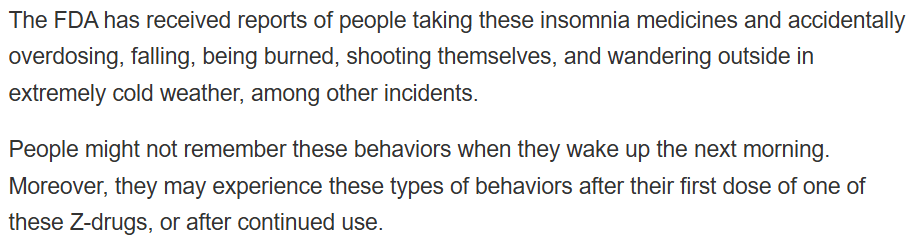
Source: FDA.gov, consumer updates. Accessed October 23rd, 2026.
For chronic insomnia, cognitive behavioral therapy for insomnia (CBT-I) offers an evidence-based treatment that addresses sleep habits and the thoughts and behaviors that interfere with rest. Clinicians can also investigate contributors such as pain, sleep apnea, depression, or other medications.
5. Antipsychotics: Seroquel, Risperdal, and Haldol
Antipsychotic medications treat conditions such as schizophrenia and bipolar disorder. Some also have other approved uses. However, clinicians sometimes prescribe them to manage agitation or aggression in people with dementia, a practice that requires particular caution.
The FDA warns that older adults with dementia-related psychosis who receive antipsychotics face an increased risk of death. These drugs can also increase the risk of stroke, sedation, movement disorders, and falls.
The AGS recommends avoiding antipsychotics for dementia-related behavioral problems unless documented non-drug approaches have failed or are not feasible and the person threatens substantial harm to themselves or others. That guidance recognizes that severe symptoms can require treatment, but routine sedation should not replace careful assessment.
Pain, infection, medication side effects, hunger, and environmental changes can contribute to agitation. Clinicians and caregivers can investigate these triggers and consider approaches such as familiar routines, meaningful activities, music, and a calmer environment. When an antipsychotic is necessary, the care team should regularly reassess whether the medication remains appropriate.
6. Digoxin: Lanoxin
Digoxin, sold under the brand name Lanoxin, helps treat certain heart conditions, including heart failure and atrial fibrillation. Unlike the other medications on this list, digoxin is not simply a drug that older adults should generally avoid. It can provide important benefits for selected patients.
Its narrow therapeutic range makes careful dosing and monitoring essential. Too much digoxin can cause nausea, appetite loss, confusion, visual disturbances, and dangerous heart rhythms.
Kidney function plays a major role because the kidneys remove digoxin from the body. Reduced kidney function, dehydration, and interactions with other medications can allow the drug to accumulate. Changes in potassium or magnesium levels can further increase the risk of toxicity.
The AGS advises avoiding digoxin as a first-line treatment for atrial fibrillation or heart failure and recommends avoiding doses above 0.125 milligrams daily when it is used for these conditions. Individual treatment decisions still depend on the diagnosis and clinical circumstances.
Patients should ask whether they need kidney-function tests, electrolyte checks, or digoxin blood-level monitoring. New confusion, vomiting, vision changes, or an irregular heartbeat warrants prompt medical attention.
Give Every Prescription a Fresh Look
These six medication categories do not carry identical risks, and there is no sound basis for declaring one universally the most dangerous. The real concern is whether a drug’s potential benefits still outweigh its risks for a particular person.
A medication review can reveal duplicate treatments, risky combinations, outdated prescriptions, and safer alternatives. Bring an updated list of prescription drugs, over-the-counter products, vitamins, and supplements to appointments. Ask the clinician or pharmacist what each medication treats, which side effects deserve attention, and whether the dose remains appropriate.
The AGS published its alternatives resource to help clinicians identify other approaches to conditions commonly treated with potentially inappropriate medications. Patients and caregivers can use it as a starting point for informed conversations, not as a substitute for individualized medical advice.
Never stop a prescribed medication or change its dose without consulting the prescriber. Some drugs require gradual withdrawal, while others protect against serious complications when taken correctly.
A prescription that worked well five years ago may deserve another look today. The goal is not to fear every pill in the medicine cabinet. It is to make sure each one still earns its place there.
Have you or someone you care for discovered a medication that caused unexpected side effects? Share your experience in the comments to help other families know which questions to ask.
If you liked this article, please send it to a friend who might benefit from reading it.
You Might Also Enjoy
Side Effects of Aging Nobody Tells You About
Why Emergency Rooms Are Quietly Avoiding Senior Patients
Unnecessary Medical Procedures That Seniors Are Pressured Into
Why More Seniors Are Using Cannabis, Despite Potential Health Concerns