

Slate is a new American vehicle maker backed by investors including Amazon founder Jeff Bezos. Its truck is designed around a single basic specification, with personalisation taking place through accessories rather than a conventional ladder of trim levels. The company sells directly to customers, and assembly is planned at a former printing plant in Warsaw, Indiana, with first deliveries scheduled for next year.
Buying a Slate starts with a two-seat electric pick-up. What happens after that is rather more open-ended: you can keep the standard grey body and wind-up windows, change the colour with a wrap, add equipment as you need it or turn the whole thing into a five-seat SUV. You can even change it back again. The starting point is called the Blank Slate, which gives you a fair idea of what the company has in mind.
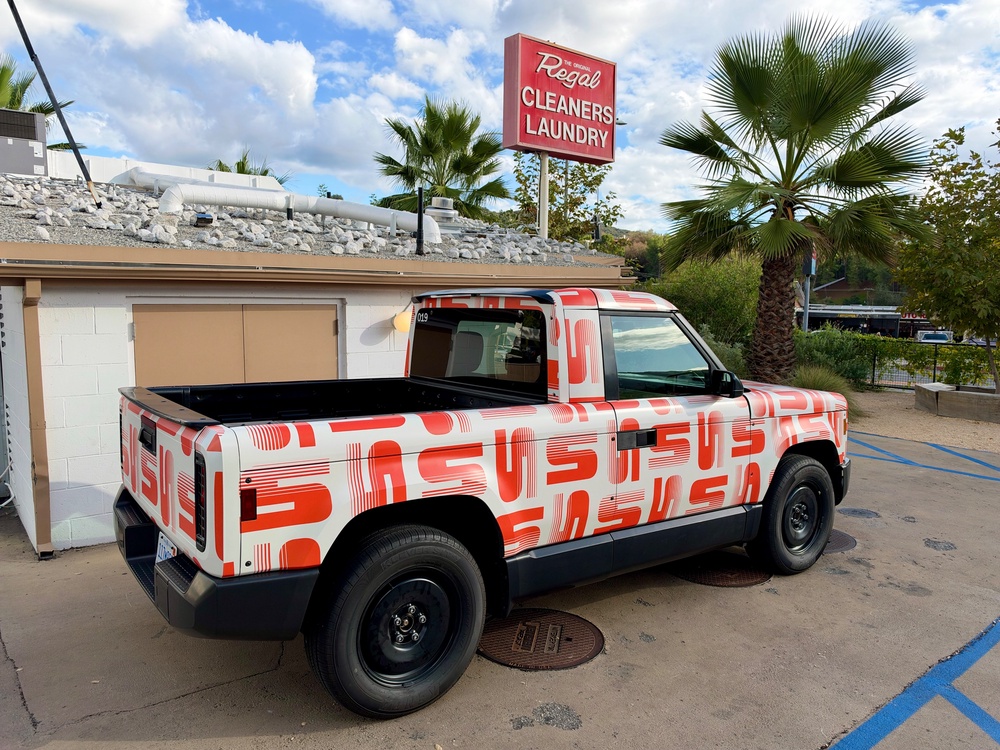
Every truck begins with unpainted grey body panels. Leaving out the paint shop helps keep manufacturing costs down, while owners can choose full or partial wraps, stripes and other graphics – as my prototype test car did. More than 200 accessories cover everything from extra storage and different cabin finishes to audio systems and the kits that change the body style. You can order equipment at the beginning or add it later.
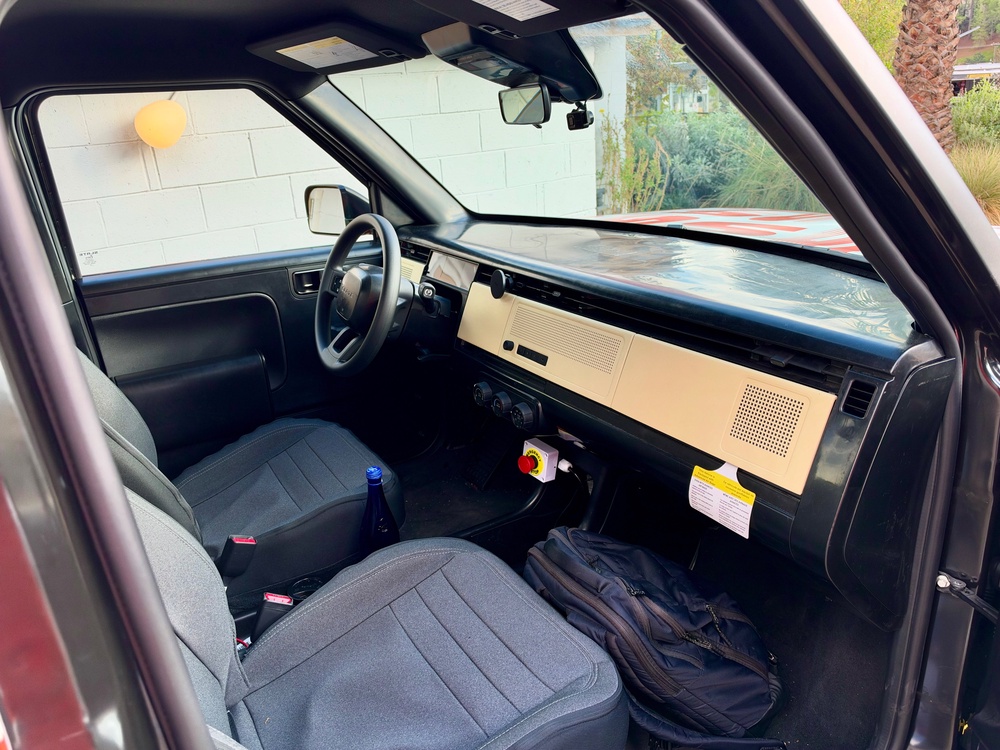
The same approach continues inside, where a phone takes on the navigation and entertainment duties that would normally fall to a central touchscreen. Heating and air conditioning have physical controls, and the standard window winders can be replaced with powered windows if that’s what you want.
Underneath, the Slate has a single motor driving the rear wheels, a 65kWh battery and a maximum claimed range of 205 miles. US prices start at $24,950 before delivery, taxes and other fees. Sales are currently restricted to the United States, so there’s no British price to put beside that figure, although it currently equates to around £19,000. My introduction to the driving experience came in a pre-production pick-up around Pasadena in California.
How we tested
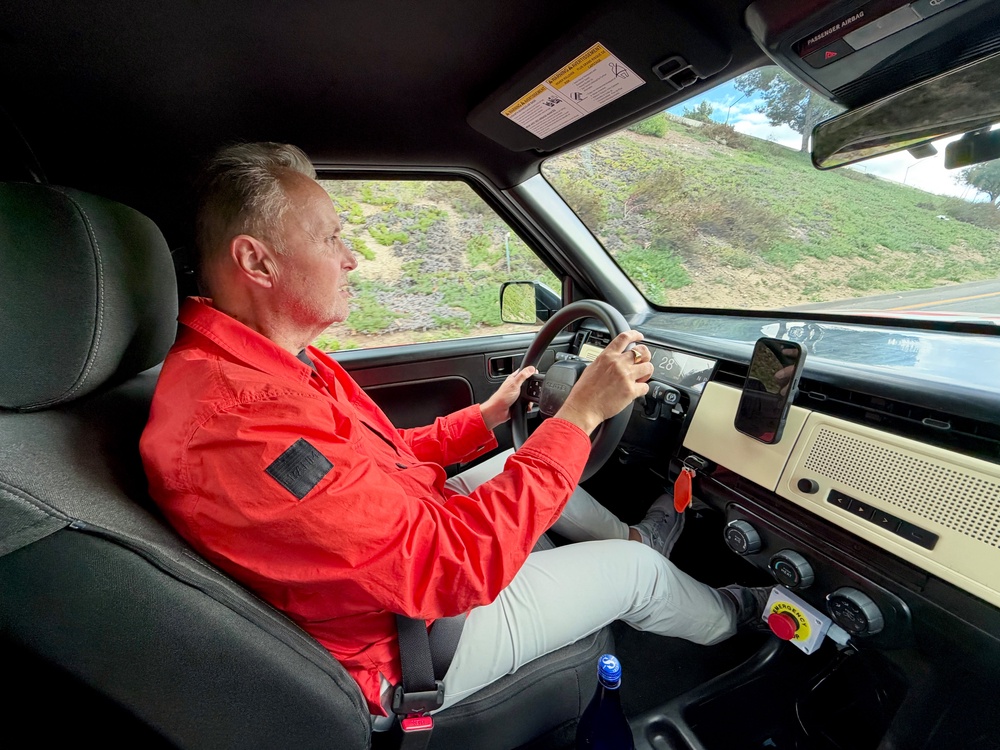
I drove a pre-production Slate Truck in and around Pasadena, California, on roads I know particularly well. My route took in the freeway, bumpy city streets and roads up in the hills, before parking outside a trendy coffee shop. Along the way, I assessed the ride, steering, acceleration and braking, including regeneration, as well as noise levels. I also tried the phone mount and optional stereo, and reacquainted myself with those wonderfully simple wind-up windows.
Slate Truck: from $24,950 in the US, plus $1,450 delivery, taxes and other fees, Slate.auto
Independent rating: 9/10
- Pros: Smooth electric drivetrain, settled ride, direct steering, manageable size, huge scope for personalisation
- Cons: Underwhelming optional stereo, only sold in the US
Slate Truck specs
- Price: $24,950 in the US (£19,000), plus $1,450 delivery, taxes and other fees
- Battery size: 65kWh
- Maximum claimed range: 205 miles
- Charging: 120kW DC, 20 to 80 per cent in around 30 minutes
Battery, range, charging, performance and drive
The first pleasant surprise was the ride. I’m used to pick-ups that bounce around when there’s nothing in the back, but the Slate felt settled on the bumpy streets around Pasadena. There was none of the constant bobbing about I’d been half expecting, and I found myself enjoying the drive rather than bracing for the next rough patch. The battery helps tie everything down, and I was impressed by how settled it felt.

The steering helped, too. There’s a nice weight to it and a directness that some pick-ups miss. It didn’t have that woolly feel where you turn the wheel and wait for the rest of the vehicle to catch up. Up in the hills, that made the Slate an enjoyable companion, while its compact size meant it never felt like too much truck for the road.
I was just as pleased with the electric drivetrain. The accelerator brings a smooth response, without the jerkiness that can make some EVs unnecessarily awkward at low speeds. The brakes have a decent feel, too, and the regeneration blends into the way the car slows down naturally. Everything felt really well integrated.
The prototype did have some wind noise, but I was still surprised by how quiet the Slate felt overall. For such a rudimentary little truck, it went about its business with rather less fuss than I’d expected.
The single rear motor produces 181bhp and 264Nm. Slate estimates 0–60mph in 8.0 seconds and a top speed of 90mph, while the pick-up’s kerb weight is 1,836kg, rising to 1,966kg with the SUV body configuration.
I liked the way the car rode on the standard steel wheels, although Slate also offers different wheel and suspension options for owners who want to change the look – you can beef up your Slate if that’s your wish.
The battery uses lithium iron phosphate chemistry and has an overall capacity of 65kWh. Slate’s maximum claimed range of 205 miles applies to the Blank Slate pick-up and is the company’s projection based on an approximation of the American EPA test, rather than a certified European test result. Temperature, driving style, and chosen accessories will all affect the distance between charges.
For a rapid top-up, the Slate accepts up to 120kW DC, with the company estimating around 30 minutes to go from 20 to 80 per cent. The onboard AC charger handles up to 11kW, and the truck can also charge from a slow 1.9kW AC supply. The American charging socket is the NACS type, and the truck can use compatible Tesla Superchargers. A charging cable is included, so a new owner has something to plug in with from the start.
Interior, practicality and boot space
There’s something about the Slate’s simple shape and steel wheels that reminds me of an old Defender. I think it looks really cool, and I like the fact that you can keep that plain, purposeful appearance if it suits you. Nobody is making you cover it in stickers or bolt on half the accessories catalogue, although there’s plenty of scope to do both.
The size is a big part of the appeal. At 4,435mm long, 1,793mm wide without the mirrors and 1,984mm with them, this is smaller than many pick-ups sold in Britain. It certainly didn’t feel too big on my drive surrounded by Cybercabs and other giant pick-ups, and I could see it fitting into life on UK roads really well.
There were plenty of unfinished plastics in the prototype I drove, although what caught my attention most was the return of wind-up windows. Remember those? You turn a handle and the window goes down; I loved having them back. Slate will sell you the kit to power them if you must, although I’d be quite happy keeping the winders.
There’s scope to change the interior in much smaller ways, too. Dashboard panels, armrests, seat covers and storage accessories let you alter the colour and usefulness of the cabin without replacing the vehicle. Some seat covers simply zip into place. Slate’s online tutorials explain accessory fitting, while its service partners can do the work for owners who’d prefer to hand over the tools.
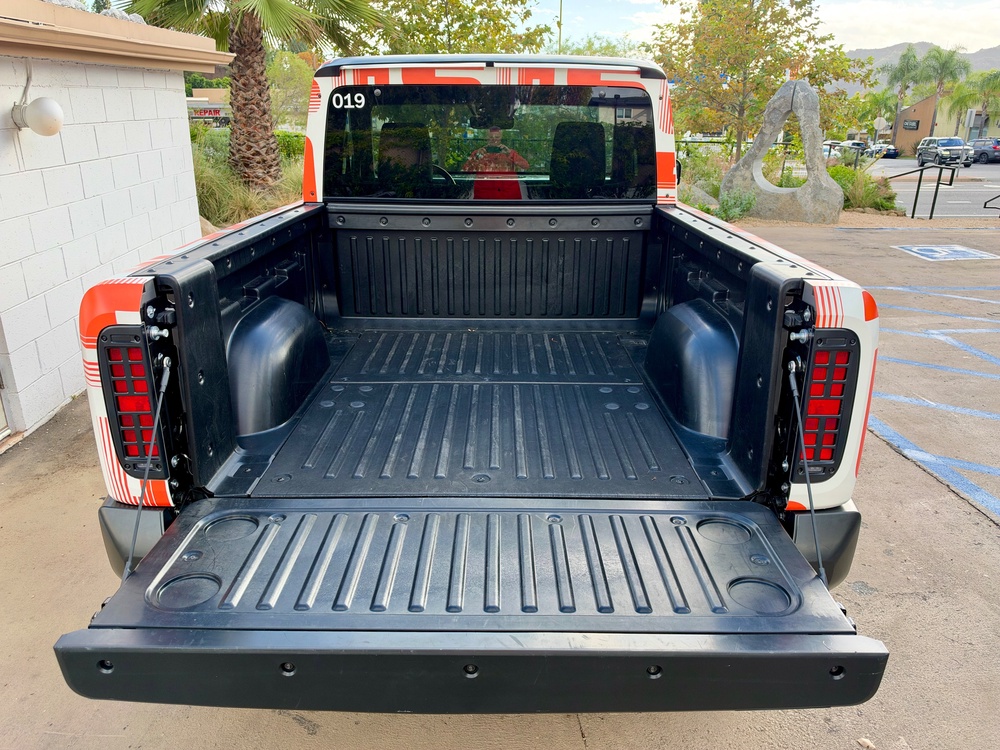
The load bed provides about 994 litres of space. It’s 1,537mm long with the tailgate up, extending to 2,050mm with it lowered, and measures 1,115mm between the wheelarches or 1,499mm above them. The sides are 495mm high, with the top of the closed tailgate sitting about 1,201mm above the ground. There’s another 198-litres of storage under the bonnet, giving you an enclosed place for smaller belongings alongside the open load area.
That SUV conversion is a substantial change, adding a rear bench, protective structure and rear airbags, as well as enclosing the back. The Squareback has a more upright shape and the Fastback a sloping rear, with five seats in either. There’s also an Open Air configuration without a hard rear roof or rear windows, and a Cargo version for enclosed load carrying. You can have a conversion fitted before delivery or make the change later.
Technology, stereo and infotainment
The phone mount worked just fine. That might sound like faint praise in a world of vast touchscreens and elaborate digital dashboards, but I really didn’t feel this truck needed a big screen in the middle. My phone already does the things I’d want it to do, and the Slate gives it somewhere to sit. It’s an approach that fits the rest of the vehicle rather neatly.
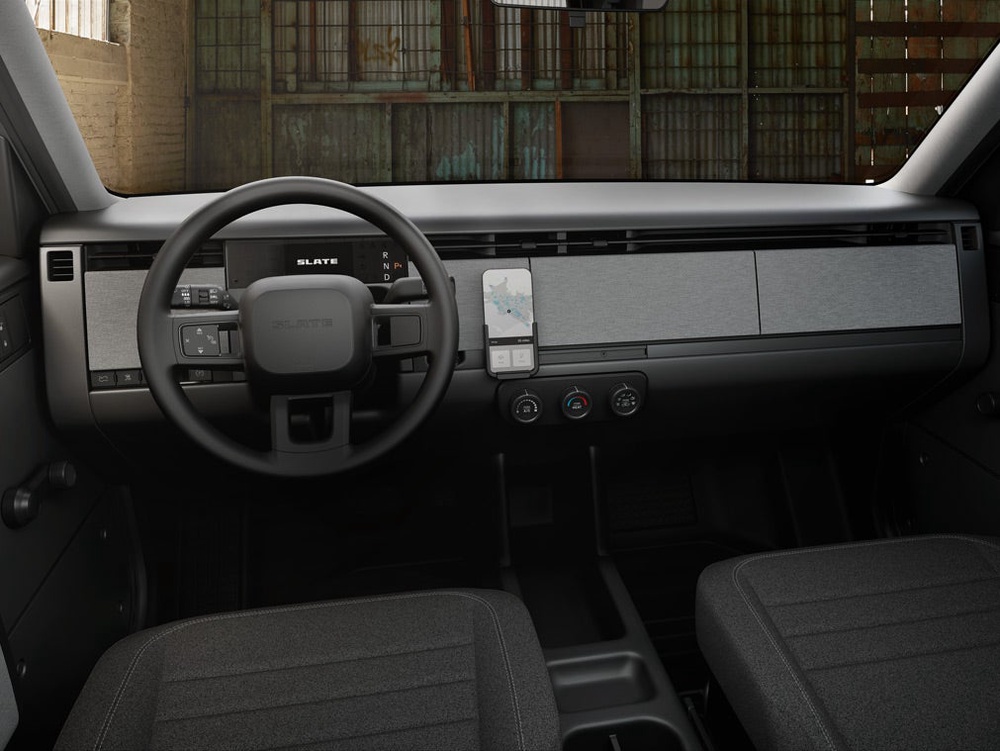
There’s no built-in infotainment system or Apple CarPlay/Android Auto interface: navigation and entertainment run through the apps on your own device. Phone charging is provided, and an accessory bracket is available if you’d prefer a tablet. The heating and air conditioning have physical controls, so you don’t have to involve the phone when you want to change the temperature – and yes, air con is one creature comfort that comes as standard.
Music is where I’d choose carefully. The added stereo in my test car sounded no more than okay, and at around $300 I’d be tempted to find a way of fitting a decent Bluetooth speaker of my own, such as a Sonos Play. I’d want a suitable mount, of course, and I’d be surprised if somebody didn’t come up with one with their own 3D printer.
Slate offers portable-speaker mounting and its own accessory audio, including speakers that can turn the dashboard into a soundbar. There’s also an optional steering-wheel controller for connected devices. You can add equipment later, so you don’t need to decide on the final sound system at the same moment you choose the truck.
The same thinking runs through the wider accessories programme, and I think it’s brilliant. Slate encourages outside companies and individual makers to develop products for the truck. Its Collective programme gives approved businesses the design information and attachment-point details they need, while letting them keep their own branding and ideas. When I describe the Slate as an open-source car, it’s this approach to accessories I’m talking about.
If there’s a bracket, storage solution or other extra that Slate hasn’t made, there’s a good chance somebody in that community will tackle it. The car has been designed with attachment points from the outset, and the online marketplace brings the company’s own products together with those from other makers. You can personalise it when you buy it and keep making changes afterwards.
The basic approach doesn’t leave out the usual safety equipment. The Slate gets traction and stability control, forward collision warning, automatic emergency braking, pedestrian detection, a reversing camera and automatic high-beam headlights. There are front, seat-side and curtain airbags, plus remote keyless entry – and the key just slots into a space in the dash for you to start the car.
A free Slate app is also planned, with charging status, battery-health information and help finding a charger – it won’t be required to drive the truck. That leaves you free to use the phone for the jobs it does well without making every part of owning the vehicle depend on it.
Prices and running costs
The Blank Slate starts at $24,950 in America, but you need to add the mandatory $1,450 destination charge. That makes $26,400 before taxes, registration and other fees, or any accessories.
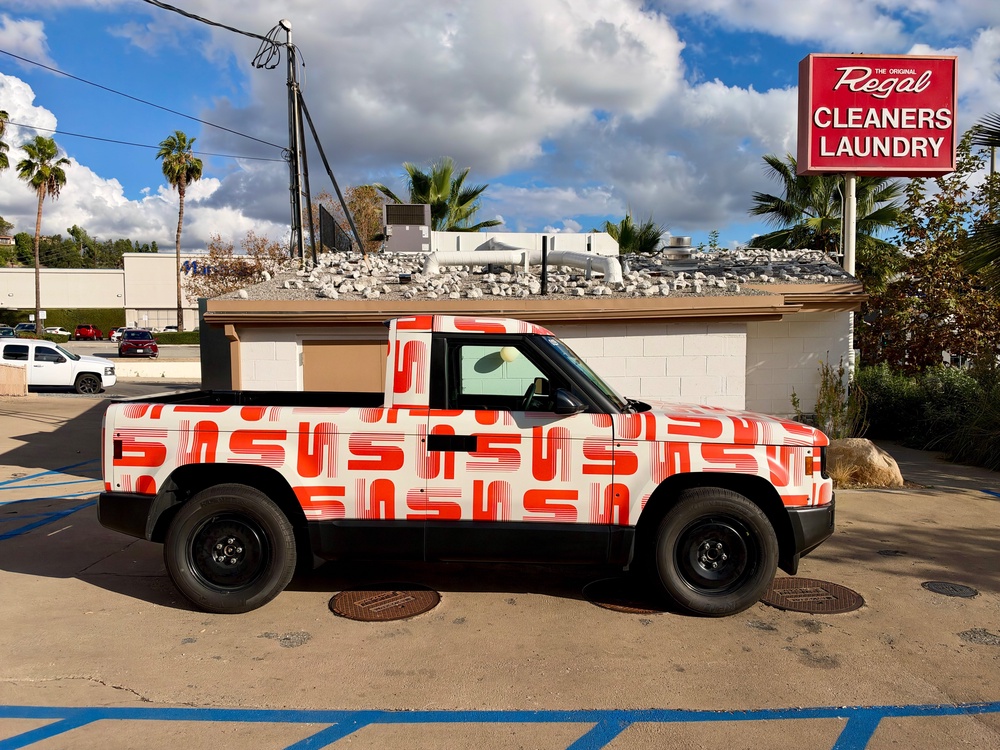
Slate also quotes prices from $29,950 for its Squareback and Fastback SUVs, before delivery and other charges. The truck and accessories are only available to buy in the United States. A $300 preorder deposit counts towards the purchase price, with the vehicle bought directly from Slate rather than a traditional dealer.
How far you wander through the accessories catalogue is up to you. Slate says more than 80 per cent of its accessories cost less than $500. Full wraps start at around $500, with professional installation targeted at a similar amount, and there are more than 100 colours as well as partial wraps and decals. The wrap material is made for Slate’s unpainted panels, so this isn’t simply a case of assuming any film intended for painted bodywork will do the same job.
You can fit many accessories yourself, using Slate U’s free guides, or pay someone to do it. You can also spread the purchases over time. I like that flexibility, although I’d still keep an eye on the total; the roughly $300 stereo I tried is a good example of an extra I wouldn’t automatically choose.
For servicing, Slate is working in the US with a company called RepairPal’s nationwide network and making repair manuals and diagnostic information freely available. The truck still needs attention to tyres, brakes, filters and fluids, but there are no engine oil changes or spark plugs to budget for. High-voltage battery work belongs with an appropriately qualified workshop, rather than on the driveway accessory-fitting list.
The verdict: Slate Truck
I came away seriously impressed. The Slate’s smooth electric drivetrain, weighty steering and settled ride make it a fun thing to tool around in, while its simple looks and scope for personalisation add to the appeal. My prototype had wind noise and unfinished plastics, and the optional stereo was only okay, but I really enjoyed my time behind the wheel. If its range and charging fit your life, I’d happily recommend this cool little truck.
FAQs
How long does it take to charge?
Slate estimates around 30 minutes for a 20 to 80 per cent top-up using a suitable DC rapid charger, with a maximum charging rate of 120kW. The onboard AC charger accepts up to 11kW, and Slate describes a full overnight charge from a suitable higher-powered home supply. From a standard US household socket, it quotes roughly three to four miles of range added per hour. The truck uses a NACS charging socket and can use compatible Tesla Superchargers. A home charging cable is included.
How much does it cost and is it worth it?
The US starting price is $24,950, plus a mandatory $1,450 delivery charge, making $26,400 before taxes, other fees and extras. Squareback and Fastback SUVs start at $29,950 before those additional charges. I was seriously impressed by the way the pick-up drove, particularly its settled ride, direct steering and smooth electric drivetrain. I also loved its simple appearance and the scope to personalise it. If the claimed range of 205 miles fit your needs, I’d recommend it on the evidence of this drive.
Does Slate replace batteries for free?
Slate provides a battery and powertrain warranty for 10 years or 110,000 miles, whichever comes first, with protection for retaining 70 per cent battery capacity. The standard vehicle limited warranty lasts four years or 50,000 miles, whichever comes first, and roadside assistance runs for the same period and mileage.
Why trust us
Our team of motoring experts have decades of experience driving, reviewing and reporting on the latest EV cars, and our verdicts are reached with every kind of driver in mind. We thoroughly test drive every car we recommend.
Read MoreThink EVs are too expensive? These 12 could blow your mind, not your bank balance
How to install an EV charger at home: Costs, grants and what to expect
Skoda Epiq review: I’ve driven the cool new electric SUV, but is it epic?
Leapmotor B03X review: I drove the new electric SUV with 237 miles of range that’ll improve with age
Bentley ploughs on with electric Luxury Urban SUV plans
BMW iX3 review: Is this new electric SUV with 500-mile range a game-changer?
This fast-charging EV can have an almost-full battery in under 10 minutes
Volkswagen ID. Cross review: Small electric SUV feels impressively polished and properly posh