
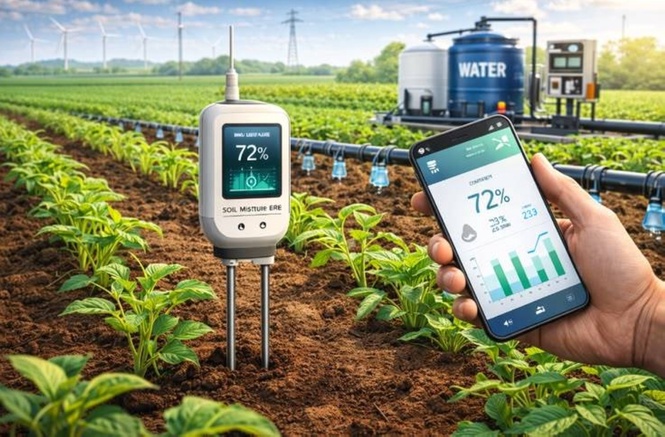
SMART farming could take years to gain wider acceptance in the Philippines, since farmers still need training and support to adopt new technologies, according to agri-tech firm Agridom Solutions.
The Davao-based company provides precision agriculture services, including drone spraying, mapping, training and technical support to the government.
“It’s a long way to go,” Agridom CEO Dom Subang told The Manila Times at the 24th Management Association of the Philippines International CEO Conference on Tuesday.
Smart farming encompasses a broad range of technologies and practices, making farmer education critical to wider adoption, Subang said.
Agridom has been working with the Department of Agriculture (DA) on the Drones4Rice project for the past two years, Subang said, adding that the initiative has made progress, but still has significant room for improvement.
Launched in 2024, Drones4Rice is a three-year initiative aimed at standardizing protocols for using drones to apply seeds, fertilizers and pesticides in rice production.
The project is implemented by the International Rice Research Institute and the DA’s Philippine Rice Research Institute, in partnership with private companies including Agridom. It is funded by the DA-Bureau of Agricultural Research.
Subang said Agridom is willing to work more closely with the DA to accelerate the program.
“There’s progress, but we need to further expedite,” he said, adding that the company is prepared to adjust to the government’s priorities.
Subang said drones could make farming faster, more precise and efficient by supporting fertilizer and pesticide application, crop monitoring and early detection of problems.
The technology could reduce labor and input costs while improving farm productivity and yields, he noted.
While Drones4Rice focuses on rice production, Subang said similar technologies could be applied to other crops, including bananas, coffee and corn.
“Ultimately, smart farming is about helping farmers produce more efficiently, manage costs better, and make better decisions using technology and data,” he said.
The government has been exploring wider adoption of agricultural technology as it seeks to raise farm productivity amid climate risks, resource constraints and uneven access to modern equipment.
Agriculture Secretary Francisco Tiu Laurel Jr. recently led a Philippine delegation to Zhejiang Huihong Fruit and Vegetable Farm in China, where officials observed digital systems used for crop monitoring and farm management.