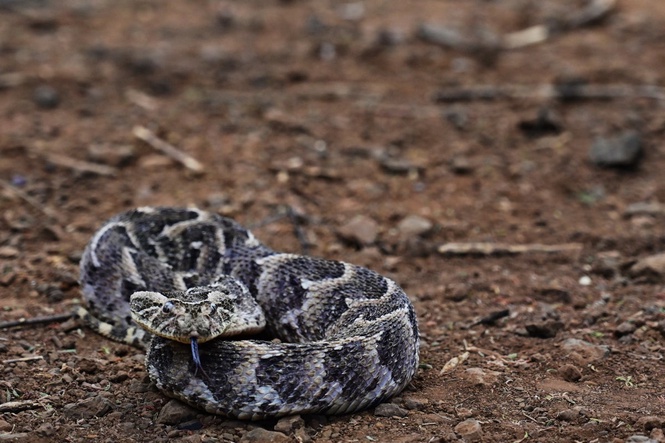
The incidence of snake bites and related deaths is much higher than previously estimated, according to a major global study that calls for better surveillance and access to anti-venom.
Venomous snake bites cause illness, disability, and death, mainly in the tropical and subtropical regions, disproportionately affecting rural communities.
However, a lack of data has inhibited accurate estimations of the global snakebite burden.
Current estimates are based on limited and dated data and are likely to underestimate the actual burden of snakebites globally, researchers say.
“Snake envenoming is a far greater global crisis than previously recognised,” scientists wrote in the study published in the journal PLOS Medicine.
“Our study suggests that previous burden estimates may have substantially underestimated the scale of the problem,” they wrote.
To make a better estimate of the annual global snakebite burden, researchers reviewed literature on snakebites across 79 countries published between January 2007 and March 2025.
Wherever data were lacking, scientists used computer models to estimate the incidence and annual number of snake envenomings and deaths.
They developed low and high estimates of global snakebite burden with individual country-level estimates.
The findings suggest there could be between two and seven million people experiencing venomous snake bites each year. This number substantially exceeds previous estimates and those currently quoted by WHO.
“Based on our analysis, we estimate that at least 2.1 million snake envenomings occur annually, resulting in 274,000 deaths worldwide,” researchers wrote.
“The true burden may be substantially higher, potentially up to three times greater for envenomings and twice as high for mortality,” they wrote.
According to WHO, an estimated 5.4 million people worldwide are bitten by snakes each year, with 1.8 to 2.7 million cases of envenomings.
The global deaths, according to the latest estimate, ranges from 274,000 to 513,000 per year compared to WHO’s statistics which cite 81,410 to 137,880 deaths.
Snakebite envenoming is a potentially life-threatening disease that results from the injection of a mixture of different toxins following the bite of a venomous snake.
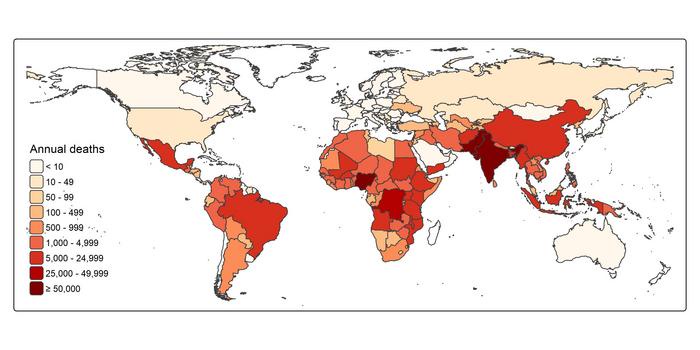
Low-income countries face the highest incidence and mortality rates, with sub-Saharan Africa accounting for 45 per cent of global snakebites and deaths.
Sub-Saharan Africa suffers a disproportionate number of snakebite incidents as it is home to a rich diversity of venomous snakes, including saw-scaled vipers, puff adders, African cobras and mambas.
Agricultural workers in these African countries also work in open fields without protective boots and walk at night on unlit footpaths.
Limited data available from many countries underreport the number of venomous snakebite incidents, researchers say.
“We identified 170 countries with venomous snakes; however, 91 countries lacked robust data on envenomings, including 86 per cent of countries in the Middle East and North Africa, 55 per cent of countries in sub-Saharan Africa, and 43 per cent of countries in the East Asia and the Pacific region,” researchers wrote.
“These findings highlight the need for improved prevention, surveillance, access to anti-venom and clinical care, particularly in the most affected regions,” they wrote.
The research, according to scientists, establishes the critical baseline needed to scale up clinical care and treatment access in low-income regions across sub-Saharan Africa and Asia.
Read MoreUK scientists discover ancient crocodile species with bizarre toothpick-like teeth
Naturally occurring fungus could help protect wheat from disease – study