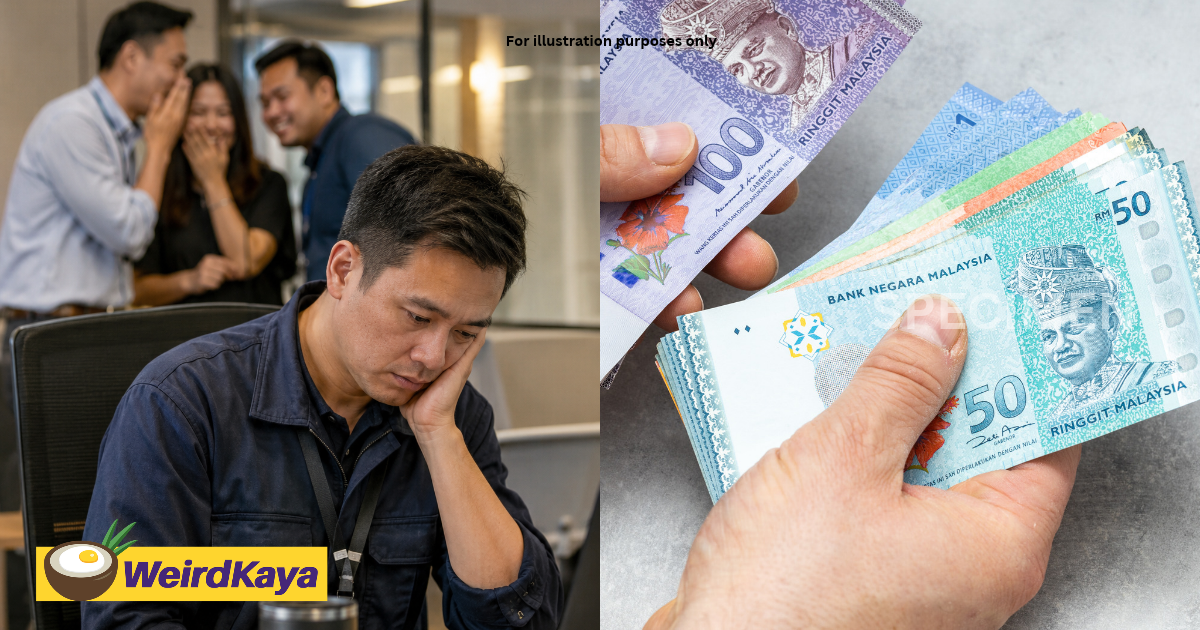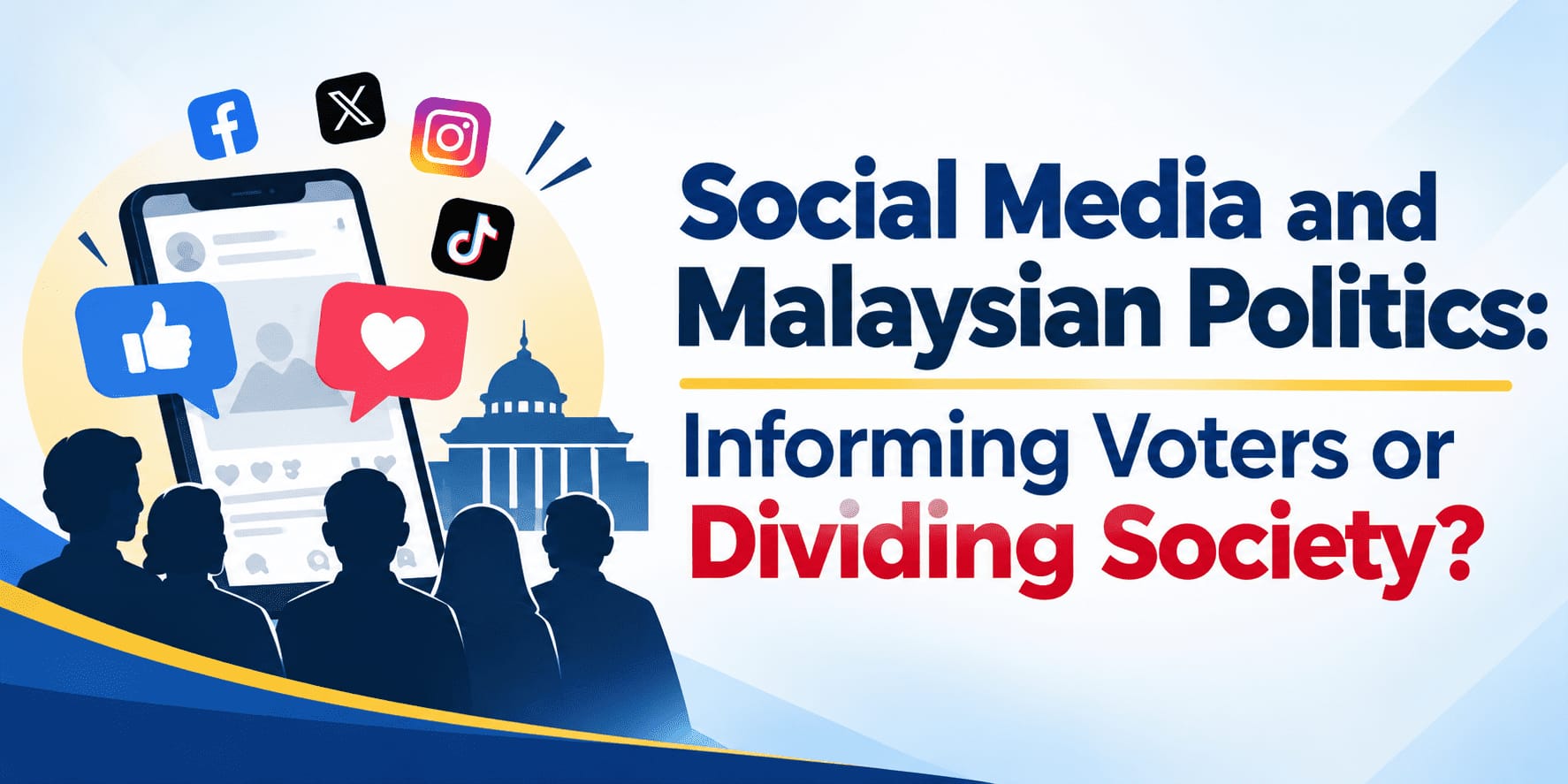
Social media has become an important part of Malaysian politics. Political announcements, campaign promises, public complaints and breaking news can reach thousands of people within minutes. For voters, this offers easier access to information and a wider range of viewpoints. Yet the same platforms can also spread misleading claims, intensify political arguments and deepen divisions within society.
The question is not whether social media belongs in politics. It is whether Malaysians can use it to make better-informed decisions without allowing online debates to undermine public trust.
News at the touch of a screen
The influence of social media is reflected in changing news habits. A Malay Mail report published on September 12, 2026, based on the Reuters Institute’s Digital News Report, found that nearly seven in ten Malaysian respondents used social media for news. News websites and television recorded lower figures, at 42% and 36% respectively.[1]
These figures illustrate how digital platforms have become central to the way many Malaysians discover current affairs. A voter can watch a candidate’s speech, compare reactions and access different perspectives without waiting for the next newspaper edition or television bulletin.
However, the figures measure news consumption among survey respondents; they do not establish that social media users are better informed or more politically engaged. Access to information and the ability to assess it critically are two different things.
When speed overtakes accuracy
One challenge is the speed at which political content circulates. A short video, an edited speech or a dramatic headline may attract attention before the full facts become available. Old photographs and recordings can also be presented as if they relate to a recent event.
During Malaysia’s July 2026 state election campaigns, The Star reported on the use of artificial intelligence to produce campaign posters and memes. The report also highlighted concerns about AI-generated misinformation and the possibility that repeated exposure to misleading content could make voters less certain about what is genuine.[2]
This presents a challenge for all political parties. Digital tools can make communication faster and cheaper, but they also make it easier to produce convincing content that lacks context or contains false claims.
The responsibility does not rest with politicians alone. Users should check the original source, publication date and full context before sharing material, particularly when it makes serious allegations against individuals or groups.
Debate or division?
Social media gives ordinary citizens a platform to question leaders, discuss public policies and raise issues that might otherwise receive limited attention. It can strengthen accountability when evidence-based criticism is allowed to circulate.
But political discussion becomes less constructive when disagreement turns into personal attacks, racial or religious hostility, or the assumption that everyone supporting another party must have bad intentions. Algorithms that encourage attention-grabbing content may also reward outrage more readily than careful explanation.
A The Star report in July 2026 quoted a reminder to voters in Negeri Sembilan to verify online information through established news sources amid concerns over false and recycled content.[3] Verification should apply equally to claims made by the government, opposition parties, political influencers and ordinary users.
A shared responsibility
As Malaysia approaches GE16, social media will remain a major arena for political communication. Parties need to explain their policies clearly and correct inaccurate claims. News organisations must maintain reliable reporting, while platforms should respond responsibly to demonstrably harmful misinformation.
Voters, meanwhile, can compare claims with credible reporting and original documents instead of relying on a single post or viral video.
Ultimately, social media is neither automatically a force for democracy nor necessarily a cause of division. Its impact depends on how it is used. If Malaysians treat online content as a starting point for inquiry rather than unquestionable truth, digital discussion can help strengthen democratic participation. If every disagreement becomes a battle between enemies, the same technology may weaken the trust that a diverse society needs.
Footnotes and sources
1. Malay Mail — “Social media overtakes TV, news websites as Malaysians’ main source of news”, 12 September 2026. Reports on Malaysia’s news-consumption habits, drawing on the Reuters Institute’s Digital News Report 2026.
2. The Star — “AI hits the campaign trail”, 4 July 2026. Examines the use of AI in political campaigning and concerns about misleading content.
3. The Star — “Negri polls: Voters urged to verify information with mainstream media”, 25 July 2026. Covers warnings about recycled content, false information and verification during an election campaign.
salleh35@gmail.com
Healthy LifeSTYLE (salleh35@gmail.com) is a content creator under the Newswav Creator programme, where you get to express yourself, be a citizen journalist, and at the same time monetize your content & reach millions of users on Newswav. Log in to creator.newswav.com and become a Newswav Creator now!
The User Content (as defined on Newswav Terms of Use) above including the views expressed and media (pictures, videos, citations etc) were submitted & posted by the author. Newswav is solely an aggregation platform that hosts the User Content. If you have any questions about the content, copyright or other issues of the work, please contact creator@newswav.com.