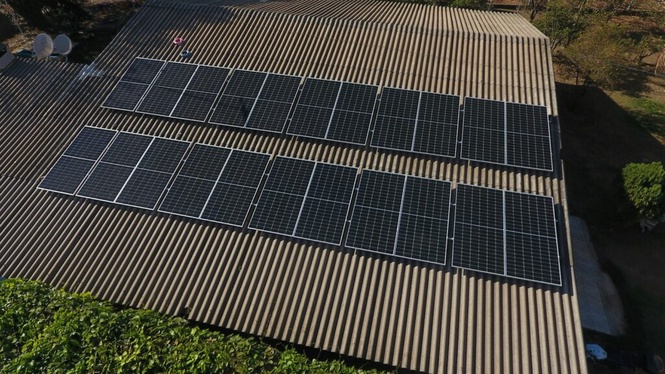
Solar ATAP, short for the Solar Accelerated Transition Action Programme, is how homeowners in Peninsular Malaysia can now put solar panels on their roofs and offset part of their electricity bill. It took over from the Net Energy Metering (NEM) programme, which closed at the end of June 2025, and has been open since 1 January 2026. For households weighing up the switch, here is what the programme actually offers, as of November 2026.
Why rooftop solar matters for Malaysia
Malaysia’s National Energy Transition Roadmap envisions a 70% renewable energy capacity mix by 2050, according to the Sustainable Energy Development Authority (SEDA) Malaysia. Rooftops are one of the simplest places to add that capacity. For families, the appeal is simpler: buying less electricity each month. Much like recycling old gadgets responsibly, it is a practical way to live more sustainably at home.
Six things to know before you sign up for Solar ATAP
1. Who can apply
Solar ATAP is open to registered consumers of Tenaga Nasional Berhad (TNB) in Peninsular Malaysia. Under the Energy Commission (Suruhanjaya Tenaga) guidelines, it is meant for consumers who do not already have a solar PV system for self-consumption and are not on NEM, although existing participants may end their contracts and move across. Tenant sub-meter accounts in multi-tenant buildings, and accounts that are also generators, are not eligible.
2. How big your system can be
The Energy Commission’s Solar ATAP guidelines set the domestic limit at 5kW for single-phase supply and 15kW for three-phase supply. SEDA notes that proposals above these levels require a Connection Confirmation Check by TNB, which carries a fee of RM1,000.
3. How excess energy is credited
Solar power is used in your home first. Any surplus that flows to the grid earns bill credits, and for domestic consumers the guidelines state these are based on the applicable Energy Charge, the part of the tariff that covers generation cost. Non-domestic users are credited at the average System Marginal Price instead.
One point is worth noting carefully: unused credit is not carried forward. The guidelines say exported energy that is not used up in a billing period is forfeited, and the Solar ATAP contract states any remaining credit at the end of each billing cycle is adjusted to zero. In practice, a system sized to match your own daytime consumption tends to deliver the best value.
4. How long the arrangement lasts
Each Solar ATAP contract runs for ten years from commissioning. After that, the panels keep working for self-consumption only, with no offset for exported energy. The guidelines set no fixed quota; capacity is as determined by the Government on a first-come, first-served basis.
5. How to apply
Homeowners do not apply alone. SEDA Malaysia requires you to appoint a Registered PV Service Provider (RPVSP), listed in SEDA’s directory. The broad steps are:
- Choose an RPVSP and agree on a system design that meets TNB’s connection requirements.
- Complete any TNB technical assessment needed for your system size.
- Have the system fully installed and commissioned. Applications are only accepted after this is done.
- Your RPVSP submits the application and supporting documents through SEDA’s eATAP system.
- Keep your email address up to date, as TNB uses it for notices and bills.

6. The SuRIA Home rebate, available until year-end
To encourage more households to go solar, the Ministry of Energy Transition and Water Transformation (PETRA) introduced the SuRIA Home rebate in May 2026. It offers a one-time cash rebate of RM600 per kWac installed, capped at RM3,000, with a total allocation of RM150 million. It is open to Malaysian citizens who are domestic Solar ATAP customers and have not received a rebate under the earlier SolaRIS programme.
There is a time limit. Systems must be commissioned by 31 December 2026, or earlier if the allocation runs out, as rebates are given on a first-come, first-served basis. The rebate is paid into the TNB account holder’s chosen local bank account. PETRA has also warned that anyone who misuses the application system, including solar providers, may be blacklisted from future incentive programmes.
Making the most of the sun
Solar ATAP rewards households that use their own solar power during the day, so it helps to review your bills, look at when you use the most electricity and ask your installer for a system sized accordingly.
For the full guidelines, eligibility details and the directory of registered providers, visit the SEDA Malaysia Solar ATAP portal.
The post Solar ATAP: 6 Essential Things Homeowners Should Know Before Going Solar appeared first on RISEMALAYSIA.my.