
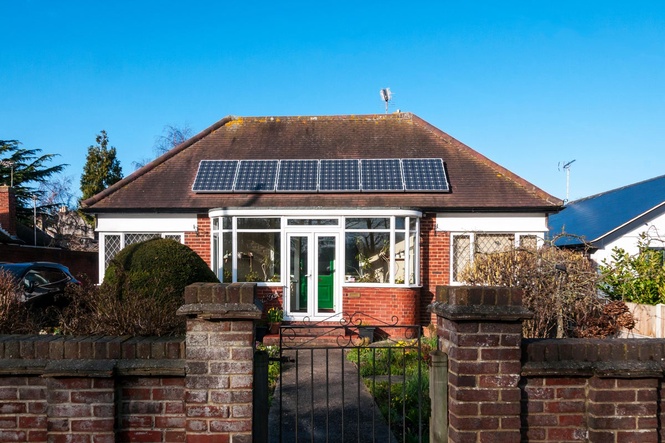
Good Energy has launched a new solar panel finance scheme that allows homeowners to pay a 25 per cent deposit and spread the remaining cost over as long as 10 years.
The renewable energy supplier has partnered with Zopa Bank on the new financing option, which is available for solar panel installations as well as combined solar and battery systems.
Customers can choose repayment terms of five, seven, eight or 10 years, with borrowing offered at 9.9 per cent APR representative, subject to status and affordability.
Get a quote for solar panels for your home
Use our comparison tool to get free quotes from leading solar panel installers.
Good Energy said the scheme was designed to tackle one of the biggest barriers to installing solar panels: the upfront cost.
Its own research, conducted among 2,009 UK adults in April, found that 26 per cent said lower upfront costs or the ability to spread payments would make them more likely to install solar panels.
The launch also comes as households face the prospect of another increase in energy bills this autumn.
Energy consultancy Cornwall Insight expects Ofgem's energy price cap to rise by around 4 per cent from October. Under Ofgem's new measure of typical household consumption, that would take the annual figure from £1,663 to £1,729 for a dual-fuel household paying by direct debit.
Ofgem is expected to announce the final price cap for October to December by 26 August.
Carl Hogg, managing director at Good Energy Services, said: “For many customers, the challenge isn't whether they want solar; it's finding a way to manage the upfront cost.
“By partnering with Zopa, we're making it easier for more homeowners to spread the cost – which will open up an opportunity for thousands more to start benefiting from home-grown renewable energy.”
However, spreading payments can considerably increase the overall cost of installing solar.
Good Energy gives the example of a typical 10-panel system with a cash price of £6,380. A homeowner using the new scheme would pay a £1,595 deposit and borrow the remaining £4,785.
If that balance were repaid over 10 years, monthly payments would be £61.86. The total amount paid would rise to £9,019, including £2,639 in interest.
Whether financing solar makes financial sense will therefore depend on factors including the cost of the installation, the length and interest rate of the loan, how much electricity the home uses itself and how much surplus power it can sell back to the grid.
Solar panels can reduce household electricity bills by allowing homeowners to use electricity they generate rather than buying it from their supplier. Households with an eligible export tariff can also be paid for surplus electricity sent to the grid.
Good Energy said customers will own their solar panels from the point of installation, while the finance agreement is made directly with Zopa Bank.
Read MoreThis is how much electricity solar panels actually produce for your home, according to an expert
Do solar panels add value to a house? How they affect property prices
What size solar battery do I need? A guide to choosing the right capacity
As plug-in solar panels go on sale, here’s how they compare to installed arrays
How much electricity solar panels produce for your home, according to an expert
Do solar panels actually work in UK winters and on cloudy days?
