South Korea conducted its first test launch of a domestically developed hypersonic glide missile in what appeared to be a show of military strength against North Korea.
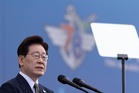
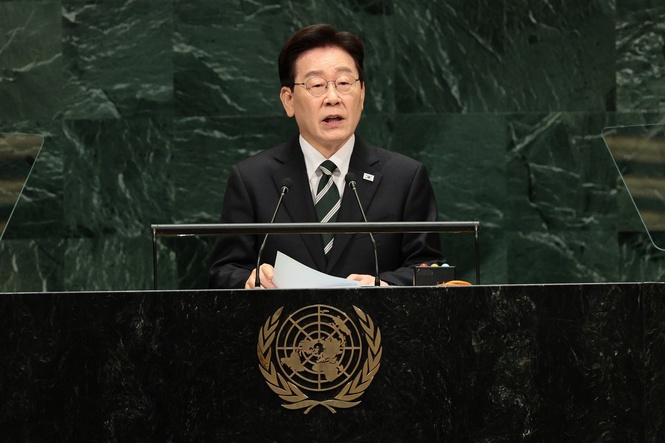
President Lee Jae Myung on Thursday oversaw the test-firing of the hypersonic glide vehicle which is designed to fly at least five times the speed of sound at low altitudes and evade missile defence systems.
It came days after North Korea said its leader Kim Jong Un had also overseen his own test of an intermediate-range, hypersonic missile.
The test of the manoeuvrable weapon that can change course during flight took place amid heightening inter-Korean tensions in recent weeks following a border land mine blast which left three South Korean soldiers injured.
President Lee said it was a major step in strengthening Seoul's defence capabilities, according to a statement issued by the presidential office.
The South Korean missile is a "strategic asset" for the country, the presidential office said, adding that it was capable of striking a target by surprise with its unpredictable flight paths and overwhelming speed.
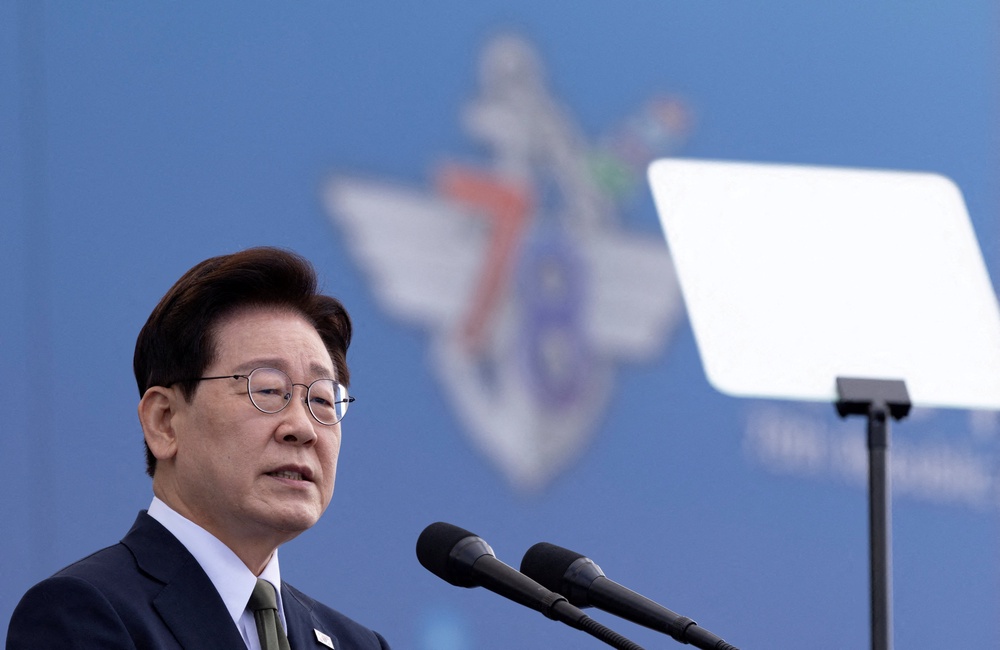
"Today, the first test launch of a hypersonic missile we are developing with our own technology was a success. I am truly proud," Mr Lee wrote in a Facebook post.
Calling it progress in "self-reliant defence", Mr Lee said South Korea will "keep investing steadily in advanced defence technologies, including hypersonic propulsion, AI, and high-powered lasers".
President Lee called on researchers at a state-run institute to swiftly develop and deploy the missile, his office said.
Mr Lee also inspected the country’s most powerful Hyunmoo-5 ballistic missile, his office said.
The president's office did not disclose the location of the test launch, but according to The Korea Times, it took place on a barge inside a test centre run by the Agency for Defense Development in Taean.
The surprise launch is seen as a countermeasure to the September explosion on the South's side of the heavily militarised border.
The South's military and the US-led UN Command concluded the blasts were caused by devices planted by North Korea, which has denied responsibility and ridiculed Seoul's demands for an apology.
North Korea has also stepped up weapons testing activity as Mr Kim expands his military nuclear programme while taking an increasingly hard line toward Seoul.
Mr Kim has so far rebuffed US president Donald Trump’s calls to revive their diplomacy that broke down in 2019, with his government demanding that Washington abandon its “hostile” policy toward Pyongyang and drop demands for its denuclearisation as a precondition for talks.
The tensions have been a setback for Mr Lee, who favours engagement with North Korea and has tempered his rhetoric toward the North even as public anger grows over the mine blasts.
His government has received backlash for not taking a strong stance in responding to the mine blast in an effort to not upset Pyongyang.
Mr Lee has also called for strengthening South Korea’s conventional defence capabilities while reducing its reliance on the US, which unilaterally decided to scale back a major military exercise with the South in August, with Mr Trump citing his “very good relationship” with Mr Kim.
In its latest weapons test on 3 October, North Korea launched what it described as a hypersonic intermediate-range missile that it said flew more than 1,000km.
Japan said the missile landed in waters outside of its exclusive economic zone.
Read MoreDisover the laidback coastal city known as the Miami of Korea
Why North Korea is at the heart of South Korea’s strange rift with Ukraine
Why a Korean film about a 1974 shooting has sparked protests and a political row
US-India trade talks grind to a halt. What went wrong?
South Korea considers ending military service exemption for athletes