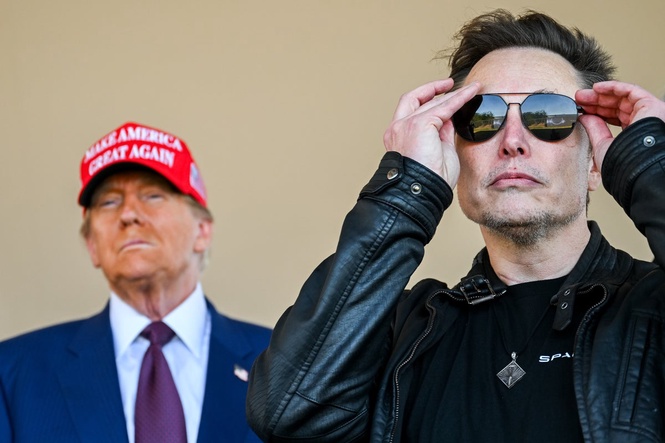
Elon Musk's SpaceX has been given permission to deploy up to 1 million satellites to create data centers in space.
The US-based Federal Communications Commission said on Wednesday that it was approving SpaceX’s “Starmind” constellation to help meet rapidly growing demand for AI computing.
“At this pivotal time in America’s development of super intelligence, the FCC is granting SpaceX authorization to deploy 1,000,000 orbital compute modules to process massive amounts of data to be used back here on Earth,” the FCC wrote in a news release.
“More fundamentally, it promises to bring the human race closer to a Kardashev II civilization—one that can harness the full power of the sun. The system also operates consistent with the FCC’s orbital debris rules.”
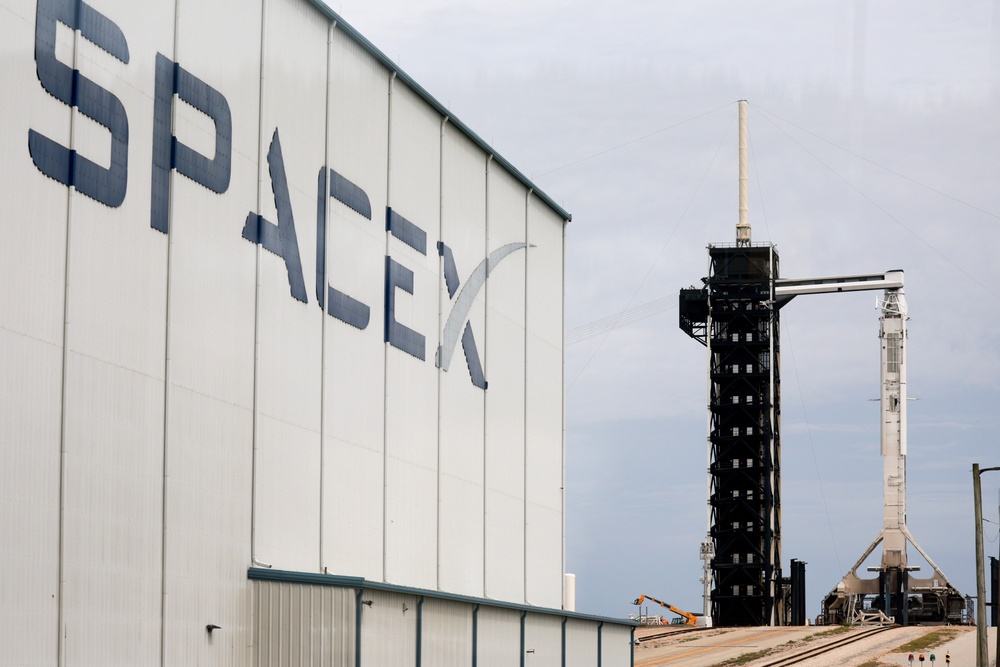
Under the license, SpaceX must begin launches by November 2033, deploy 10% of the total count—or 100,000 satellites—by November 2035, and reach 50% by November 2038, the regulator said.
Approval will allow SpaceX "to pioneer emergent technology that advances American leadership in space and artificial intelligence," the FCC added.
Data centers serve as the physical backbone of artificial intelligence, consuming vast amounts of power.
"By directly harnessing near-constant solar power with little operating or maintenance costs, these satellites will achieve transformative cost and energy efficiency while significantly reducing the environmental impact associated with terrestrial data centers," SpaceX told the agency.
It is unclear if SpaceX will ultimately launch 1 million satellites into orbit, where roughly 17,000 currently operate. Operators frequently request clearance for higher satellite totals to maintain design flexibility.
SpaceX sought approval for 42,000 Starlink satellites before launching that network, which now has just over 11,000 satellites in orbit.
The company's application depends heavily on reduced launch costs from Starship, its reusable next-generation rocket under development.
Competitors, including Amazon's satellite division Leo, opposed the plan, arguing SpaceX was unlikely to deploy the full fleet and suggesting it could take centuries. FCC Chair Brendan Carr rejected those concerns in March.
"Amazon should focus on getting Amazon's house in order with their own launches and their own satellite constellation, rather than worrying about other people that are actually out there launching satellites at the pace and cadence that SpaceX is," Carr said.
The FCC also approved SpaceX's application to back up its optical network with additional communications authorization.
Elon Musk thanked the FCC for the approval, writing on X on Wednesday: “Much appreciated. This will be a great asset to America and the world.”
Read MoreAn AI system is hacking into some of the most important websites in the world
Tech stocks are crashing. Will AI destroy my ISA and pension?
Elon Musk asks appeals court to throw out Twitter fraud verdict over stock drop
We can’t rely on ‘kill switches’ for AI safety, Amazon boss warns
John Motson’s legendary voice resurrected by AI for EA FC 27
‘I’d rather torture you into greatness’: What it’s like to work for Jensen Huang