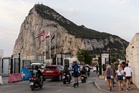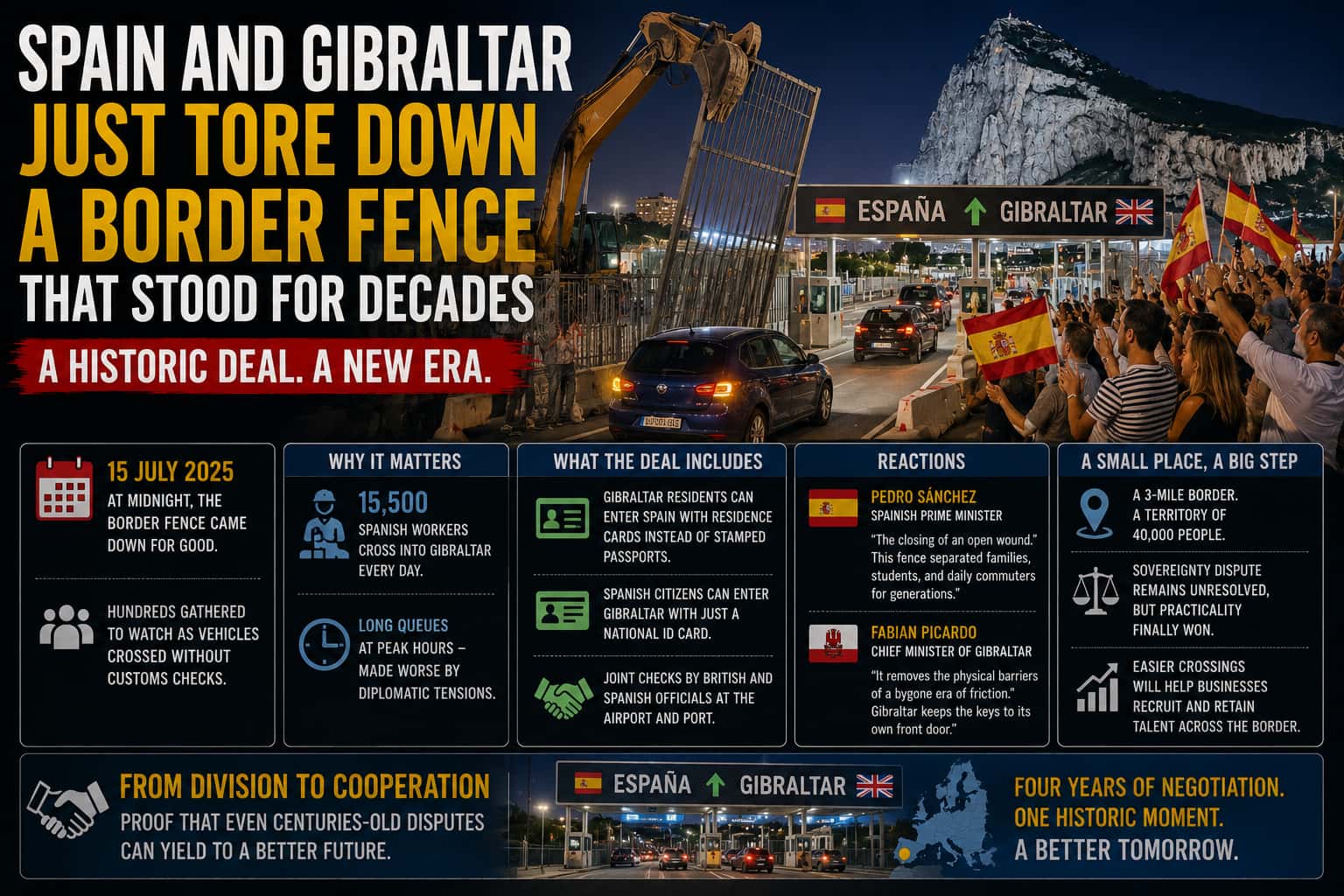
At midnight on 15 July, something quietly historic happened at the southern tip of Europe. The physical border fence separating Spain from Gibraltar, the tiny British territory that has been a source of friction between the two countries since 1713, came down for good, following a treaty signed in Brussels the day before by the EU's trade commissioner, Britain's Europe minister, Spain's foreign minister and Gibraltar's Chief Minister Fabian Picardo. Hundreds of people gathered to watch, waving Spanish flags as the first vehicles crossed without a single customs check.
The moment capped four years of negotiation since Brexit first left Gibraltar's status with the EU unresolved. Roughly 15,500 Spanish workers cross into Gibraltar every single day, more than half of the territory's entire workforce, and for years they faced long queues at peak hours, queues that grew even longer whenever diplomatic tensions between London and Madrid flared up.
Under the new arrangement, Gibraltar residents can now enter Spain using residence cards instead of stamped passports, while Spanish citizens can enter Gibraltar with just a national ID card. The deal effectively folds Gibraltar into the EU's Schengen free travel zone, even though Gibraltar itself remains firmly British territory and not an EU member. At the airport and port, checks will still be carried out jointly by both British and Spanish officials, similar to how passport control works at Eurostar terminals in London and Paris.
Spanish Prime Minister Pedro Sánchez called it the closing of "an open wound," describing the fence as something that had separated families, students heading to extracurricular activities, and daily commuters for generations. Picardo, meanwhile, struck a more guarded note, saying the deal removed the physical barriers of "a bygone era of friction" while insisting Gibraltar keeps "the keys to its own front door," a reminder that sovereignty over the Rock remains as contested as ever, treaty or no treaty.
It is a small story on the world stage, three miles of fence in a territory of forty thousand people, but it says something bigger about how even centuries-old disputes can eventually bend toward practicality when enough people on both sides are simply tired of the inconvenience. It took four years of negotiation between London, Madrid, Brussels and Gibraltar's own government to get here, and even now the underlying dispute over who actually holds sovereignty has not been settled. What changed is that the daily inconvenience of thousands of people queuing at a checkpoint every morning finally became a problem important enough to solve, even while the bigger political question stayed unresolved. Owen Smith, who heads Gibraltar's Federation of Small Businesses, said the change should make it noticeably easier for local businesses to recruit and retain workers who live across the border, since the friction of a slow daily crossing had genuinely factored into people's decisions to take or keep a job in Gibraltar.
Ronny M (ronny76netstuff@gmail.com) is a content creator under the Newswav Creator programme, where you get to express yourself, be a citizen journalist, and at the same time monetize your content & reach millions of users on Newswav. Log in to creator.newswav.com and become a Newswav Creator now!
The User Content (as defined on Newswav Terms of Use) above including the views expressed and media (pictures, videos, citations etc) were submitted & posted by the author. Newswav is solely an aggregation platform that hosts the User Content. If you have any questions about the content, copyright or other issues of the work, please contact creator@newswav.com.