Flight of Terror by Singapore Airlines flight SQ321 on 21st May 2024 which caused shocking flight experience and resulted in injuries to its passengers and crew and death of one passenger due to clear air turbulence (CAT) has been described by a number of experts as an event exacerbated by climate change.
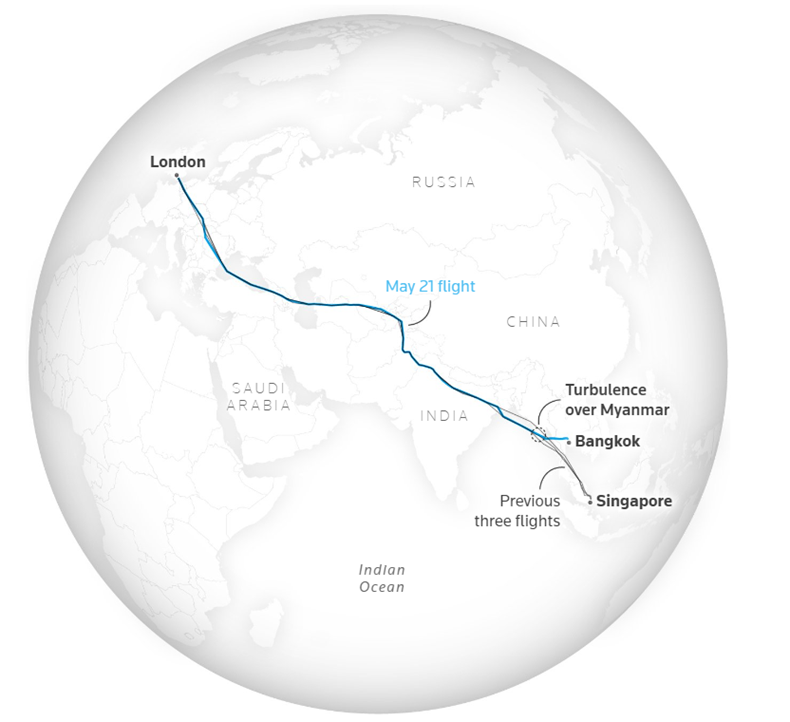
Singapore Airlines flight SQ321 carrying 211 passengers and 18 crew members which departed London’s Heathrow Airport at 21:38 UTC (22:38 local time) on Monday.
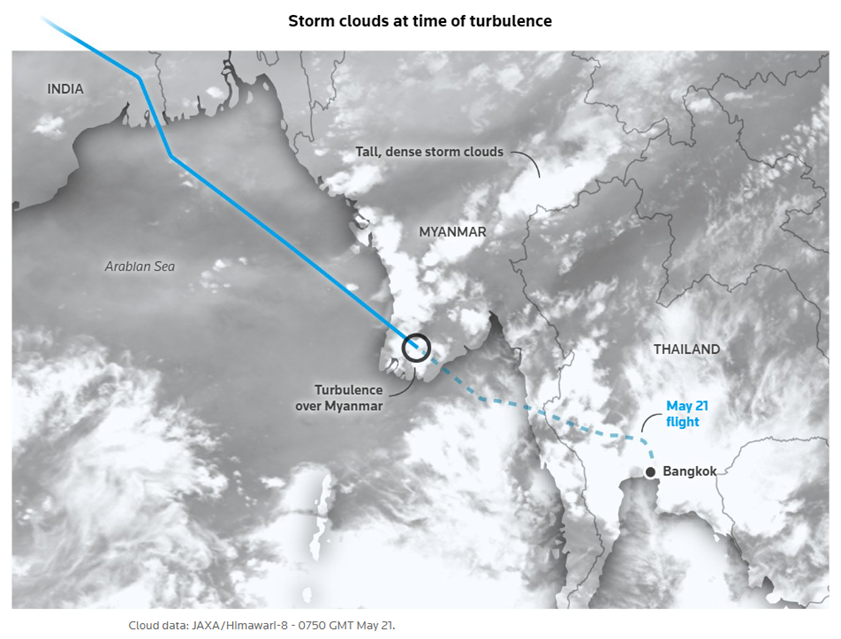
20th May 2021 enroute to Singapore had hit severe turbulence over Myanmar at 07:49 UTC on 21 May (14:19 local time) (Fig 1) which tossed the plane about violently, flinging passengers and crew around the cabin and slamming some onto the plane’s ceiling.
Passengers and crew on board flight SQ 321 had a terrifying mid-air ordeal when the SQ Boeing 777 aircraft 300ER which was about 10 hours into its flight and midway through meal service, hit turbulence while flying over Myanmar’s Irrawaddy Basin. (Fig 2- Fig 3)
There were 16 Passengers from Malaysia, Australia (56), United Kingdom (47), Singapore (41), New Zealand (23), the Philippines (five), Ireland (four), the US (four), India (three), Canada (two), Indonesia (two), Myanmar (two), Spain (two), Germany (one), Iceland (one), Israel (one), and South Korea (one) onboard the flight.
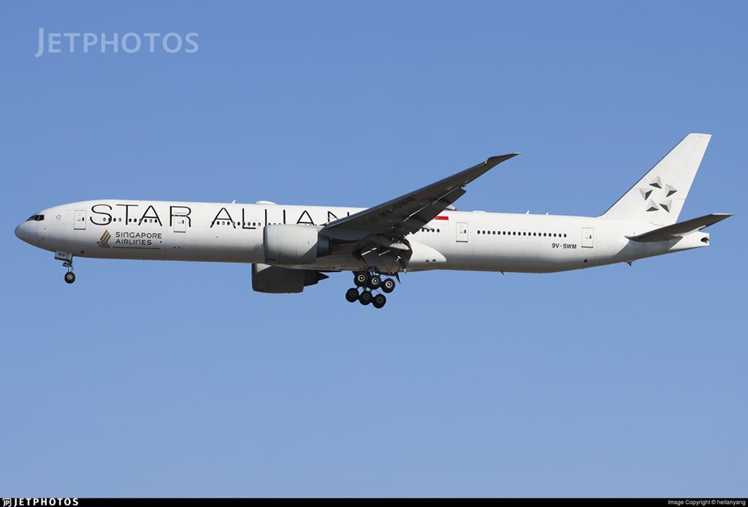
FlightRadar24 highlighted that Flight SQ321 was operated by a Boeing 777-300ER registered 9V-SWM (MSN 34578). It is powered by two GE90-115B engines. The aircraft was delivered new to Singapore Airlines in February 2008. (Fig 4)
Airways described turbulence in flight as the phenomenon involving the airplane's irregular, annoying and unpredictable motion causing it to fly in an undesired attitude, altitude, and direction and if this situation is severe and uncontrolled, it can cause injuries to passengers and crew and damage the airframe.
The Diplomat reported that upon encountering the turbulence, the Boeing 777-300ER had suddenly lurched upward, throwing unbuckled passengers out of their seats. A few seconds later, the aircraft plummeted into a “terrifying” freefall. An engineer from Sydney who was strapped into his seat compared the experience to hurtling down a “vertical rollercoaster.” The mid-air scare on SQ321, which lasted less than 5 seconds was one of the most severe turbulence-related mishaps in commercial aviation.
Tragically, at least one passenger, a British citizen, has died as a result of the turbulence, and several others have been injured.
Turbli reported that the turbulence event from Singapore Airlines SQ321 flight resulted in the death of one passenger, making it the first time in over 20 years* that a death in a commercial flight is solely attributed to turbulence.
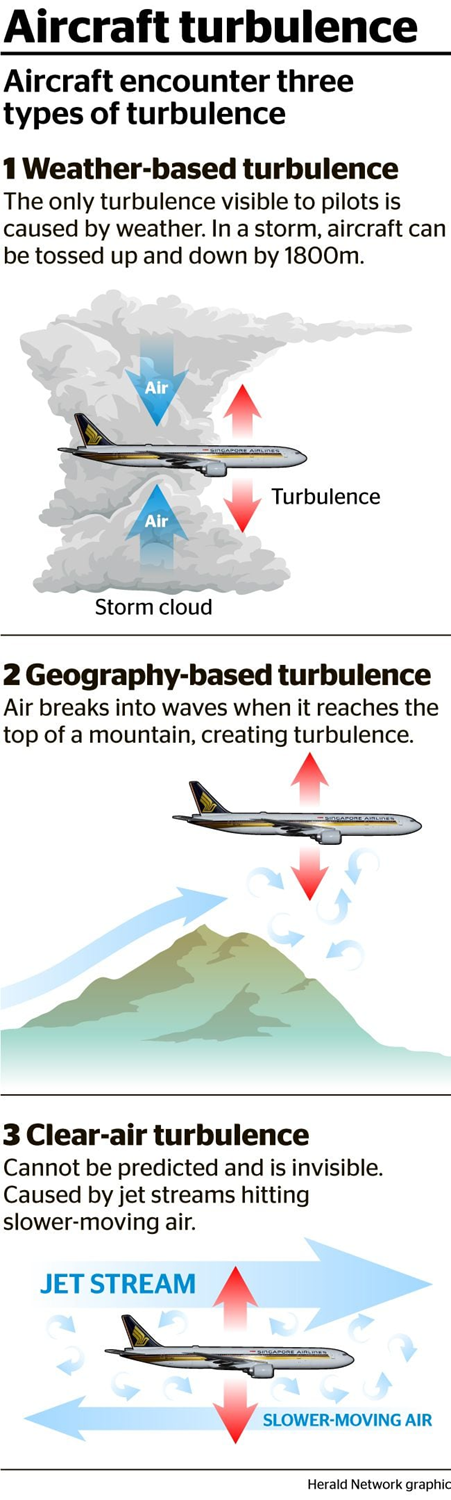
There are four main types of turbulence (Fig 5):
- Clear-air turbulence (CAT): This type of turbulence occurs when large air masses of high or low pressure collide or when encountering high-level jet streams. As we'll see, clear-air turbulence incidents have increased in the last four decades, and avoiding them by planning flight routes that steer clear of these areas is never easy.
- Wake turbulence: Flying in the wake of a preceding aircraft that has disturbed the air generates wake turbulence. Consider the visible wake left by a large boat. To avoid wake turbulence, aircraft maintain lateral separation, fly at different altitudes, or offset their tracks.
- Mechanical turbulence: Strong winds passing over mountains cause mechanical turbulence. This generates waves of turbulence that can reach up to five times the height of the mountains and extend for hundreds of miles, depending on wind strength. Planning flight routes around mountainous areas or regions prone to this type of turbulence can prevent encountering it.
- Weather-related turbulence: Weather-related turbulence occurs in the presence of cumulonimbus clouds, commonly known as thunderclouds. These large, white, puffy clouds can grow in width and height, often surpassing the normal cruising altitude of airliners. To avoid weather-related turbulence, pilots choose to fly around these clouds or delay take-offs and landings if they directly impact the airport.
Regarding Flight SQ321, the incident involved clear-air turbulence, which can be challenging to anticipate as it does not appear on the weather radar in the flight deck.
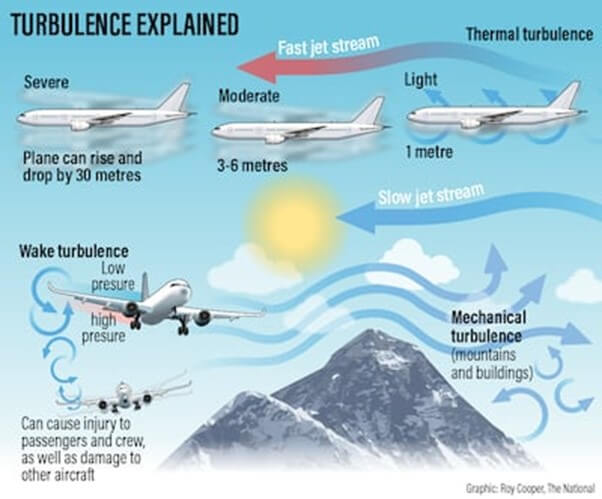
Causes of Turbulence
Various factors cause turbulence, including:
Thermal (convective) turbulence
Turbulence can occur on warm summer days, as the sun heats the earth's surface unevenly, causing the warm air to rise in columns and cooler air to descend. As planes fly in and out of these isolated convective currents, the flight experiences bumpy conditions. Rocky or sandy surfaces will also heat more rapidly than grassy fields or water.
Pilots therefore often prefer to fly in the early morning or evening when the thermal activity is not as severe.
It can be particularly prevalent when approaching a landing area, says weather.gov, since the moving convective currents vary in intensity, potentially causing an aircraft to veer from its glide path and over or undershoot the runway.
Wake turbulence
This type of turbulence is generated by aircraft vortices – circular patterns of rotating air left behind by a wing as it generates lift – or jetwash, which are gases expelled from the engine. It happens when one aircraft crosses paths with another, creating wing tip trailing vortices from the leading plane.
This is predictable and avoidable, and it's why planes have designated minimum separation distances from each other.
To minimize the effect of wake turbulence, air traffic controllers (ATC) allow enough time for the vortex to dissipate by the appropriate separation between those departing. In the case of landing aircraft, controllers apply a safe distance between aircraft on approach.
Mechanical turbulence
This is caused by friction between the air and the ground, generated by irregular landscapes or man-made objects (such as skyscrapers) found at low altitudes.
The obstacles cause the obstruction of airflow and the intensity of turbulence will depend on the strength of the surface wind, nature of the surface and the air stability. So, if the wind speed is strong, the terrain is rough and the air is unstable, this would create the greatest turbulence.
Mountain wave turbulence
Weather.gov also defines mountain wave turbulence as a form of mechanical turbulence, whereas other resources define this in its own category.
This occurs when strong eddies – whirls of air – are found downwind from mountain ridges. Mountain waves can produce some of the most severe turbulence associated with mechanical agencies.
It has also been known to cause structural damage to aircraft and result in a loss of control.
Thunderstorm
While planes can veer away from storm clouds, this is only the visible part of a turbulent region in a thunderstorm, and updrafts and downdrafts can often extend as much as 24 to 48 kilometres outside of the storm, with severe turbulence still possible.
As long as pilots know where these storm clouds are, however, it is possible to avoid this type of turbulence with up-to-date technologies and weather-predicting tools.
Regarding Flight SQ321, the incident involved clear-air turbulence (CAT) (Fig 6 - Fig 8)
Regarding Flight SQ321, the incident involved clear-air turbulence, which can be challenging to anticipate as it does not appear on the weather radar in the flight deck.
The US Federal Aviation Administration (FAA) defines clear air turbulence as “sudden severe turbulence occurring in cloudless regions that causes violent buffeting of aircraft… CAT is especially troublesome because it is often encountered unexpectedly and frequently without visual clues to warn pilots of the hazard.”
Clear-air turbulence is a "typically very violent" phenomenon that occurs at high altitudes, typically between 23,000 to 39,000 feet above sea level, said Hassan Shahidi, president and CEO of the Flight Safety Foundation as reported by cbsnews.
What makes clear-air turbulence dangerous is that it can't be seen in advance like turbulence caused by weather, known as convective turbulence. Normally, flights divert or enter a holding pattern to avoid severe turbulence, but if it can't be seen in advance, pilots can't adjust to avoid it, Shahidi said.
Channel News Asia reported that Clear-air turbulence is often behind injuries as it can happen without warning, and flight crew may not have time to instruct passengers to fasten their seatbelts and that currently, there is no technology to detect the phenomenon.
Wind shear
Where the FAA defines wind shear as an association with clear air turbulence, weather.gov separates it as its own type. This is the change in wind direction and/or wind speed over a specific horizontal or vertical distance. Wind shears exist in atmospheric conditions such as areas of temperature inversions, along troughs (an area of low pressure) and around jet stream. When the change in speed or direction is strong, severe turbulence can be expected.
CBSNews highlighted that planes often fly through air masses known as jet streams. Within those streams, there are multiple layers of air flowing at varying speeds "almost on top of each other," said Daniel Adjekum, a pilot and aircraft safety consultant who holds a doctorate in aerospace sciences and teaches at the University of North Dakota. The differing temperatures cause friction. That friction, in turn, causes "a lot of disturbance," Adjekum said.
In convective turbulence, caused by storms or other weather, air is heated and displaced, leading to high moisture content that can be easily spotted on flight instruments. Clear-air turbulence doesn't have that high moisture content level, so radar and other instruments can't detect it until it's too late, That is what makes it very insidious," Adjekum said.
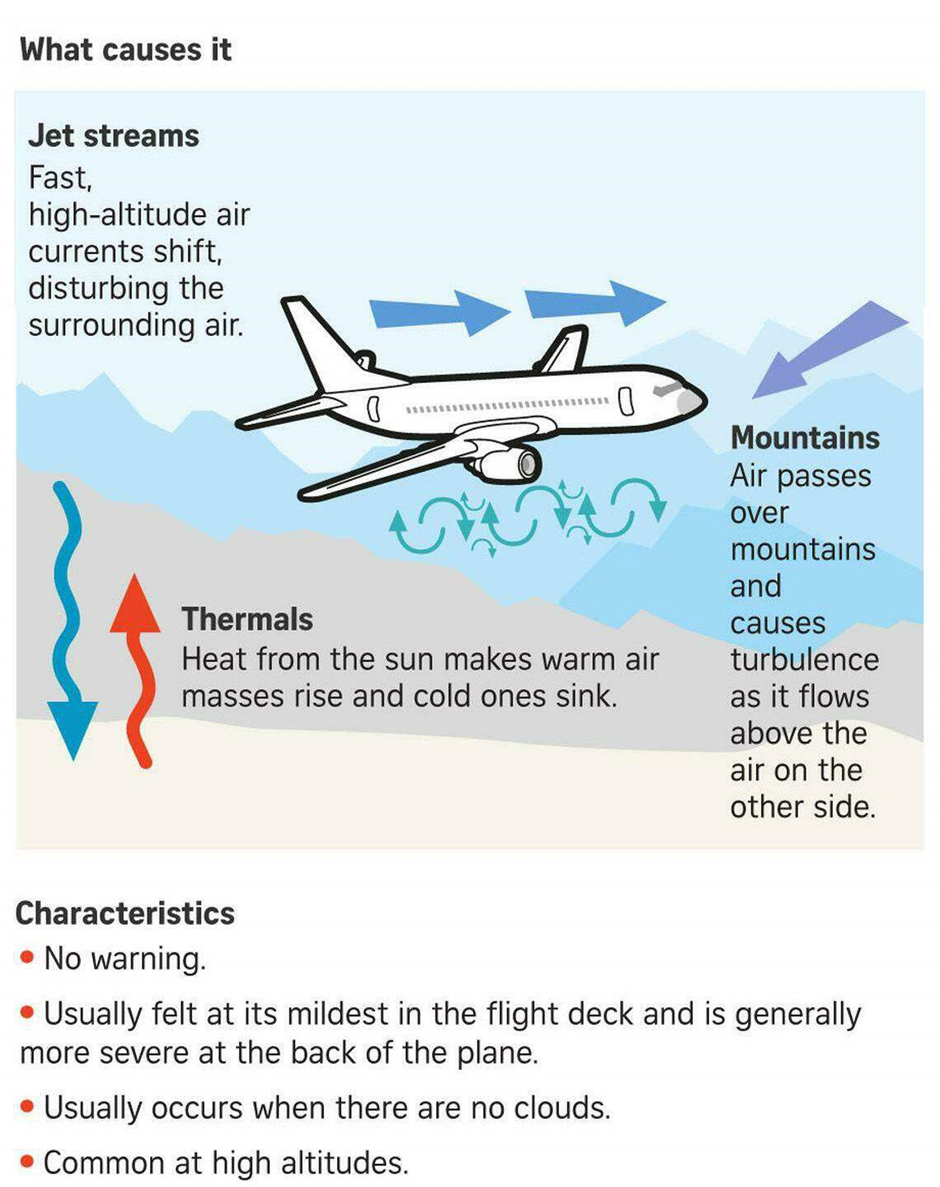
In a nutshell, Clear-air turbulence occurs in cloudless regions (away from storms) and is predominantly created by intense changes in wind direction and/or speed. “This occurs near the jet stream when the wind speeds change quickly with both horizontal and vertical distance,” says Guinn. “When the [wind] shear is strong enough, the air will overturn, creating turbulent whirls that cause the aircraft to experience rapid up-and-down motions. This is loosely similar to how strong winds over the ocean surface can create large crashing waves.”
Unlike turbulence caused by thunderstorms or clouds, CAT is not visible to pilots or meteorologists or even detectable by radar, which means it’s virtually impossible for pilots to avoid. Plus, CAT most often occurs above 18,000 feet—the cruising altitude area of most commercial aircraft.
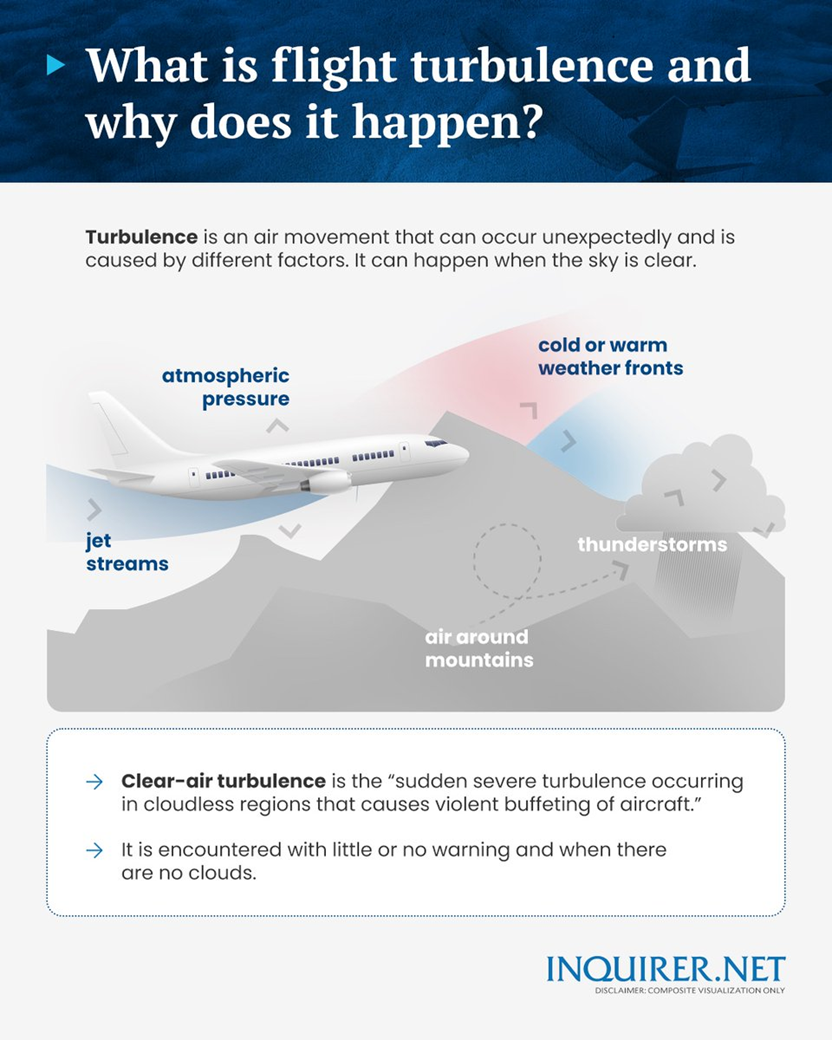
CNA reports that “Clear-air turbulence is often behind injuries as it can happen without warning, and flight crew may not have time to instruct passengers to fasten their seatbelts. Currently, there is no technology to detect the phenomenon. Although NASA says it is developing an early-warning system, but experts caution it could take years.”
Buckling Up
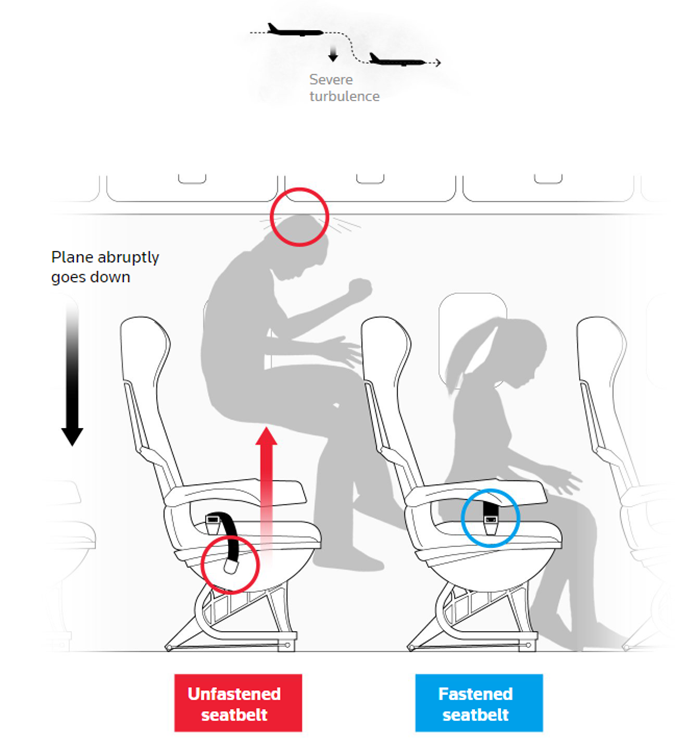
Reuters had highlighted that when an aircraft encounters turbulence and suddenly moves, anything not secured, such as passengers, can continue moving in the original direction, while the plane moves in another. Injuries from turbulence can occur as passengers are thrust towards the ceiling of the aircraft. (Fig 9)
…. To be continued Part 2
Sheriffah Dato Syed is a content creator under the Newswav Creator programme, where you get to express yourself, be a citizen journalist, and at the same time monetize your content & reach millions of users on Newswav. Log in to creator.newswav.com and become a Newswav Creator now!
The User Content (as defined on Newswav Terms of Use) above including the views expressed and media (pictures, videos, citations etc) were submitted & posted by the author. Newswav is solely an aggregation platform that hosts the User Content. If you have any questions about the content, copyright or other issues of the work, please contact Newswav.