Hybrid SST-GST model risks recreating GST, economist warns
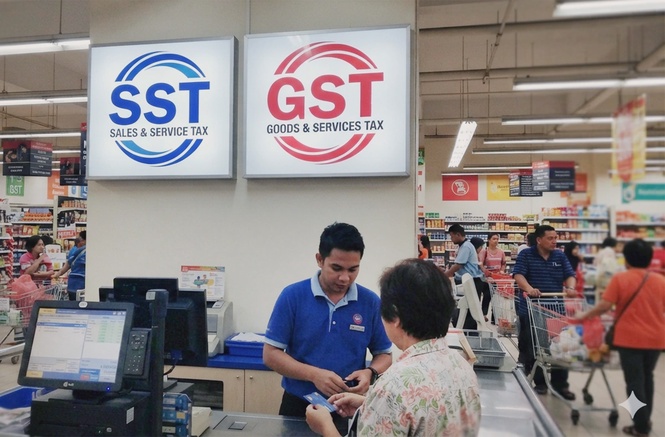
PETALING JAYA: The government proposal to retain the Sales and Service Tax (SST) while using selected features of the Goods and Services Tax (GST) could end up recreating the very system it is trying to avoid, said Centre for Market Education CEO and economist Dr Carmelo Ferlito.
He said the proposal was understandable from a political standpoint but questioned whether a hybrid system could deliver the efficiency of GST without eventually becoming a GST-like system.
READ MORE: Zeekr 7X Black Nova launched in Malaysia, 200 units from RM235,000
READ MORE: RM700,000 gone in 21 days: A wake-up call for retirement planning
“I understand the political motivation. But economically, I am sceptical.
“GST was a structurally better tax than SST because it was broader, more transparent and less distortive across production chains.”
Ferlito said the main advantage of GST was its input-tax-credit mechanism, which allows businesses to offset tax paid on inputs against tax collected from customers.
“Once you introduce that systematically, you are essentially rebuilding a GST or Value-Added Tax system.
“There is a limit to how much GST efficiency could be imported into SST without turning it into GST.”
His comments came after Prime Minister Datuk Seri Anwar Ibrahim said the government was prepared to study incorporating certain GST features into the existing SST framework to make Malaysia’s tax system more progressive.
Anwar, who is also Finance minister, emphasised that SST would remain the basis of the country’s taxation system and that he would not compromise on avoiding a tax that broadly affected the population.
He added that his fundamental concern with GST was that it was a broad-based tax that could place an additional burden on the public, particularly amid current cost-of-living pressures.
Malaysia introduced GST at a standard rate of 6% in 2015 before abolishing it in 2018 and reverting to SST.
Ferlito said trying to make SST more efficient while keeping most consumers outside the tax net would be difficult because the strength of a consumption tax comes from having a broad base.
He also said numerous exemptions and special rates could instead make the system harder to understand and administer, while creating distortions and encouraging businesses to lobby for preferential treatment.
He added that a simpler GST, accompanied by lower income taxes and targeted assistance for vulnerable households, would be preferable if the government wanted to pursue consumption-tax reform.
Ferlito urged the government to look beyond taxation when addressing its fiscal position, saying increasing revenue alone would not solve the underlying fiscal challenges.
“Malaysia does not simply need a better tax-collection machine, it needs fiscal discipline.”
He proposed that any future GST reform should be revenue-neutral, with additional consumption-tax revenue offset by reductions in other, more distortionary taxes.
However, economist Prof Geoffrey Williams took an opposing view, saying the government was right to resist a return to GST because of its impact on consumers.
“Anwar is right to oppose GST because it is regressive,” he said, adding that GST raises more revenue largely because it taxes more people and a wider range of goods and services.
Williams added that the input-credit mechanism meant GST was ultimately borne by consumers at the point of final consumption.
“The cost falls almost completely on consumers. This is why it is regressive.
“It will cause higher prices across more goods and services and more people will be worse off as a result.”
He instead proposed an electronic payments tax (EPT) as an alternative, adding that a very small levy on transactions made through cards, QR payments and e-wallets could generate substantial revenue.
He said a 1% EPT could potentially raise RM28.8 billion, while a 2% rate could generate almost RM60 billion.
Williams said Malaysia needed to rethink traditional consumption taxes as the economy becomes increasingly digital.
“In a world where most people are using e-payments, we need new taxes, not SST or GST, which are old-style taxes not fit for purpose in the current business environment.”