A shark that has spent more than a month trapped in an artificial waterway in South Korea could have just two weeks to live, a marine expert has warned.
The three-metre-long female dusky shark, nicknamed Bukang-i, was first spotted in an artificial canal at North Port Waterfront Park in Busan on 18 September. The shark's affectionate nickname combines Bukhang, the Korean word for North Port, with the suffix -i, commonly used in Korean names.
The endangered shark has since become a local sensation, drawing more than one million visitors to see it, but two attempts to guide it back to the open sea have failed. A third attempt has been planned for Wednesday, before falling water temperatures further threaten the shark’s chances of survival.
Authorities have been monitoring Bukang-i’s condition, with concerns mounting that it has not eaten during its time in the canal. According to SBS News, the shark was seen repeatedly striking its head against a concrete canal wall on Monday, and footage filmed by visitors the previous day showed that the tip of its right pectoral fin had turned white and appeared damaged.
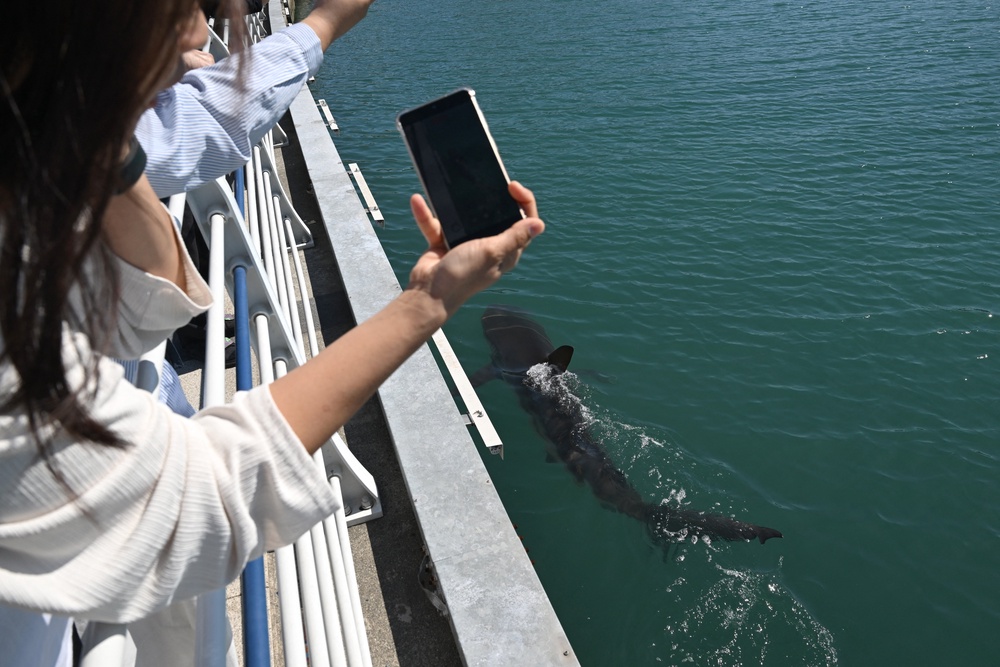
Choi Yoon, an ichthyologist and emeritus professor in the Department of Marine Bio-Resource Sciences at Kunsan National University, said that the shark’s physical condition appeared to be worsening rapidly.
“Even though dusky sharks can go without food for as long as one to two months, Bukang-i now appears to be at its limit, with almost all of its stored energy depleted,” Choi told Seoul Economic Daily, adding that the shark may have hit the wall because exhaustion had impaired its senses, leaving it less able to detect and avoid obstacles.
He warned that the shark might survive for only about another fortnight as its condition worsened and water temperatures fell.
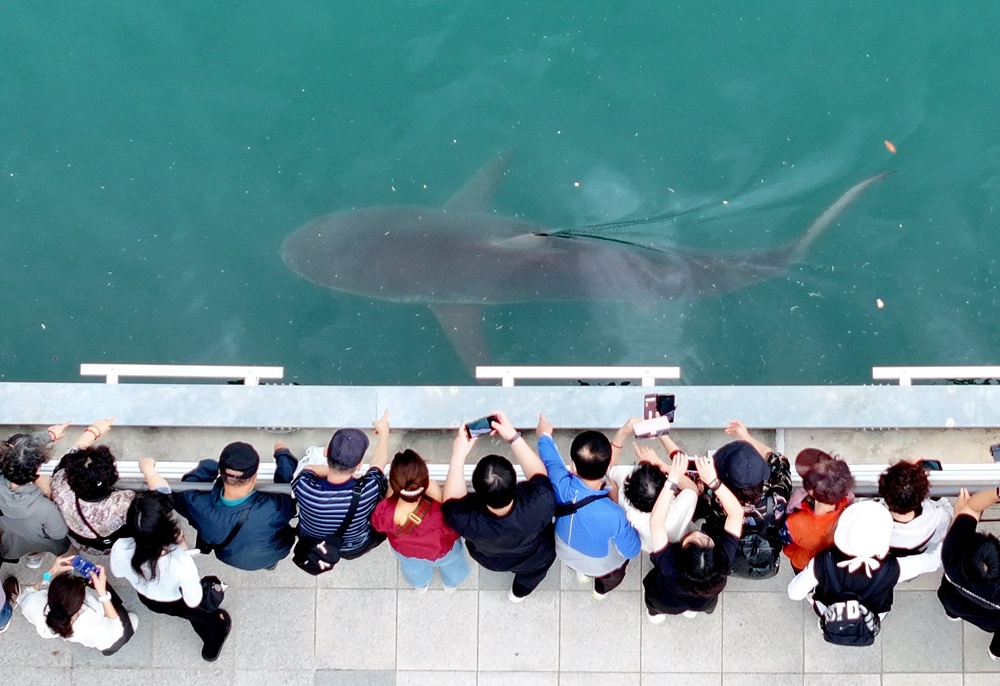
The National Institute of Fisheries Science, which has been monitoring the animal, said there had been no confirmed sightings of Bukang-i feeding since entering the waterway. The officials have identified injuries to its snout and right pectoral fin, which they believe may have happened from contact with the canal’s wall, where barnacles and oyster shells can cause abrasions.
Although the fin damage was not severe enough to affect the shark’s health and there is no bleeding, the institute is concerned about continued contact with the wall which could delay healing.
The crowds gathering to see Bukang-i may also be adding to the stress it is experiencing. The shark has been seen thrashing in the water after being startled by bright lights, including torches shone by residents at night.
There have already been two attempts to guide the shark back to sea, both unsuccessful. On 29 September, the Busan Coast Guard and other agencies deployed five vessels and used water jets to steer it towards the exit.
The operation was abandoned after about five hours as the shark repeatedly evaded the streams of water.
A second attempt on 2 October relied on a 50-metre-long net, measuring 6.8 metres in depth, to guide the animal towards open water. The shark reached a point about 100 metres from the waterway’s exit, but the net became caught on the canal floor and the operation was halted.
The following day, Bukang-i crossed the net and returned further into the waterway, according to Yonhap.
Officials have since been monitoring the shark rather than immediately attempting another rescue. However, the recent concerns about its health, combined with the prospect of falling temperatures, have led to a renewed effort to move it into open water.
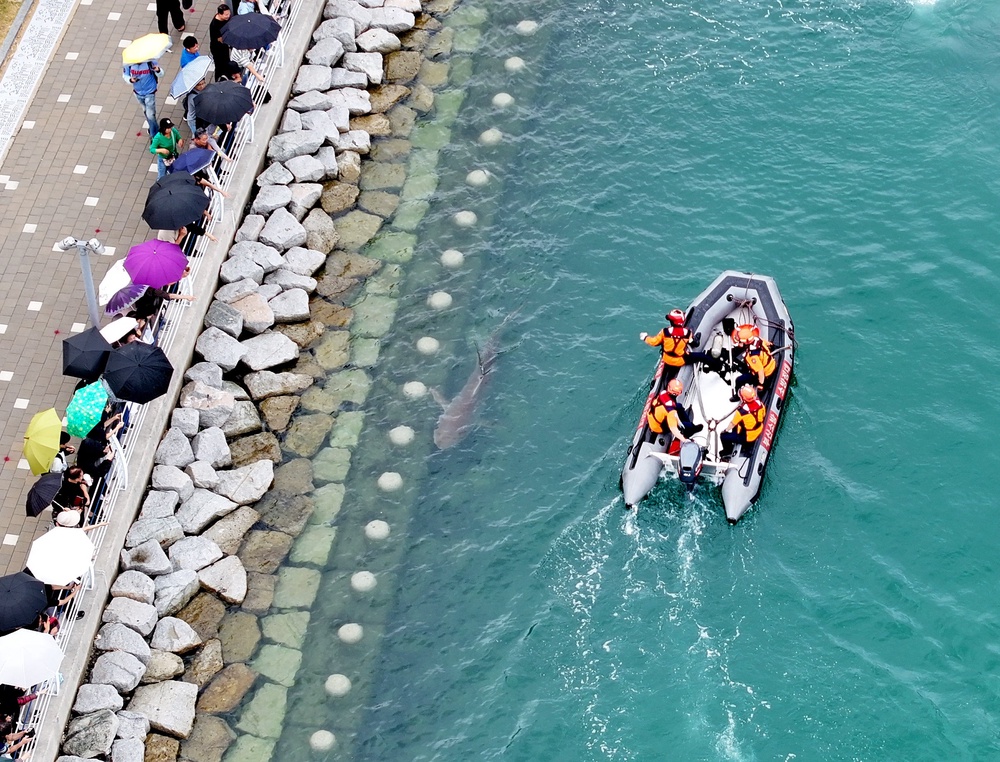
The Ministry of Oceans and Fisheries said on Tuesday that a third operation would take place the following day, in collaboration with Busan Metropolitan Government, the National Marine Biodiversity Institute of Korea, and other agencies.
The plan will involve attaching nets to pontoons – floating platforms used for work on the water – and moving them towards the sea in stages, while blocking off the sections behind the shark to prevent it from swimming back into the canal.
Underwater drones will be used to survey the canal floor and monitor the shark’s movements, while divers will inspect obstacles and check the nets. Officials also plan to restrict access around the fifth and sixth pedestrian bridges during the operation.
The date was chosen partly because no cruise ships were scheduled to call at the port and temperatures were expected to fall sharply from Thursday, reported The Chosun Daily.
South Korea issues grave warning to North Korea after border threats
North Korea may resume loudspeaker broadcasts as border tensions rise
Disover the laidback coastal city known as the Miami of Korea
South Korean religious leader sentenced to 33 years in prison for sex abuse
North Korea claims to have tested an AI-guided ‘super-speed’ torpedo
Army officer suspended after leaving his post 64 times to ‘feed lizard’