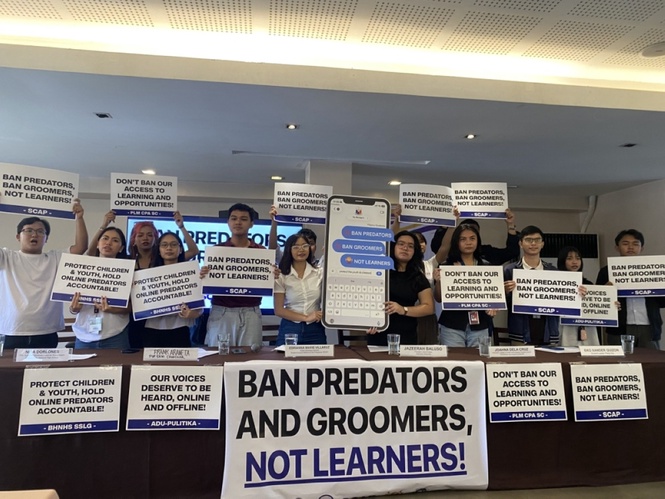
STUDENT leaders warned that a proposed blanket ban on social media access for Filipinos under 18 could further widen barriers to education by cutting students off from digital learning resources, academic communities, and opportunities beyond the classroom, as the country continues to grapple with a learning crisis.
The Student Council Alliance of the Philippines (SCAP) joined student representatives from universities and secondary schools nationwide at a press conference titled “Ban Predators, Ban Groomers, Not Learners” in Quezon City on Wednesday.
“For many young people, social media extends learning beyond the four walls of the classroom. Social media helps us stay informed, connect with others, and find learning opportunities,” said Edrianna Villaruz, SCAP undersecretary-general.
SCAP made clear that it does not take online dangers lightly, acknowledging that cyberbullying, grooming, online sexual exploitation, misinformation and scams are real threats to young Filipinos.
It argued, however, that locking an entire generation out of digital spaces does not stop the people who cause harm.
“We recognize that young people face risks online, but the answer is not to take away their access to digital spaces that also support their learning and development,” Villaruz said.
“If a predator is the problem, go after the predator. Don’t shut the door on millions of learners,” she pointed out.
The group stressed that for many students, social media is also where they learn, organize, and find opportunities, with scholarship announcements, academic communities, educational resources, and civic conversations all taking place online.
A blanket ban would cut off the very students who rely on these platforms to study, connect and take part in public life, it warned.
“For a lot of young people, social media is the classroom after the classroom, and sometimes it is the only one they have,” Villaruz said.
Instead of a ban, SCAP laid out a five-point agenda: protect children without punishing responsible young users; keep social media open as a space for learning; strengthen law enforcement and reporting systems against online predators and groomers; hold platforms accountable for privacy, content moderation, age-appropriate safeguards, and abuse reporting; and invest in digital literacy so students can recognize threats and practice responsible digital citizenship.
Student leaders from Pamantasan ng Lungsod ng Maynila, Batasan Hills National High School, and Adamson University, along with a representative from the National Federation of Supreme Secondary Learner Government ( SSLG) and Student Leaders for Good Governance (SLGG), shared their views on education, online safety and digital rights.
Lawmakers, government agencies, and technology companies should work with young people, not around them, in crafting online safety policies that are balanced, rights-based, and youth-inclusive.
“Protect the youth, hold abusers accountable, and preserve opportunities for every Filipino student,” Villaruz said.