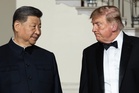
THE summit last week between Presidents Donald Trump of the United States and Xi Jinping of China was long on optics, but short on substance.
Trump rolled out the red carpet for Xi at the White House, hosted a lavish dinner, and even gave the Chinese leader a peek at his pet project, the unfinished and overpriced state ballroom.
In turn, Xi gifted the US a pair of giant pandas.
That’s about it. No breakthrough agreements on serious critical global challenges such as artificial intelligence governance, climate change mitigation or finding a negotiated end to the wars in Ukraine and the Middle East. Trump and Xi did agree to lower tariffs on $30 billion worth of “nonsensitive goods,” but kept the bigger concerns like long-term tariff structures and rare earth export controls off the table.
They also promised to meet twice again this year to keep the dialogue going.
Nobody expected a lot from the summit, except of course, Trump. He told reporters he and Xi had “never gotten along better,” and were building a relationship that promotes prosperity and security for future generations.”
Xi played the part of the obliging guest, praising the White House gala as having been done “to the highest order of perfection and there’s thought in every little detail, and it’s greatly appreciated.”
More and more, Trump is relying on optics to project himself as the leader who delivers results. He has unabashedly described himself as “a very stable genius” and a “high IQ person.” He gives himself an “A in terms of what I’ve actually done, but in terms of messaging, I’d give myself a C or C plus.” He, however, blames his middling rating in messaging on the mainstream media outlets that downplay or disparage his achievements.
It used to be that superpower summits left a deep impact on global politics. During his face-to-face meeting with US President Kennedy in 1961, Soviet Union leader Nikita Krushchev demanded that the Western allies withdraw their troops from West Berlin, a move that would isolate it from the rest of the “free world.” Kennedy firmly refused, asserting that Western rights in Berlin were nonnegotiable.
“I want peace. But if you want war, that is your problem,” Krushchev warned. Kennedy’s vaunted reply: “It’s going to be a very cold winter.”
Two months later, Krushchev ordered the building of the Berlin Wall. The Cold War got even colder, and the world inched closer to a nuclear confrontation.
In 1972, US President Richard Nixon traveled to China for a milestone meeting with China’s Chairman Mao Zedong and talks with Chinese officials. The negotiations gave China the opening to shed off its isolationism and establish a foothold in the international community.
Superpower summits have since lost their capability to shape the geopolitical landscape. They have morphed into made-for-TV events that critics call “diplotainment.”
The 90-minute closed-door meeting between Trump and Xi in Washington had little to show. “We are treated to cinematic tours of newly constructed White House helipads and casual quips about granite, while critical strategic differences remain completely unaddressed,” said one observer. “What many people don’t realize is that leaders love these summits precisely because they offer the appearance of control and statesmanship without requiring them to make any painful, messy compromises.”
“What makes this particularly fascinating is how effortlessly modern political theater blends massive geopolitical stakes with pure pageantry, leaving observers to wonder whether anything of actual substance is happening behind the curtain,” the observer said.
“Pageantry and protocol don’t add up to progress, Pandas are cute, but what America needs are rare earths,” wryly noted a former US diplomat.
In his final address to the United Nations General Assembly, outgoing UN Secretary-General Antonio Guterres said the defining challenge of the age was that world governance, reflecting the power realities of a bygone age, was not adapting to the way power is being redistributed between and within states.
He lamented that during his 10-year term, “geopolitical divides have deepened. Inequalities have intensified. Trust has frayed.”
Superpowers cloak their failure to urgently address these realities with theatrical optics.
The danger is that when substance is traded for style, a false sense of security sets in.