.jpg)
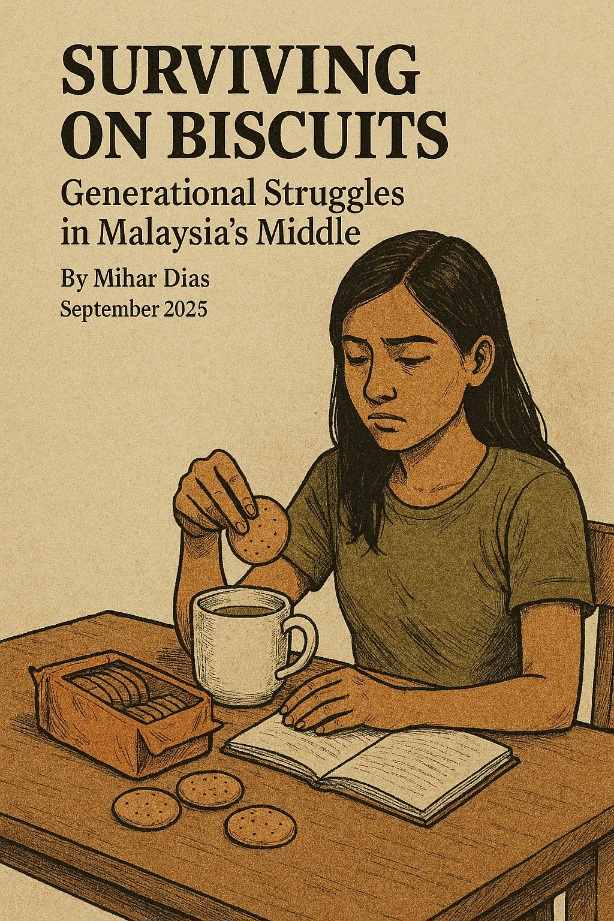
By Mihar Dias September 2025
When I read the story of a young Kedahan woman dipping biskut kering into warm water and calling it dinner while studying in KL, it felt hauntingly familiar.https://inreallife.my/kedah-woman-faced-rude-shock-trying-to-survive-with-rm20-a-day-in-kuala-lumpur/?utm_source=Newswav&utm_medium=Website
Her struggle may be dressed in 21st-century clothing, but the bones of it — hunger, exhaustion, and being forgotten by the system — are timeless.
I was born in Alor Setar just after the war. It was provincial then, quiet and cautious, and in many ways it still is, even with its new malls and highways.
Like her, I longed for escape, and education became my ticket. I left for New York, chasing the bright promise of opportunity.
But even there, I discovered that survival was often more pressing than study. When scholarship money arrived late, I starved. I borrowed from friends, feasted on free crackers, nuts and snacks, stretched meals beyond reason, and picked up campus shifts to keep afloat.
There’s nothing quite as humbling as working late into the night, only to sit in lectures half-asleep the next morning. In her story of odd jobs and sleepless exhaustion, I saw a mirror of my own youth.
Returning to Malaysia in the 1970s, degree in hand, I thought the worst was behind me. Instead, reality landed another blow: a PhD earned me just RM1,300 a month. Respectable in title, laughable in sustenance. I supplemented my income with part-time training consultancy, juggling work to keep family and self together. Even then, survival was the daily equation.
This is why her story resonates so deeply. The categories may have changed — today’s B40, M40, T20 boxes — but the experience of slipping through the cracks is the same.
She, like many in the M40, was “too comfortable” on paper to qualify for help, yet not comfortable enough to live without sacrifice. https://inreallife.my/kedah-woman-faced-rude-shock-trying-to-survive-with-rm20-a-day-in-kuala-lumpur/?utm_source=Newswav&utm_medium=Website
I was the same in my time. The labels are bureaucratic, the struggles human.
What saves us, then and now, isn’t policy but people. For me, it was friends who lent me a meal’s worth of dignity; for her, a makcik kantin who slipped her rice when she could pay nothing. Small mercies filled the gaps that institutions ignored.
The lesson across generations is stark: survival is not the same as living. A country that forces its students and scholars into exhaustion and hunger squanders its own future.
We cannot keep applauding resilience while doing nothing to remove the need for it.
Aid must look beyond neat categories and recognise lived reality. Because the hunger of one generation should not echo in another.
Yet, here we are — still counting coins, still stretching biscuits, still calling it survival.
Mihar Dias (mihardias@gmail.com) is a content creator under the Newswav Creator programme, where you get to express yourself, be a citizen journalist, and at the same time monetize your content & reach millions of users on Newswav. Log in to creator.newswav.com and become a Newswav Creator now!
The User Content (as defined on Newswav Terms of Use) above including the views expressed and media (pictures, videos, citations etc) were submitted & posted by the author. Newswav is solely an aggregation platform that hosts the User Content. If you have any questions about the content, copyright or other issues of the work, please contact creator@newswav.com.