
I am a Japanese student studying at a university in Malaysia as an international student. Since my arrival in Malaysia, I have been asked by various people whether I have tried sushi here. Like many Japanese people, I deeply appreciate sushi, which is one of the most iconic Japanese dishes. Nowadays, sushi restaurants can be found all over the world, including Malaysia. Therefore, in this article, I would like to provide a brief history of sushi and assess the taste and quality of sushi restaurants in Malaysia from a Japanese perspective.
The history of sushi
Sushi originated in China between the 5th and 3rd centuries B.C. and underwent unique changes after its introduction to Japan. To begin with, "sushi" does not necessarily mean "raw fish." Sushi is a dish composed of vinegared rice topped with various ingredients and toppings, which may include raw fish. Originally, sushi was invented as a preserved food, using fermented rice to preserve fish for a year. This style was known as "narezushi". Rice was only needed in the preservation process, so it was typically discarded, and only the fish was consumed. Later, in the 16th century, "namanarezushi" was developed. In contrast to narezushi, namanarezushi required a shorter pickling period, allowing for the consumption of the rice along with the fish.
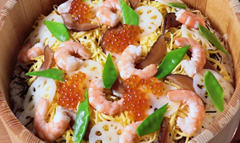
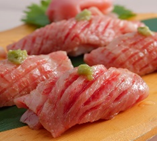
During the Edo period (1603-1867), the availability of vinegar significantly impacted the evolution of sushi. Sushi became more popular in a style similar to what we know today, where raw fish is placed on a bed of vinegared rice, and sushi is prepared and consumed immediately. Nowadays, people are enjoying various types of sushi, including chirashizushi, makizushi, and sushi with different ingredients, such as meat sushi. (Masayoshi Kazato)
Sushi restaurants in Malaysia
Sushi restaurants come in two forms. One is that the sushi chef, called itamae, prepares sushi in front of the customers, who can then enjoy it. The other is kaitenzushi, or conveyor-belt sushi, commonly found in chain restaurants. Conveyor-belt sushi is generally favored by people in Malaysia, just as it is favored by the masses in Japan.
The two major sushi restaurant chains in Malaysia are Sushi King and Sakae Sushi. Sushi King, a group of Japanese-affiliated companies in Malaysia, opened its first restaurant in Kuala Lumpur in 1995. Currently, there are more than 100 restaurants in Malaysia. Most of these restaurants have obtained halal certification, and have more Muslim customers than other Japanese restaurants. On the other hand, Sakae Sushi opened its first restaurant in 1997 and has since expanded to more than 200 restaurants in various countries, including Singapore, China, India, Indonesia, Malaysia, the Philippines, Thailand, Vietnam, the United States, and Japan. The Founder, Douglas Foo, searched for a new business model in response to intense competition from low-cost clothing factories in China. This led him to create a Japanese restaurant offering high-quality sushi and other Japanese cuisine at affordable prices. In addition to these two major chains, various other sushi chains, such as Empire Sushi and Sushi Jiro, are also widely loved in Malaysia.
Evaluation
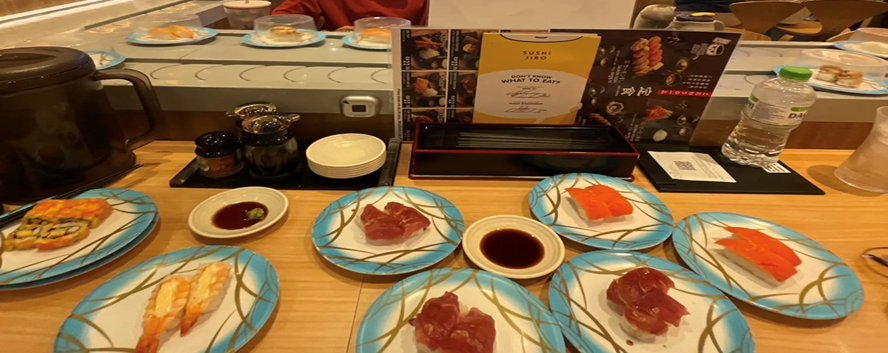
This time, I went to Sushi Jiro, which is located in the mall nearest to my university. I tried salmon, tuna, shrimp cheese, California rolls, ramen noodles, and much more. Of course, the freshness of the fish and the variety of sushi were not as good as in Japan, but it was better than I had expected. The prices were not significantly different from those in Japanese sushi chains. While relatively expensive compared to local cuisine in Malaysia, I found it to be reasonably priced for a Japanese restaurant. There was a wide variety of Japanese food on the menu other than sushi, and many locals seemed to order the yakiniku set meal or the teriyaki set meal. I could understand why many people enjoy dining there.
Summary
Japanese sushi chains also offer a wide variety of side dishes, but I noticed that there was a broader range of Japanese food available at sushi restaurants in Malaysia, such as set meals, ramen, fried rice, beef bowls, curry, and so on. What was particularly interesting was that some menu items, like small bowls of Chinese-style jellyfish, were not commonly found in Japan and seemed to be tailored to the preferences of Malaysians.
I had a strong impression of this restaurant as a Japanese family restaurant because it provided not only sushi but also a selection of other well-known Japanese dishes. Many of my friends I met in Malaysia mentioned their appreciation for sushi, which made me quite delighted as a Japanese. It's always heartwarming to hear such positive sentiments about Japanese cuisine while abroad.
References
Sushi History. EAT-JAPAN All about Japanese food. https://www.eat-japan.com/sushi-perfect/sushi-knwoledge/sushi-history/
About Sushi King. SUSHI KING Your Happy Sushi Place. https://sushi-king.com/company/
Chua, Alvin. (2016). Sakae Sushi. National Library Board Singapore. https://www.nlb.gov.sg/main/article-detail?cmsuuid=445f40b1-6858-4588-9a18-5853806d5a18
Mayu Otoshi is a content creator under the Newswav Creator programme, where you get to express yourself, be a citizen journalist, and at the same time monetize your content & reach millions of users on Newswav. Log in to creator.newswav.com and become a Newswav Creator now!
The User Content (as defined on Newswav Terms of Use) above including the views expressed and media (pictures, videos, citations etc) were submitted & posted by the author. Newswav is solely an aggregation platform that hosts the User Content. If you have any questions about the content, copyright or other issues of the work, please contact Newswav.