

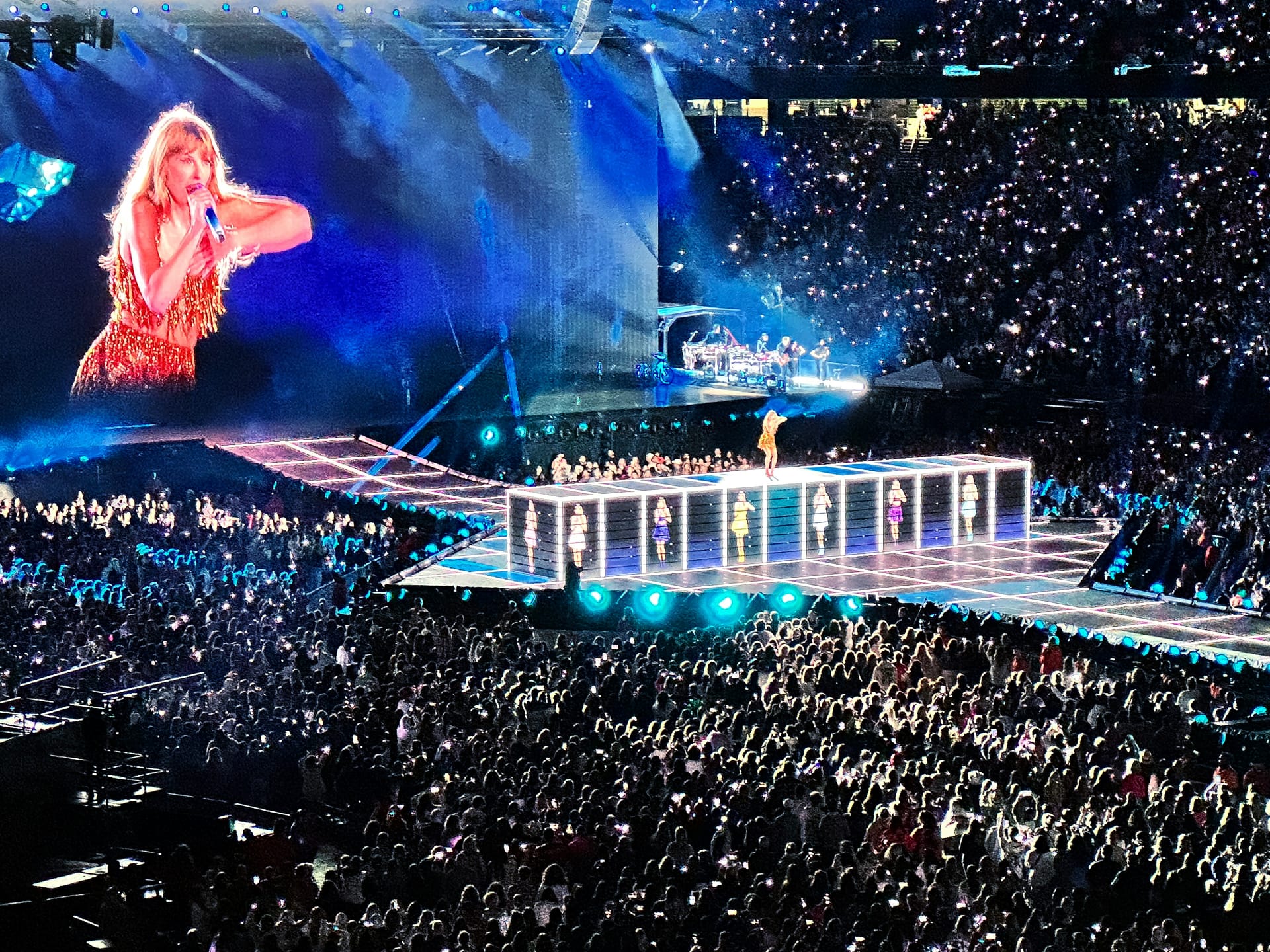
The Eras Tour was a two-year long world tour by global sensation Taylor Allison Swift that started in Glendale, Arizona on March 17, 2023, and ended in Vancouver, British Columbia on December 8, 2024. Across 149 shows, The Eras Tour was a travel back in time to her past eras, bringing music from her earliest pop-hits ranging from Love Story, You Belong With Me, Style to the viral hit song Cruel Summer, Cardigan and Anti-Hero. And with an estimated revenue of over $2 billion, it is evident that the tour was a huge success. But what actually contributed to the economic growth?
The ticket is just one part of the picture
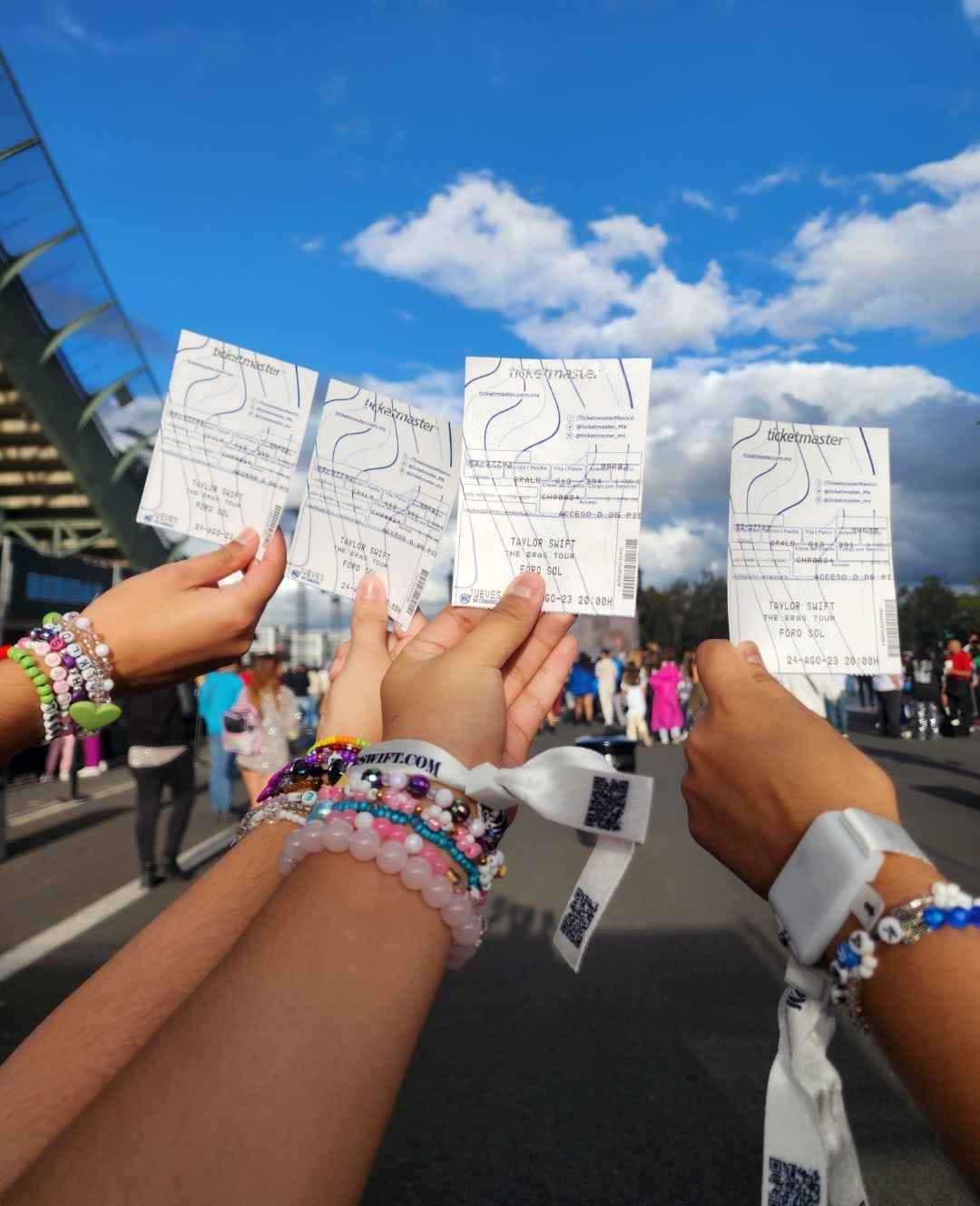
A ticket for a tour concert isn't exactly a standalone purchase for fans wanting to see their favourite artist. Accommodation, transportation, food, and even a little sightseeing at the city they're visiting is actually the main driving force that benefits the local economy. Picture this : A fan in Kuala Lumpur buys a $108 SGD ticket for a Taylor Swift concert in Singapore, the cheapest I could find. And that's only the beginning. She needs a return flight ticket, a hotel for two nights minimum, transport fares around the city, and maybe a little bit extra for some sightseeing, which could easily total to be more than $1000 SGD (roughly RM3,180). In essence, she becomes a tourist for the duration of her stay, and makes purchases similar to that of a tourist visiting the city. To top it all off, this is only one fan we're talking about, The Eras Tour had an average attendance of 68,240 people per show, totaling over 10,168,000 attendancees across the entire tour. For example, looking at estimations provided by the US Travel Association, they estimated that the average spending of a swiftie attending the Eras Tour concert was $1,300.
The Multiplier Effect
Let's continue with the example of the Eras Tour concert in Singapore, the huge influx of tourists into the country in a small timeframe brought along major spending. Imagine 1,000 fans come to Singapore, and each of them spends an average of $500 SGD each, that is already $500,000 in initial tourist spending. If the businesses affected continue to spend that money locally, the country can see an economic growth of the same magnitude. Now zoom in into the major affected businesses, first to the hotels, with greatly increased revenue and demand, the hotels could increase hours, pay overtime, purchase additional supplies from local businesses etc. Now, the employees would have a chance to earn more by doing extra hours, and local businesses will gain revenue as well. Which causes more employees to have an opportunity to buy things, which continues the chain of purchasing. In economics, this refers to the multiplier effect, where an insurge of money in one sector of an economy can continue additional rounds of spending that generates the economy.
The real effect of the Eras Tour in Singapore.
Singapore was the only stop in Southeast Asia for the Eras Tour. Which means demand for tickets were extremely high. Across 6 days, the total capacity of the tour in Singapore was roughly 300,000. And an article by The Straits Times estimated over 1 million people queuing for the presale tickets. For economic growth, the amount of money is just one part, where the money comes from is another major factor of growth. When people spend their money overseas, the money goes into the economy of that particular nation, since a majority of concertgoers in Singapore were estimated to be from overseas, a significant amount of spending was being brought into Singapore's economy. For instance, Filipina Charlyn Suizo splurged over $6000 for her entire trip to the concert.
The experience of Charlyn Suizo was far from unique. With around seven in every ten concertgoers estimated to be travelling from overseas, Singapore was expecting a huge influx of tourists for just six nights of concerts. Chua Hak Bin, an economist at Maybank, estimated that around 70% of the 300,000 concertgoers would be coming from abroad, spending between S$350 million and S500 million on hotels, food and entertainment.
And this is where the numbers start to get interesting. The Monetary Authority of Singapore later noted that private-sector analysts estimated the Taylor Swift and Coldplay concerts could have generated between S$350 million and S$450 million in tourism receipts. This was equivalent to around a 6% injection above Singapore's average quarterly tourism receipts in the first three quarters of 2023, benefiting industries such as air transport, accommodation, arts and retail.
The hotel industry shows just how noticeable this sudden demand was. In March 2024, Singapore's hotel occupancy reached 79.1%, a 5.1% increase from the previous year. The average daily room rate also rose by 12.7% to S$358.91, while revenue per available room jumped 18.5% to S$284.03. On the first two concert dates, hotel occupancy reached an incredible 92.7% and 92.5% respectively.
But the economic effect was already being felt before Taylor Swift even stepped onto the stage. Hotels and airlines reported that demand around the concert dates had increased by up to 30%, as fans from around the region began booking their flights and accommodation. Changi Airport also recorded a 20% increase in arrival traffic during the first week of March compared with the same period a year earlier.
So, when we look at the Eras Tour in Singapore, the S$108 concert ticket was clearly only a small part of the picture. One fan could spend money on a ticket, a flight, a hotel, food, transport and sightseeing. Multiply that by around 300,000 concertgoers, with roughly 70% estimated to be from overseas, and the spending starts to reach a completely different scale.
This is what makes Swiftonomics so interesting. Taylor Swift did not need to sell S$500 million worth of concert tickets to create hundreds of millions of dollars in tourism spending. Instead, she brought hundreds of thousands of people into Singapore, and those people spent their money across an entire range of local industries. The concert was only the starting point — the real economic effect happened outside the stadium.
The artist is just one part of the picture
Overall, the artist may be the attraction, but the fans are the ones driving the spending. A huge part of the Eras Tour were the friendship bracelets, which was a major turning point for people selling bracelet beads, and brought life to an otherwise forgotten tradition. People selling beads on Etsy suddenly became a part of the economic growth. With some sellers earning up to $16,000. Taylor Swift didn't sell beads, they were a fanmade tradition that ended up helping other people earn revenue.
The verdict? Swiftonomics isn't just about how well Taylor Swift marketed the Eras Tour, but the branding and cultural impact behind it. Large-scale events like these attract people from all over the world, pushing them to spend on tickets, hotels, flights, food, transport, merchandise and even friendship bracelets. What starts as a concert can therefore turn into an economic chain far larger than the stage itself. Taylor Swift may be the artist that attracts the revenue, but participation by the fans are the ones that actually moves the economy on a much higher scale.
Jaden W (wmjaden3@gmail.com) is a content creator under the Newswav Creator programme, where you get to express yourself, be a citizen journalist, and at the same time monetize your content & reach millions of users on Newswav. Log in to creator.newswav.com and become a Newswav Creator now!
The User Content (as defined on Newswav Terms of Use) above including the views expressed and media (pictures, videos, citations etc) were submitted & posted by the author. Newswav is solely an aggregation platform that hosts the User Content. If you have any questions about the content, copyright or other issues of the work, please contact creator@newswav.com.
