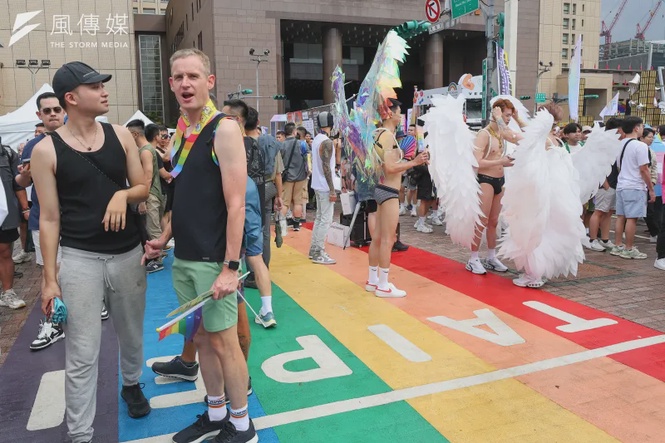
Taipei will host the 24th Taiwan LGBT+ Pride on Saturday, October 31, an event regularly described as the largest Pride march in East Asia. It falls in an unusually charged year. Four weeks ago a police raid on a gay bar in the capital drew international criticism, and the city's mayor, who has said he will march, is fighting for reelection in the 2026 Taiwan local elections less than a month later.
Taiwan became the first place in Asia to legalize same-sex marriage in May 2019, and the Taipei parade has become a regional draw. Organizers estimated about 180,000 people took part in 2024 and close to 150,000 in 2025, when the march went ahead in steady rain.
This Year's Theme Puts Listening First
The parade, first held in 2003, is organized by the Taiwan Rainbow Civil Action Association. This year's theme is "Our Voices, Our Journey," a translation of a Taiwanese Hokkien phrase that roughly means "listen to each other's voices, walk the road together."
According to Taiwan's Central News Agency, organizers said listening is the way to get past the stereotypes and misunderstandings created by identity labels, and to march alongside other vulnerable groups, including people with disabilities, people living with HIV, Indigenous people, migrant workers and new immigrants.
The message comes with a warning. Seven years after the same-sex marriage law took effect, organizers pointed to a 2026 Executive Yuan survey showing that public support for LGBTQ+ and transgender rights in Taiwan has declined, and linked the shift to a global backlash against diversity, equity and inclusion policies.
Route, Times And What Visitors Should Know
The march starts and ends at the plaza in front of Taipei City Hall, close to Taipei 101. A guide published by TAIWANIZE, which runs the city's Rainbow Culture Festival, lists the following schedule:
- 12:00: A rainbow market opens at the plaza and runs until 18:00.
- 13:00: Contingents begin to gather.
- 14:05: The march sets off.
- 18:40: Stage events end.
As in previous years, the parade splits into two loops. The north route passes along Dunhua South Road and Zhongxiao East Road through the busy shopping district, while the south route follows Guangfu South Road and Xinyi Road. Each takes about two to three hours.
Taking part is free, and individuals do not need to register. Roads around the route will be closed, so the guide recommends public transport and suggests avoiding City Hall and Taipei 101 MRT stations, which get the most crowded, in favor of Sun Yat-sen Memorial Hall, Yongchun or Xinyi Anhe stations. It also asks visitors to check with people before taking close-up photos, since not everyone at the march is out to family or employers. Organizers advise checking the official Taiwan Pride website for last-minute changes.
A Full Week Of Pride Events Across Taipei
The parade is the centerpiece of a wider Pride week. The organizers have brought together events from 20 partner groups into a Pride month calendar. Highlights include:
- Taipei International Rainbow Culture Festival: October 27 to November 1 at the North Plaza of the Red House in Ximending, the heart of the city's gay nightlife. Entry is free.
- Taiwan Transgender Pride: October 30 at 228 Peace Memorial Park, with a stage program from 18:30 and a march at 19:30.
- Ticketed parties: Several adults only events, including the X Formosa Rainbow Music Festival at the New Taipei Industrial Exhibition Center from October 30 to November 1.
Pride does not end in Taipei. Taichung will hold its march on November 14, and Kaohsiung on December 5.
A Gay Bar Raid Hangs Over The Celebrations
This year's mood has been shaped by events a few streets from the festival grounds. On October 3, police from Taipei's Wanhua precinct searched Commander D, a men's BDSM bar in Ximending that had operated for 14 years. Acting on a court warrant, they took 51 customers in for questioning over alleged public indecency and arrested the owner.
A video that spread online showed an officer asking a wheelchair user, "Disabled people can have sex too?" The Taipei Times reported that Police Commissioner Lin Yen-tien disciplined six officers, including Wanhua precinct chief Chen Yung-hua, while maintaining that the raid itself was lawful and that the bar had received 13 indecency complaints this year. Taipei Mayor Chiang Wan-an apologized on October 5.
The raid made international headlines. Local media noted that Reuters called such a large police operation rare in a place known for its liberal values and legal protections for sexual minorities. About 100 LGBTQ+ people and supporters protested outside the Red House the next day, Initium Media reported. Interior Minister Liu Shih-fang later said the parade would proceed under the normal rules for public assemblies and that all sexual orientations should be respected.
Why The Parade Matters In The 2026 Taiwan Local Elections
The march comes four weeks before Taiwan votes for mayors, county chiefs and local councilors on November 28. Organizers have urged "rainbow citizens" to back candidates who support sexual minorities and gender equality policies.
Chiang, of the opposition Kuomintang, attended Pride in 2025 and said on October 7 that he would join again. In an October 13 statement reported by ETtoday, the organizers replied that marching "is not an indulgence" that excuses the raid. They set out six questions for the city's review of the operation, covering its chain of command, legal basis and the conduct of officers, and asked for a public answer by October 19.
The calendar adds another twist. The first televised debate between Chiang and his challenger, Puma Shen of the ruling Democratic Progressive Party, is scheduled for noon on October 31, about two hours before the march sets off. Shen has also used the raid to criticize the city, writing that "Taipei's diversity and inclusivity should not only be visible on Pride parade day."
Pressure on the incumbent is building. A poll released on October 20 by the Xinmin Cross-Strait Research Association put Shen at 50.3% and Chiang at 33.3%, although other surveys have shown a tighter race. Organizers have asked politicians to march as ordinary participants and have banned campaign flags, vests and giveaways from the parade.