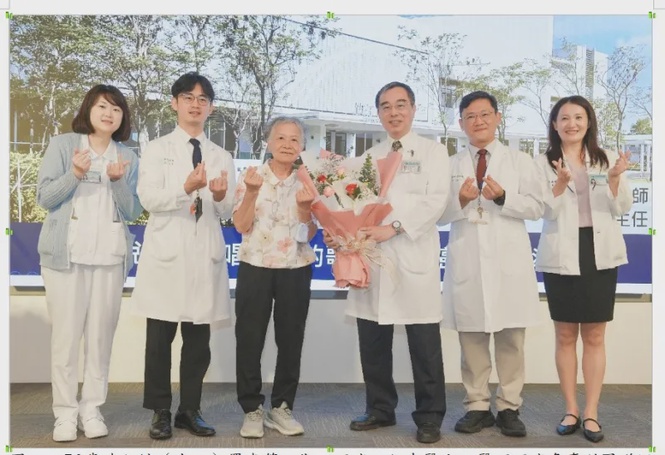
A 76-year-old grandmother who loves to sing was told she might never speak naturally again. Diagnosed with Stage 4 hypopharyngeal cancer — a throat cancer that typically requires surgical removal of the larynx — she had already begun to lose hope. Then physicians at China Medical University Hospital (CMUH) in Taichung, central Taiwan, offered her a different path. Six weeks later, her tumor was under control and her voice was intact. At her last check-up, she sang.
Chen's case is drawing attention not just for its outcome, but for what it suggests about the growing availability of advanced cancer care in Taiwan — and what that means for patients across the region who are weighing their options.
A Cancer That Gives Almost No Warning
Hypopharyngeal cancer is one of the most dangerous throat cancers precisely because it is so quiet in its early stages. The hypopharynx sits deep in the throat, behind the voice box and just above the esophagus — an area packed with lymph nodes that can carry cancer cells to other parts of the body long before a patient feels seriously unwell.
Chen first noticed difficulty swallowing about six months ago. A lump appeared on her neck. By the time doctors examined her, the tumor measured roughly 4 centimeters and had already spread to multiple lymph nodes — classic Stage 4 disease. For many patients at that stage, the standard answer is total laryngectomy: the complete removal of the voice box, leaving the patient permanently unable to speak or sing naturally.
"Early signs are easy to dismiss," said Dr. Ying-Chun Lin, a radiation oncologist at CMUH. "Patients often feel only a mild foreign body sensation in the throat, some discomfort when swallowing, or a dull ache in one ear. These symptoms are so easily confused with a simple sore throat that many people wait months before seeing a specialist — and by then, the cancer has often progressed."
Dr. Ji-An Liang, director of CMUH's Proton Therapy Center, noted that smoking, alcohol, and betel nut chewing — habits widespread across much of Southeast Asia and Taiwan — are the most common risk factors for this cancer. He stressed that people without these habits are not immune, and urged anyone with persistent throat symptoms or an unexplained, painless neck lump lasting more than two weeks to seek evaluation from an ear, nose, and throat specialist promptly.
Why Taiwan's Proton Therapy Is Different From Conventional Radiotherapy
The key to Chen's organ-preserving outcome was a technology called proton therapy, combined with chemotherapy — a combination her medical team chose specifically to avoid surgery given her age and overall health.
Conventional radiation works by firing X-rays through the body. Those beams deposit energy not just at the tumor, but along their entire path — meaning healthy tissue before and after the cancer site absorbs radiation too. In the head and neck, that collateral damage can harm the salivary glands, the spinal cord, and the very structures that allow a patient to swallow and speak.
Proton therapy exploits a different physical property. Proton beams can be tuned to release most of their energy at a specific depth — the point where the tumor sits — and then stop. This effect, known as the Bragg Peak, allows oncologists to deliver a powerful dose to the cancer while dramatically limiting exposure to surrounding tissue. Paired with Pencil Beam Scanning, a targeting technique that shapes the radiation field to the precise three-dimensional contours of the tumor, the approach offers a level of accuracy that conventional radiotherapy cannot match.
For Chen, that meant six weeks of outpatient treatment. She experienced throat pain and temporary hoarseness — expected side effects — but her CMUH team managed her symptoms and nutrition closely, and she finished the full course.
Taiwan's Expanding Cancer Care Capacity
For patients in Southeast Asia considering Taiwan for cancer treatment, the timing is relevant. CMUH's Proton Therapy Center opened in 2024 and has treated more than 400 patients to date, across head and neck cancers, brain tumors, lung cancer, and liver cancer. A second proton therapy room is scheduled to open in September 2026, which the hospital expects will meaningfully reduce waiting times — a practical consideration for patients traveling from abroad.
CMUH is one of Taiwan's largest academic medical centers and holds international hospital accreditation. Taiwan's healthcare system is consistently ranked among the most accessible and affordable in Asia for international patients, and Taichung — Taiwan's third-largest city — is well connected by air from major Southeast Asian hubs.
Chen's story is, at its core, a reminder that a Stage 4 diagnosis does not always mean the worst outcome — provided the right technology is available and the patient reaches a specialist in time. At her last visit, she walked into the clinic and sang for the staff. The disease that was supposed to silence her had not.