Taiwan's Foreign Minister Lin Chia-lung said on October 28 that the United States has repeatedly assured Taipei it has nothing to fear from a possible third and fourth summit between President Donald Trump and Chinese leader Xi Jinping, because Taiwan will not be a focus of those talks.
Trump and Xi have already met twice this year. They could meet again at the Asia-Pacific Economic Cooperation (APEC) leaders' summit in Shenzhen, China, in mid November, and at the G20 summit in Miami in December. Both would come after the US midterm elections on November 3, adding to uncertainty in Taipei about how Washington's China policy could shift.
"Trump's personal style is one level, but US policy toward Taiwan is another level," Lin told lawmakers.
What Washington Has Told Taipei
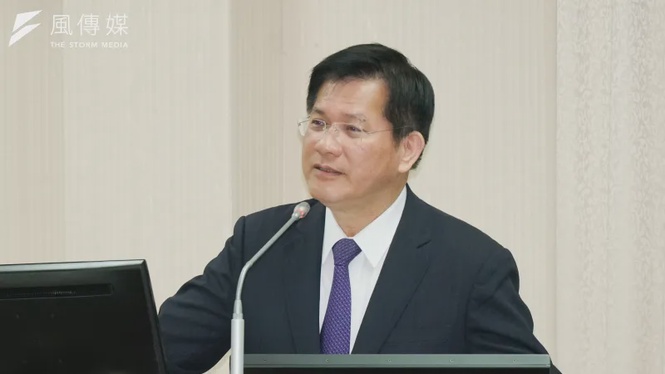
Lin was speaking at the Legislative Yuan's Foreign and National Defense Committee, where the foreign ministry was presenting its work report and defending its budget for next year. Niu Hsu-ting, a legislator from the opposition Kuomintang (KMT), asked how the ministry was tracking the frequent Trump Xi meetings.
Lin said interaction between the two leaders was "under control" and in line with Taipei's expectations. Taiwan and the US are in close contact before, during and after each summit, he said, and neither of the first two meetings led to any change in US policy toward Taiwan.
Niu countered that while Washington's broad framework and public statements had not changed, many specific policies had yet to be delivered. Lin replied that US officials, both publicly and in private briefings to Taipei, have stressed that their Taiwan policy under the Taiwan Relations Act and the Six Assurances remains unchanged.
On arms sales, a point of particular concern, Lin said the US side has explained that pending sales are still under review and no decision has been made. US officials have also repeatedly pointed to the size of last year's approved arms sales to Taiwan, which they compare favorably with Trump's first term and with the largest single arms package in history.
"I don't think US China relations and US Taiwan relations are necessarily zero sum," Lin said. "We need to find the maximum space."
"Trump Is Trump"
Lin acknowledged that working level communication between the two sides is extensive, "but Trump is Trump." Some of the president's remarks, such as saying "Taiwan is Taiwan," leave Taipei with mixed feelings, he said.
Asked about Trump's renewed claim that Taiwan "stole" America's chip industry, Lin noted that Trump had said similar things before, but has also expressed respect for TSMC Chairman C.C. Wei. "To some extent, it is also a bit of envy," Lin said.
"Don't turn our gain into his loss," Lin said, arguing that Taiwan and the US are building a symbiotic partnership in supply chains rather than a zero sum one.
When Niu suggested Taiwan's foreign policy was bending to Washington's needs to avoid damaging ties, Lin pushed back. "Cooperating with the US also has to benefit us. Otherwise, we can't go along with things that are bad for us," he said.
The Role Of TSMC In Taiwan's Diplomacy
Lin said TSMC's global investments help Taiwan's diplomacy and may strengthen its national security. The chipmaker's plant in Phoenix, Arizona, is already profitable, he said, and its overseas investments are driven by customers and industry needs. "It is a global company by nature," he said.
Niu then asked whether the US would still care about Taiwan if the island did not make chips. "That premise doesn't exist," Lin replied, describing Taiwan's chips as indispensable to the global supply chain and adding that TSMC's share price has "an objective market basis."
How The US Midterms Could Affect Taiwan
On the midterms, Lin said Taiwan is watching closely and engaging broadly with the US executive branch, Congress and both parties. "Our work in the United States has bipartisan support," he said.
He noted that, based on current polling, Trump as the incumbent faces a tough midterm. Taiwan is preparing for possible shifts in US foreign policy and looking for openings, including pushing Congress to pass legislation to avoid double taxation between Taiwan and the US.
Lin said domestic and foreign policy are two sides of the same coin. A president facing difficulties at home may turn to foreign affairs, which are largely led by the executive branch. If the midterms produce a divided government, he said, Congress could use resolutions and budget reviews to constrain the president on issues such as the wars in the Middle East and Ukraine and military aid to other countries.
Even so, Lin said, despite Trump's unusual style, both parties in Congress want to push for arms sales to Taiwan. Still, he cautioned that Taipei cannot know what Xi might say at future summits, or how Trump might respond in the moment. "Diplomacy is ever changing," he said. "We cannot let our guard down."
YP