
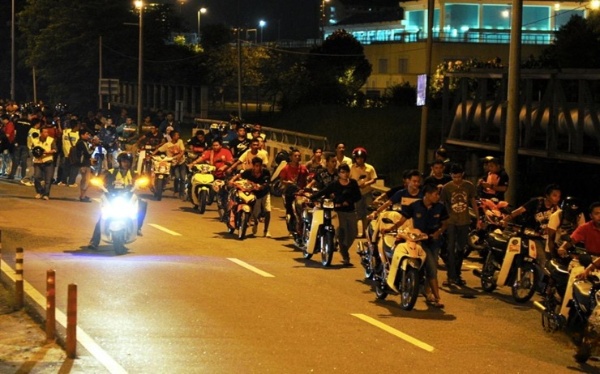
KUALA LUMPUR – Suggestions to revoke fuel subsidies from serious traffic offenders and illegal street racers may appear politically appealing, but experts warn they could create unintended consequences.
Economist and consultant at Global Asia Consulting, Samirul Ariff Othman, said fuel subsidies are intended as economic support and price-stabilisation tools, not punishment mechanisms.
“Fuel subsidy is a welfare and price-stabilisation tool,” he told Scoop. “Turning it into a behavioural punishment mechanism risks mixing two policy objectives that should remain separate.”
Samirul suggested that road offences should instead be addressed through stricter enforcement, including higher fines, demerit points, licence suspension, and mandatory court proceedings for repeat offenders.
He cautioned that removing subsidies could disproportionately affect lower-income individuals.
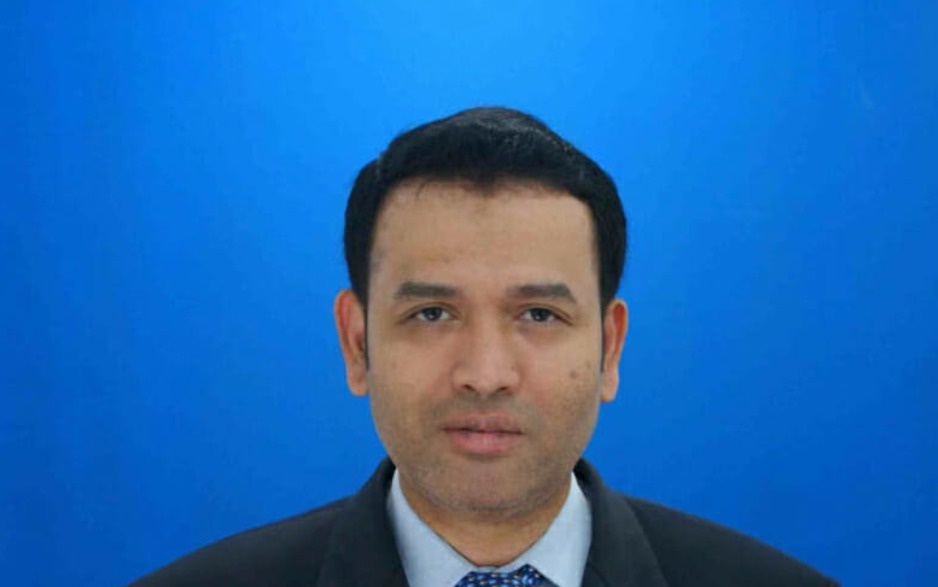
“A rich driver may not care about losing subsidy. A lower-income delivery rider or worker may be severely affected,” he said.
Highlighting the broader risks, Samirul warned that linking welfare benefits to behavioural compliance could set a dangerous precedent.
“There is also a slippery-slope risk. Once subsidies are linked to traffic offences, future governments may be tempted to attach welfare benefits to unrelated behaviours. That could undermine the principle that basic economic support should be based on need, not moral scoring,” he added.
While technically feasible, integrating systems across JPJ, PDRM, MyDigital ID, PADU, and fuel subsidies carries significant risks, he said.
“From behavioural economics, people do feel losses strongly. Losing an existing benefit can be more painful than paying a fine. But that does not automatically make it good policy. A punishment must be fair, proportionate and directly related to the offence,” Samirul emphasised.
He stressed that subsidy policies should remain targeted by economic need rather than used as tools for moral enforcement.
“Fuel subsidies should be targeted by economic need, not weaponised as moral punishment. Dangerous driving should be punished firmly — but through traffic law, insurance pricing and licence enforcement, not through the subsidy system,” he added.
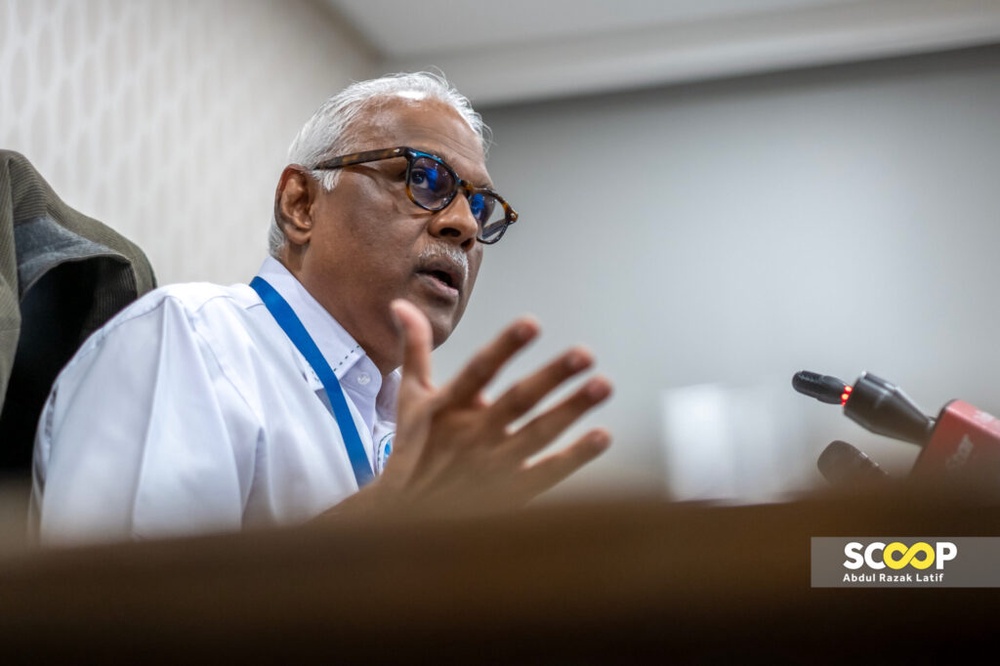
Former Klang MP Charles Santiago echoed these concerns, warning that additional penalties could further burden lower-income Malaysians already grappling with rising living costs and economic uncertainty.
“The chances are very high in the next 2-3 months, they will be losing their overtimes as well as their jobs. Unemployment will increase,” he said.
Charles argued that the government should instead focus on ensuring the wealthiest bear greater fiscal responsibility.
“But I think it will make more sense if the government actually puts more public finance burden on the T20 and one of them actually can be a wealth tax, 2% wealth tax on their wealth,” he explained, clarifying that such measures should target the upper brackets of the T20 group, such as millionaires.
He also supported heavier taxation on luxury car owners.
“I think the Prime Minister is saying that they are looking at mechanisms to tax the people with the big cars. I think that's fair. Because they have money available to them and it will not compromise their quality of life,” he said.
Charles warned that removing subsidies from lower-income motorists could trigger public backlash. Regarding illegal street racing and the “mat rempit” culture, he noted that the problem stems from deeper socio-economic marginalisation.
“The problem of mat rempit has not been properly addressed. It is your factory worker, it is your Grab driver, it is your average person who's involved,” he said.
He suggested improving monitoring and efficiency within public departments and government-owned transport assets instead of penalising vulnerable groups.
“Government has got a huge number of vehicles, cars, lorries, tractors and so on and so forth. So it's time to look at them more carefully now,” he said.
The caution comes after a recent “Mat Motor” convoy to Sultan Ismail Petra Airport in Kota Bharu, organised by several PAS assemblymen with Kelantan PAS Youth, drew widespread criticism.
Many described it as an unnecessary waste of fuel amid ongoing subsidy concerns, with Transport Minister Anthony Loke questioning the decision to stage a convoy in a strategic, security-sensitive location. - May 12, 2026
The post Targeting Mat Rempit, illegal racers via revoked subsidies may backfire: observers appeared first on Scoop.