
Table of Contents
FCCI Film Fest brings together talents from local universities
FOR many young filmmakers, university is where an interest in movies first becomes something more serious. Cameras have to be operated, scripts rewritten, locations secured and creative disagreements settled before anything reaches the screen.
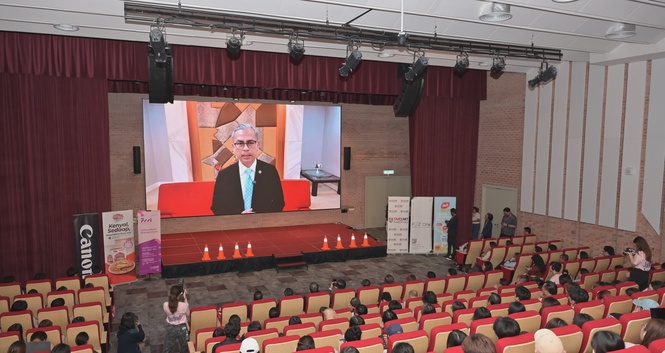
That process was on display at the fifth TAR UMT Faculty of Communication and Creative Industries (FCCI) Film Festival, held recently under the theme “The Unspoken – Where Silence Tells the Loudest Stories”.
The annual festival brought together students, academics and industry professionals, with screenings, workshops, forums, exhibitions and an awards ceremony providing young filmmakers with an audience beyond their classrooms.
This year also included participation from university partners in Indonesia and India.
Learning by making
For 24-year-old broadcasting student Chong Ee Jack, filmmaking became a way to examine the online culture he encounters every day.
Chong wrote, directed and edited Goodman, the festival’s opening film, which explores rage-baiting, online influence and the divide between a person’s digital persona and real-life identity.
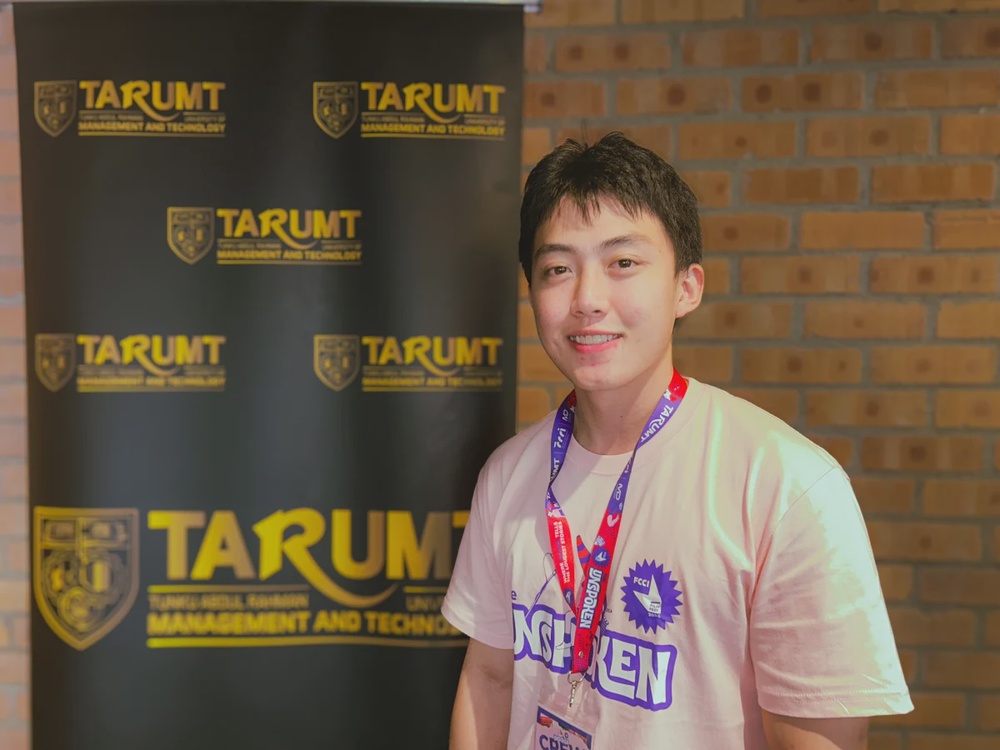
Its protagonist is an aggressive YouTube personality who becomes consumed by attention and numbers, while behaving very differently away from the screen. Chong compared the character’s two identities to Spider-Man and Peter Parker.
“I think in (the) modern world, in (the) adult world, there is no bad or good. There’s a lot grey area in everything. So through this film, I try to bring out the good and the bad,” he told theSun.
Making the 15-minute film also represented a substantial jump in scale for Chong, whose previous directing experience was limited to five-minute productions.
“Directing is a very new thing for me. So, there’s a lot of details I missed out. But through this, I get to reflect on what I did good and what I did bad,” he said.
The production involved around 30 people, giving Chong experience working with a much larger crew and showing how student productions can become practical training grounds for collaboration.
Building a crew
For 21-year-old Mass Communication student Melvin Teh Houng Yenn, the experience was similarly collaborative.
His psychological short The Margin of Error, about a woman with obsessive-compulsive disorder, was completed in roughly a month from pre-production to post-production and received seven nominations at the festival.
Working under such a tight schedule forced Teh to rely heavily on his student crew, which operates under the name Island Productions.
“I wouldn’t say that this is my project, I would say it’s our project,” he said.
That collaboration did not mean everyone agreed. Meetings sometimes became debates over which ideas made sense, teaching Teh that directing also involves listening to the people around him.
“I would say that communication is key and choosing the right people for your team is also very important,” he said.
For Teh, simply reaching an audience carried personal significance. He moved from Penang to Kuala Lumpur to continue his studies, partly because he wanted the opportunity to showcase his work.
“Getting nominated for the film festival, I think that itself is already winning for me,” he said.
Stories with responsibility
Communications minister Datuk Seri Fahmi Fadzil, who addressed the launch through a recorded video message, placed the students’ work within the wider responsibilities facing a new generation of media practitioners.
With deepfakes, scams, fake accounts and artificial intelligence (AI)-generated misinformation becoming increasingly sophisticated, Fahmi said authentic storytelling had become increasingly important.
“Filmmaking is not only a craft. It is a form of civic responsibility. As you become the directors, editors, screenwriters, cinematographers and documentarians of tomorrow, I ask you to carry this festival’s spirit with you – to look past the surface, verify before you publish, give a voice to those who are rarely heard and use emerging technologies, including AI, responsibly and with integrity,” he said.
The festival concluded with student filmmakers from several institutions sharing the honours.
Asawara’s Bisu Otak took first place for Best Short Film, while Everyday Life (Nichijou), also from Aswara, finished second. TAR UMT’s Shadow Hunter placed third and also won Best Production Design, Best Editing and Best Cinematography.
Bisu Otak director Zamrud Zulzikry Iskandar was named Best Director, while Fimie Don won Best Actor. Renee Tan Qian Yi won Best Actress for TAR UMT’s The Margin of Error, giving Teh’s production one of the festival’s major acting prizes.
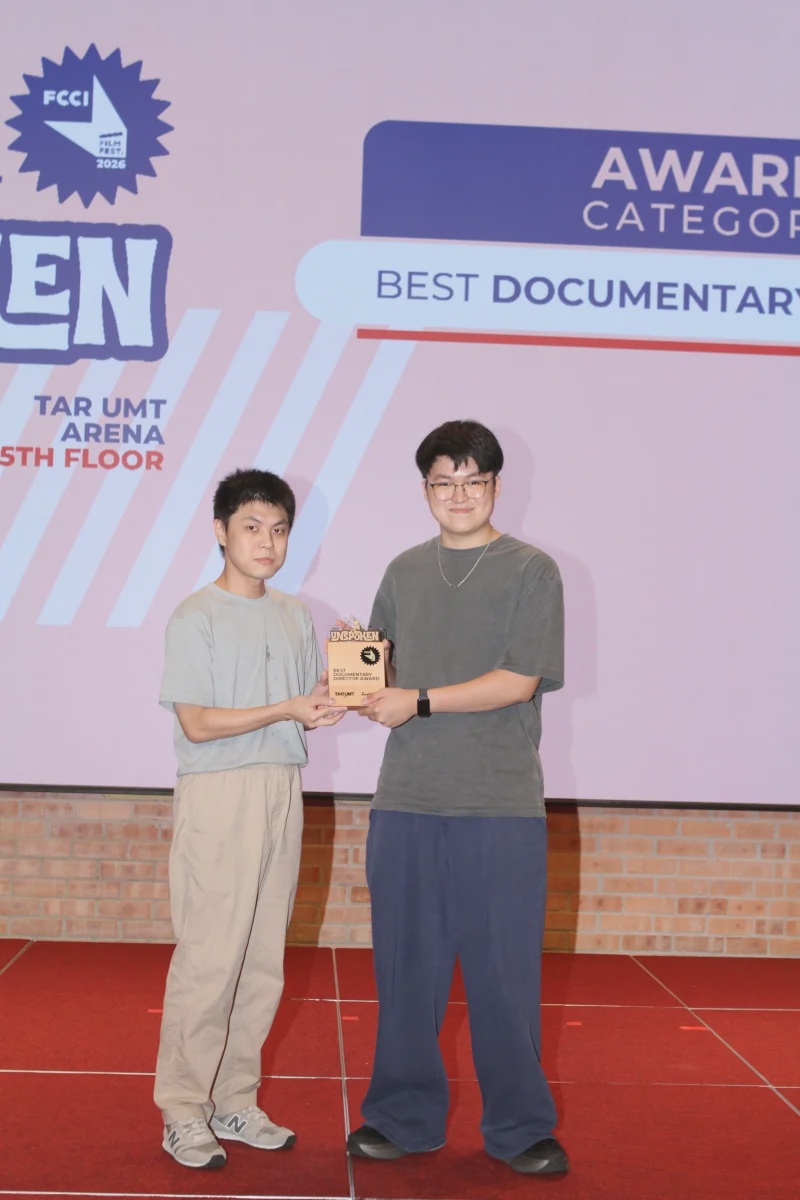
In the documentary categories, Asawara’s Main Teri won Best Documentary, while TAR UMT student Chen Jia Ming received Best Documentary Director for Between Deities and Humans.
For the students involved, the festival provided a chance to find out what happens when work previously confined to classrooms and production crews finally meets an audience.
READ MORE:
Season nine review: ‘Rick and Morty’ jump back into portals